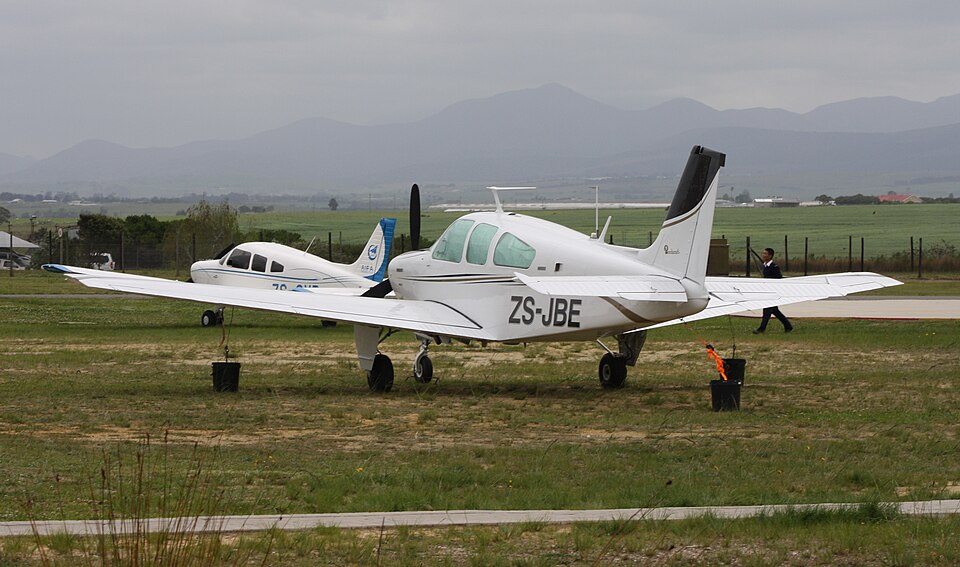
Accident Overview
On 20 January 2017 at approximately 1447Z, a Beechcraft Bonanza F33A, registration ZS-JBE, experienced a landing gear accident at Hoedspruit Air Force Base (FAHS) on runway 18. The aircraft was operated under Part 141 training rules. The flight crew comprised a designated flight examiner (DFE) and two student pilots. No injuries were sustained; the aircraft suffered substantial damage to the belly, undercarriage, main landing gear doors, and propeller blades.
Flight History
The flight departed from FAHS for a training flight to assess student pilots for Private Pilot License (PPL) and Commercial Pilot License (CPL) revalidations. Weather was fine with wind from 090° at 6 knots, temperature 34°C, visibility CAVOK. During the return from the General Flying Area, the DFE reduced the throttle to idle and instructed the PPL student to simulate an emergency landing on runway 18. As engine power dropped below 1500 rpm, the gear warning horn sounded. The student continued the emergency procedure, reducing speed to best glide. When certain of reaching the runway, the student selected gear down and lowered flaps. The warning horn stopped, and the student assumed the gear was locked. During the flare, the tower advised to check the gear, and the student observed the red gear unsafe light illuminated. A go-around was considered but deemed unsafe as touchdown was imminent. On touchdown, the gear collapsed, and the aircraft skidded to a stop on the runway centerline. The student shut off the fuel and noted the gear motor circuit breaker had popped.
Findings
The student held a valid PPL with correct type rating and had 938.4 total hours, with 1 hour on type. The DFE held an Airline Transport Pilot License and a Grade 1 instructor rating, with 23,350 total hours and 250 hours on type. The aircraft had a valid Certificate of Airworthiness and was current on maintenance. The total airframe time was 5,319.2 hours. The last Mandatory Periodic Inspection was on 24 March 2016 at 5,225 hours. The circuit breaker popped due to overload as the undercarriage was still in transit during landing.
Probable Cause
The student pilot selected the landing gears late and landed the aircraft whilst the gears were in transit. A contributory factor was forgetting to select the landing gears on time.