History of the Flight
On 14 November 2019, snowfall and mist prompted low visibility procedures (LVP) at Lyon Saint-Exupéry airport, which had been in force since 20:24. Runways 35L and 35R were active; runway 35L had been closed for snow clearance earlier and reopened at 21:38.
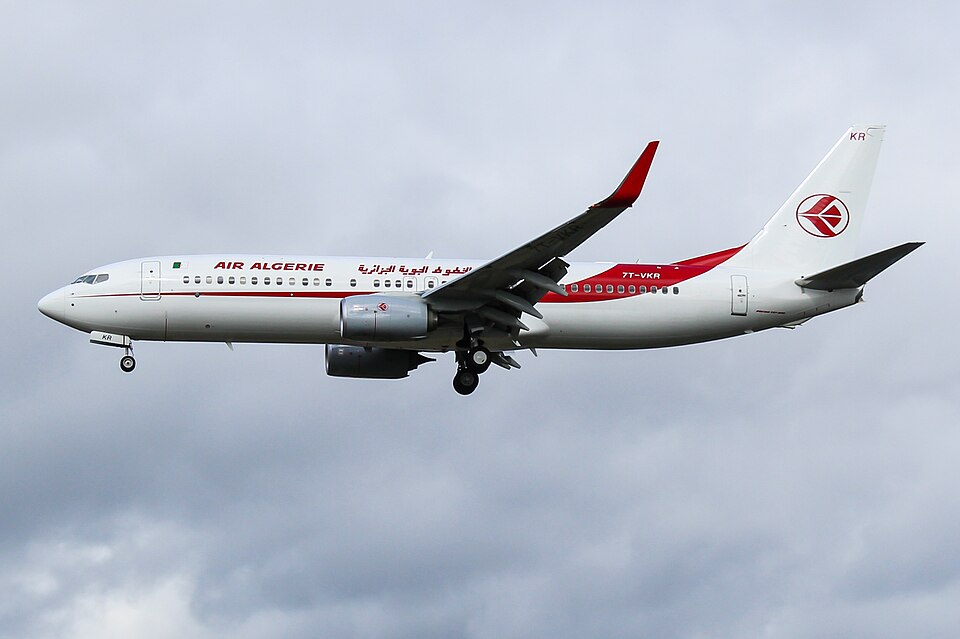
The aircraft involved was a Boeing 737-800, registration 7T-VKR, operating as Air Algérie flight AH1157 from Lyon Saint-Exupéry to Annaba, Algeria. It had 87 passengers and a crew of eight.
At 22:19, the crew contacted ground control (GND) and received pushback clearance. At 22:20, the lead vehicle of two snowploughs, call sign ELEC8, asked the GND controller for clearance to enter runway 35L to clear the junction with taxiway A3. The GND controller initially asked them to remain outside the safety area, then cleared them to enter, noting a measurement vehicle on the runway.
At 22:27, the GND controller cleared flight AH1157 to taxi to holding point A9. At 22:29, the crew was advised of poor braking conditions on runway 35L. At 22:32, the crew was instructed to contact the tower (TWR) frequency, and the local control (LOC) controller asked them to advance to the stop bar.
At 22:33:11, the LOC controller cleared the crew to line up and take off from runway 35L. Simultaneously, the lead snowplough vehicle again contacted the GND controller, who cleared them to remove snow from taxiway A4 and make the junction with the runway. The driver read back and indicated they were entering runway 35L.
At 22:34:15, the lead vehicle entered the runway safety area. At 22:34:43, the flight crew applied takeoff thrust; five seconds later, the LOC controller instructed them to reject the takeoff. The aircraft reached a maximum ground speed of 63 knots, well below the calculated V1 of 118 knots. The crew reduced thrust and vacated the runway via taxiway A6.
At 22:42, flight AH1157 lined up again on runway 35L and departed without further incident.
Causes
The runway incursion was linked to an erroneous clearance to enter the runway as a result of a coordination failure between the GND and LOC controllers, and to keeping the vehicles cleared to enter the runway on the GND frequency.
Contributing Factors
The investigation identified several factors that contributed to the conflictual clearance and use of an inappropriate frequency:
- A high workload in an unusual context where roles were sometimes poorly delimited.
- The reopening of the inner runway although snow clearance of taxiways and junctions required vehicles to enter the runway.
- Practices without a clear framework regarding the use of frequencies for vehicles during temporary runway closures.
- A stop bar configuration incompatible with the snow-clearance paths taken by vehicles.
Additionally, the runway incursion was considered symptomatic of confusion and disorganization arising from the management of the snow episode. Factors that may have contributed included:
- A Snow Plan whose definition was too formal and partly disconnected from operational realities.
- Inaccurate runway surface condition measurements resulting in high workload and difficulties in snow-clearance strategy.
- Rules for regulating and suspending operations that were difficult to apply by those directly involved in traffic management and snow clearance.
Safety Recommendations
The BEA issued four safety recommendations concerning air operation regulation and suspension decisions during snow episodes and coordination of snow clearance operations.