Background
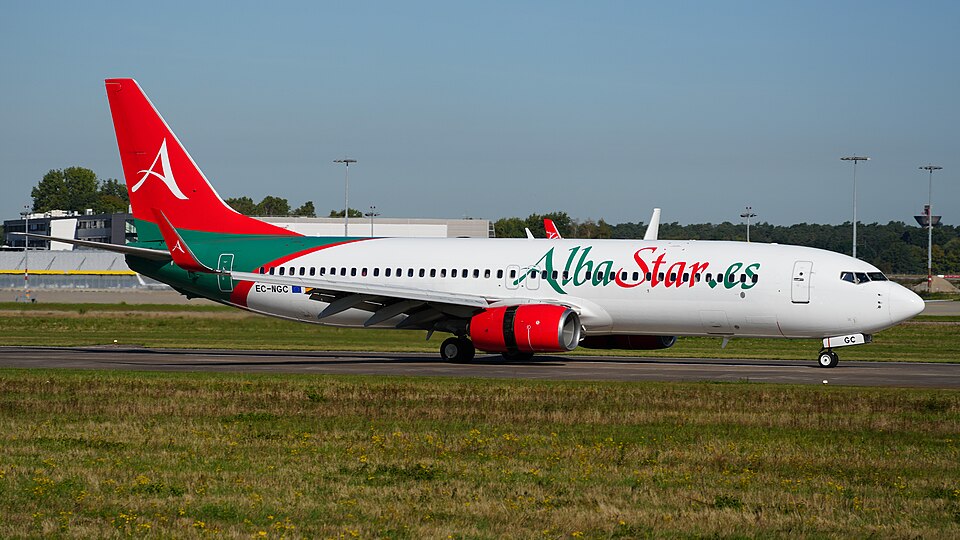
On 21 July 2023, a serious incident occurred in cruise flight near the Limoges VOR/DME involving a Boeing 737-809 registered EC-NGC, operated by Albastar, and an Embraer 190 registered F-HBLD, operated by HOP!. The incident took place in Reduced Vertical Separation Minimum (RVSM) airspace.
Flight Details
The Boeing 737-809 was operating flight LAV4651 from London-Stansted Airport (United Kingdom) to Tarbes-Lourdes-Pyrenees airport, carrying a crew of two pilots and four cabin crew, with 185 passengers. The Embraer 190 was operating flight AFR21YB with a crew of two pilots and two cabin crew, and 94 passengers. Neither aircraft reported any injuries or damage.
Transponder Failure
Approximately 20 minutes before the conflicting flight path, the transponder on the Boeing 737, which had been switched on by the crew, ceased transmitting information in response to interrogations from ground radar stations and Airborne Collision Avoidance Systems (ACAS) of nearby aircraft. This loss of functionality resulted in the aircraft becoming invisible to radar and ACAS systems, including the Short Term Conflict Alert (STCA) systems used by air traffic controllers.
Crew and Controller Response
Neither the crew of the Boeing 737 nor the air traffic controllers in the control sector perceived or acted upon the systems designed to alert them to a transponder failure. According to the investigation, the crew did not notice the amber ATC FAIL light on the ATC Control Panel, which likely illuminated during the flight. The air traffic controllers did not perceive the visual warnings displayed on their screens and acknowledged them by deleting the marker indicating loss of radar contact.
Compulsory Reporting Point BALAN
Radio communication near the compulsory reporting point BALAN, located at the boundary between the ACC/west and ACC/south sectors, could have allowed the situation to be recovered. The Planner Controller (PCR) instructed the crew to head directly to BALAN, a compulsory reporting point. However, in the absence of an explicit request from the controllers to contact them when approaching BALAN, the crew continued along their planned flight route.
Outcome
The transponder failure and loss of radar contact resulted in the Boeing 737 crossing the route of the Embraer 190 while in RVSM airspace. No collision occurred, and the incident was classified as serious due to the potential risk. The investigation focused on the technical failure, human factors, and air traffic management procedures.