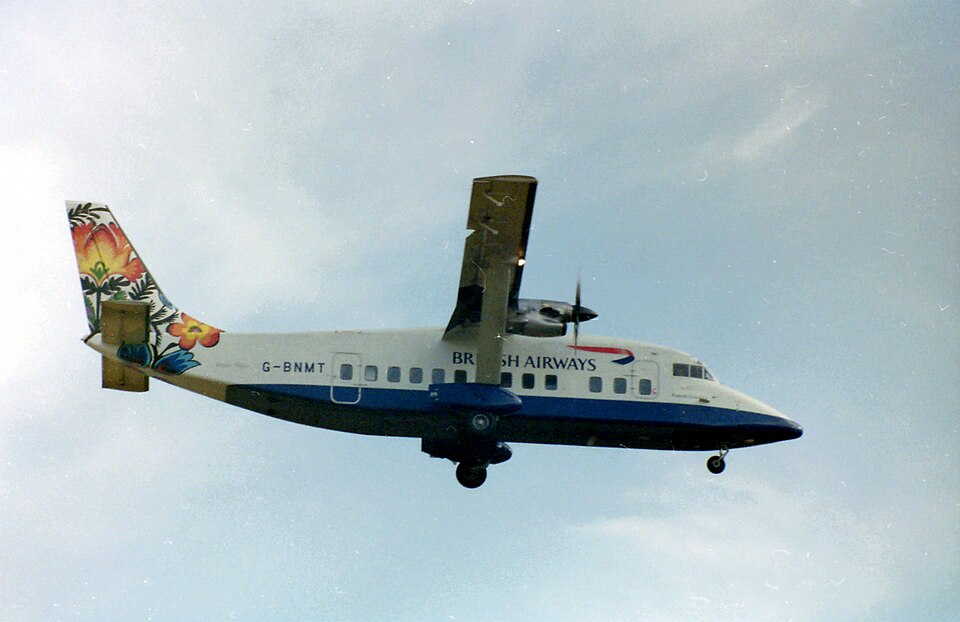
Background
After landing at Edinburgh Airport at 00:03, the aircraft was parked on Stand 31 in light to moderate snowfall. It was prepared for a Royal Mail charter flight to Belfast. Start clearance was given at 15:03, but at 15:12 the crew reported a technical problem and shut down. The problem was a generator that would not come online. An avionics technician diagnosed the issue and ground-ran both engines twice without finding a fault. The crew then requested taxi clearance at 17:10.
Event
A normal takeoff from runway 06 was performed, with a reduction to climb power at 1,200 feet above mean sea level. At 2,200 feet, the aircraft's anti-icing systems were selected on. Three seconds later, the torque on each engine dropped rapidly to zero. The crew declared a MAYDAY for a double engine failure. The aircraft ditched in the Firth of Forth estuary approximately 100 meters from the shoreline near Granton Harbour. Both pilots were killed. Weather conditions at the time included a temperature of +2°C, dewpoint -3°C, visibility over 10 km, broken clouds at 4,500 feet, and overcast at 8,000 feet.
Probable Cause
The official investigation identified the following causal factors:
1. The operator lacked a practical procedure for fitting engine intake blanks in adverse weather, leading to non-compliance with the manufacturer's Maintenance Manual freezing weather precautions. Intake blanks were not provided on the aircraft nor readily available at Edinburgh.
2. Significant snow almost certainly entered the engine intakes due to the aircraft being parked heading into strong surface winds during light to moderate snowfall overnight.
3. The intake system flow characteristics likely allowed snow, ice, or slush to accumulate in areas not visible during normal pre-flight inspection.
4. After engine ground running began, deposits probably migrated from the plenum chambers to the intake anti-ice vanes. Conditions before takeoff likely caused re-freezing, preventing ingestion during taxi, takeoff, and initial climb.
5. Movement of the intake anti-icing vanes, combined with the presence of snow/ice/slush, altered intake airflow and resulted in near simultaneous flameout of both engines.
6. The standard operating procedure of selecting both intake anti-ice vane switches simultaneously eliminated a protective measure against simultaneous double engine flameout.