History
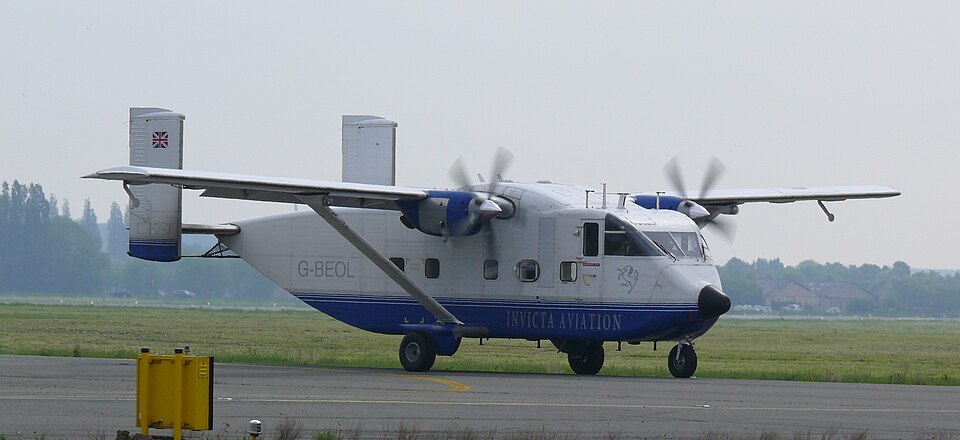
The pilot of the Shorts SC.7 Skyvan, registration G-BEOL, reported that he was making an approach to Weston-on-the-Green after a flight from Manston. During the final stages of the approach, the aircraft developed a rapid rate of sink and landed heavily. The aircraft then veered abruptly to the right, prompting the pilot to execute a go-around. Suspecting damage from the heavy landing, the pilot performed a flyby inspection at Weston, which confirmed that the right main landing gear had sustained heavy damage and was now folded aft. The pilot then diverted to Oxford Airport, where a Full Emergency was declared. The aircraft was held from landing until emergency crews were deployed. The aircraft subsequently landed on Runway 21, which has a 900-metre grass surface. The pilot was able to maintain reasonable directional control during the touchdown on the folded right main landing gear. There was no fire and no injury.
Engineering Examination
Examination of the right landing gear showed that the shock absorber had become disconnected from the lower trunnion and that the retaining nut was missing. The screw threads at the end of the trunnion showed no evidence of deformation or stripping. There was a large area of impact damage on one side of the threaded part of the trunnion, consistent with what would have occurred during the final landing. The threads on the undamaged side were in very good condition. No locking wire was present. The retaining nut was found at the initial impact point, by the right landing gear, on the grass runway. Examination showed no deformation, damage, or stripping of the screw threads, and there was no locking wire present. The holes in the retaining nut, through which the locking wire should have passed, were clogged with hardened grease and general debris associated with landing gear areas, which appeared to have accumulated over a long period. Examination of the lower shock absorber retaining nut on the left landing gear showed that it was secure and correctly wirelocked.
Maintenance History
The aircraft's logbooks and worksheets were examined in detail. The last recorded time that the main landing gear shock absorbers were disturbed was in March 2000, when Dowty Rotol Mandatory Service Bulletin 32-14M was carried out. This Service Bulletin required the removal of the main landing gear shock absorbers to check for cracking of the lower shock absorber attachment trunnion. The aircraft had flown 2,414 hours over 4,985 flights since the Service Bulletin had been carried out. It appears likely that the recorded maintenance work, or subsequent undocumented maintenance work, did not include completion of the wirelocking task.
Maintenance Requirements
The manufacturer’s Aircraft Maintenance Manual and the shock absorber’s Overhaul Manual require that, following fitting of the lower shock absorber, the retaining nut should be torqued and wirelocked.