History of Flight
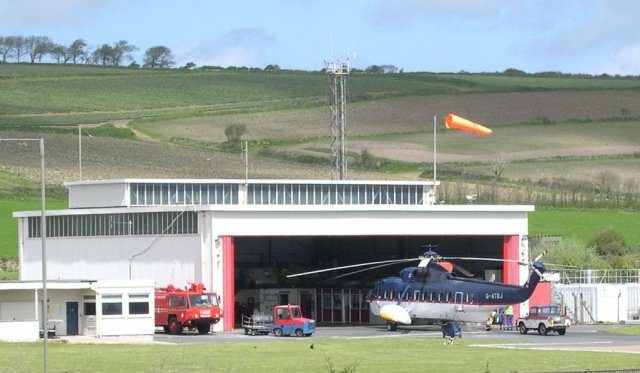
The helicopter was returning to base after an uneventful flight from a North Sea platform. The crew planned a run-on landing on Runway 32. During the flare, the handling pilot (first officer) applied collective pitch and found that despite increasing left pedal input, he could not prevent the nose from swinging right. He reached full left pedal and commented on the situation. The commander responded to put it down. The pilot realized loss of tail rotor control as rotation rate increased. The helicopter yawed rapidly right for two to three rotations before the pilot, using collective and cyclic, managed to put it on the ground. The touchdown was a skidding manoeuvre on grass. The aircraft remained upright. Crew shut down engines and advised ATC.
Technical Examination
Examination revealed the only discrepancy was a failed tail rotor cable in the tail cone. The cable had separated near a pair of pulleys. The cable was conventional 1/8" diameter with 7 strands of 19 wires. Metallurgical examination showed fatigue and overload failures. A guard pin had wear marks indicating the cable had been misrouted over it during maintenance. A test with a new cable showed that misrouting allowed the controls to operate, but with a different feel and noise that could be missed.
Previous Maintenance
The maintenance organization had a policy of replacing tail rotor cable sections every 300 hours. 44 flying hours before the incident, a 300-hour check was performed where four cable sections were replaced, including the failed one. Interviews of engineers did not reveal any particular circumstance for the misrouting. Engineers were qualified and experienced, and followed normal procedures including duplicate inspections.
Previous Occurrences
AAIB reviewed similar occurrences to S-61/Sea King helicopters. UK military records showed several cases of misrouted tail rotor cables; some were caught, but some caused in-flight failures and at least one accident. Similar issues occurred on S-76 helicopters, leading to two changes: revision of the Maintenance Manual to install guard pins after tensioning, and replacement of steel guard pins with frangible pins. These changes were not applied to the S-61.
Safety Recommendations
The AAIB recommended that the FAA require changes to S-61 maintenance documentation to minimize misrouting likelihood (Recommendation 98-64). The manufacturer has revised the S-61N Maintenance Manual accordingly (Revision 43, October 1998). Another recommendation (98-65) called for changes to tail rotor pulley hardware so that misrouted cables remain intact.