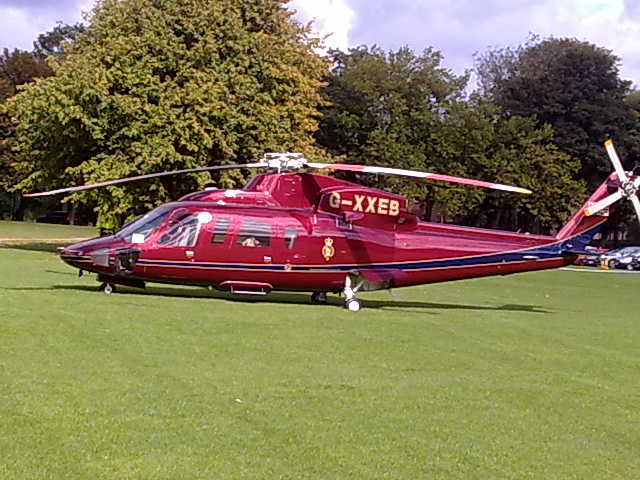
Incident Overview
On 23 May 2013 at 0930 UTC, a private Sikorsky S-76C helicopter, registration G-XXEB, experienced a yaw control abnormality while on approach to Denham Aerodrome in Buckinghamshire. The two pilots and six passengers were uninjured, and the helicopter sustained no damage.
History of the Flight
During the descent with the autopilot disengaged, the pilot noticed the aircraft yawing to the right. Applying left pedal, he felt a restriction and heaviness in the yaw control system, with the left pedal travel limited. When pressure on the left pedal was released, the right pedal moved forward almost to its full extent without pilot input. The co-pilot confirmed the abnormality in his pedals as well. Selection of the yaw trim switch to IN and OUT positions had no effect. While flying into wind at 80 kt with full left pedal applied, a right yaw remained. The pilot declared a PAN and briefed the co-pilot to immediately reduce engine torque if directional control were lost. The crew performed an uneventful running landing and taxied to dispersal with the yaw issue still present. The helicopter was then shut down.
Technical Investigation
Initial fault diagnosis identified the Pedal Damper Trim Actuator (PDTA) as the source of the problem. The PDTA was replaced, and subsequent flights were normal. The faulty PDTA, which had been overhauled and released on 27 February 2013, had accrued about 73 flight hours since installation. It was sent to the manufacturer in the United States for examination, coordinated with the NTSB. A CT scan revealed a small steel ball, part of the trim solenoid valve, had split in half. Functional tests using a hydraulic bench reproduced the exact symptoms reported by the pilot. The split ball allowed hydraulic pressure to leak internally past the solenoid valve, continuously activating the trim mode and counteracting the damping circuit, requiring significant force to overcome. The ball had been fitted during overhaul. Metallurgical analysis indicated that the most likely cause of the fracture was an anomaly in the ball's heat treatment during manufacture.
Safety Action
In response, the helicopter manufacturer began issuing a Sikorsky Safety Advisory and a Rotorcraft Flight Manual revision to inform operators of the symptoms of a PDTA fault and the appropriate crew actions.