Incident Overview
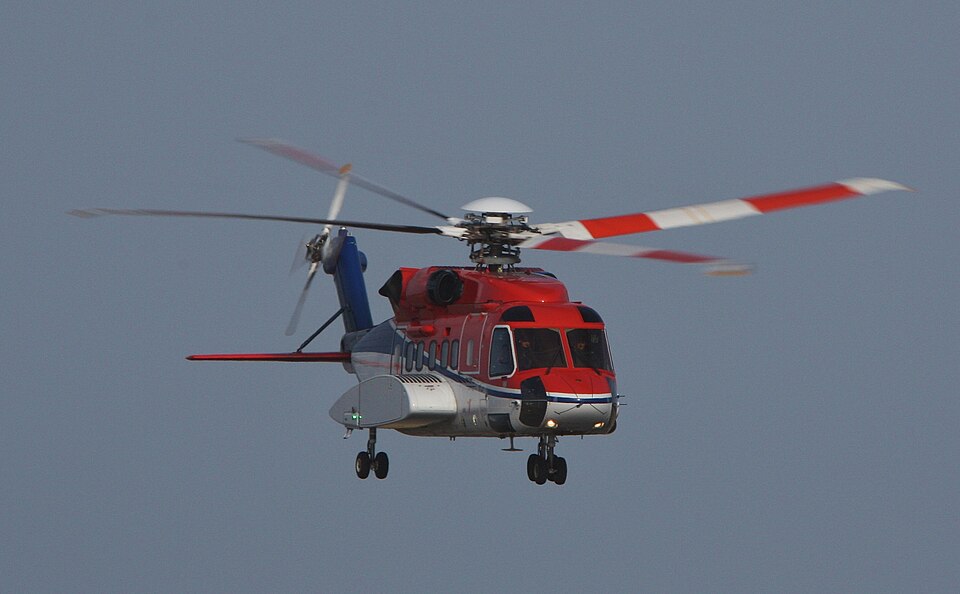
On 23 April 2007, a Sikorsky S-92A helicopter, registration G-CHCK, was operating a commercial passenger flight to offshore platforms in the North Sea. Approximately 65 nm north-east of Aberdeen, at 0710 hrs, a heavy vibration suddenly started. The commander took control, turned back towards Aberdeen, and initiated a descent. The co-pilot radioed Aberdeen Airport. Air Traffic Control asked if they wished to declare an emergency; the co-pilot responded that they had a technical problem.
Crew Actions
The commander descended to 1,000 ft and slowed to below 120 kt. As the vibration did not diminish, he directed a 'PAN' call. The descent continued to 500 ft and airspeed reduced to 85 kt. ATC advised that a Search And Rescue helicopter would be sent and asked if they wished to route towards the nearest coastline. The crew agreed and turned towards Peterhead. Passengers were kept appraised. The Stability Augmentation System continued normal operation, but autopilot hold functions were unavailable. The Active Vibration Control system went into degraded mode approximately 15 nm from the coast; the co-pilot switched it off but the vibration increased, so it was switched back on. The Crash Position Indicator signalled deployment.
Landing
ATC asked if the crew wished to land at Longside. Considering systems showing distress, they chose that option. A successful run-on landing was completed at Longside at 0748 hrs.
Investigation Findings
Examination revealed that the vibration was caused by detachment of a tail rotor blade pivot bearing. The bearing retainer had disbonded from the flexible spar of the blade, allowing the bearing to migrate outwards inside the torque tube. The outboard pivot bearing and its retainer detached and became jammed between the torque tube and flexible spar. The inboard bearing retainer also detached and travelled up inside the torque tube but was undamaged. Witness marks indicated the retainers had moved from their original positions.
Additional Discoveries
Inspections of other S-92 helicopters highlighted other disbonded bearing retainers. On another operator's S-92, similar witness marks were found. The helicopter manufacturer increased pivot bearing inspection frequency until a final fix is implemented. The affected blade had been manufactured in 2005 and installed since new. The helicopter had flown about 1,030 hours at the time of the incident. The previous scheduled tail rotor inspection was performed 53 flying hours prior with no defects.
Recorded Data
The Multi Purpose Flight Recorder recorded no data due to a configuration mismatch. Health and Usage Monitoring System data showed a marked increase in tail rotor vibration from 0725 hrs, with mean vibration increasing from 0.2g to 0.5g. A single sample of tail rotor balance exceeded 4.5 inches/second, ten times the previous flight's reading and above the service limit of 0.8 inches/second.