What happened
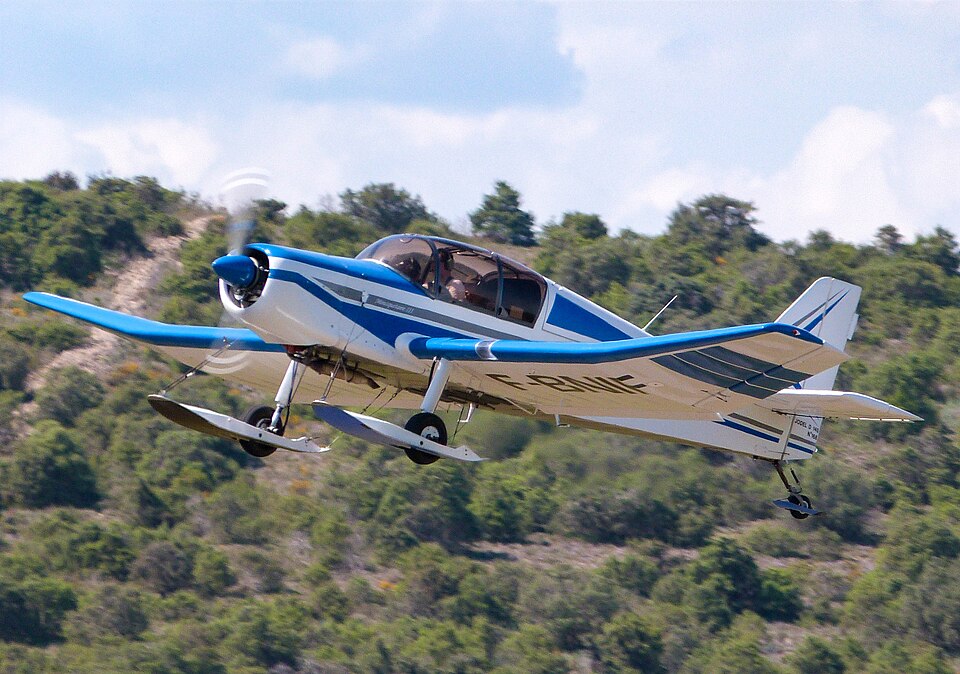
On March 12, 2014, a Jodel D104 (registration F-BNIF) was preparing for a flight from the Alpe d'Huez altiport to Grenoble-le-Versoud. The runway was covered in melting snow. To increase safety margins and utilize a longer takeoff distance due to the aircraft's weight and estimated wind conditions, the pilot moved the aircraft to an unpaved, cleared area adjacent to the runway. During this maneuver, an external pilot assisted by holding the left wing to facilitate a turn on the slippery surface.
As the pilot applied power for the takeoff roll, the aircraft veered sharply to the left. The pilot was unable to correct the trajectory, causing the aircraft to leave the prepared area and collide with trees. There were no fatalities among the four occupants, but the aircraft sustained heavy damage.
The investigation
The investigation examined the environmental conditions, the aircraft's mechanical configuration, and the pilot's maneuvers. At the time of the accident, the site was experiencing significant wind, with gusts reaching 35 knots. The investigators noted that the aircraft was equipped with skis, but the non-retractable tailwheel protruded beneath the ski. This configuration allowed the tailwheel to unlock during tight turns, enabling the aircraft to pivot, though it required a straight run to realign the wheel.
Findings
- The investigation established that during the pre-takeoff turn, the tailwheel likely unlocked and remained oriented to the left.
- The combination of the left-oriented tailwheel and a strong crosswind caused the aircraft to deviate significantly from its path during the application of power.
- The pilot's decision to attempt takeoff under conditions of high winds and melting snow was the primary cause of the accident.