What happened
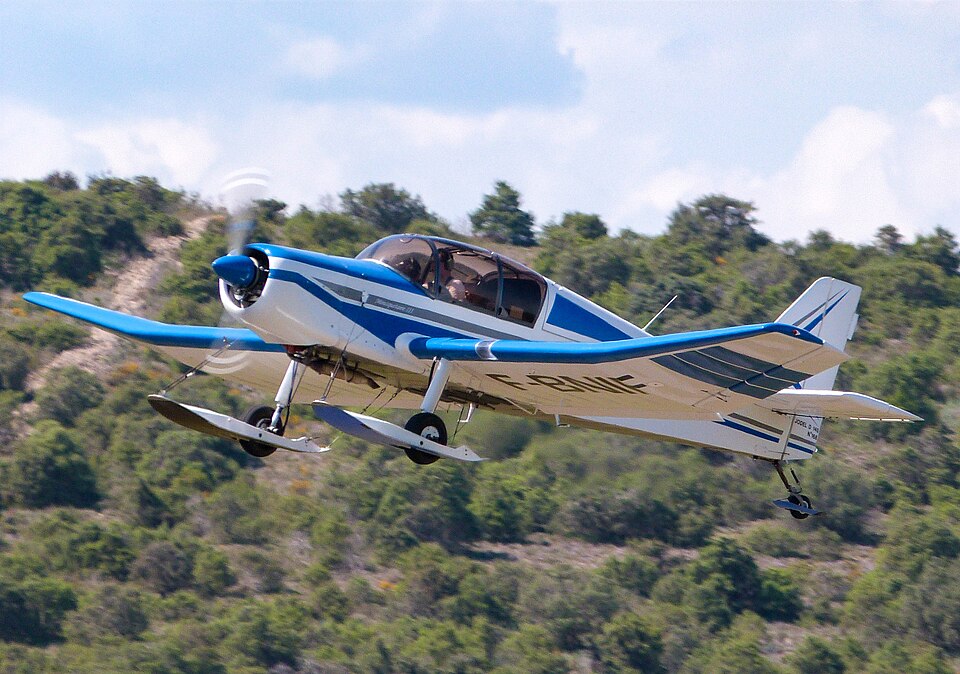
On February 20, 2013, a Jodel D140 aircraft, registration F-BNIF, was performing a series of landings on high-altitude surfaces. After completing two landings on the Sarenne glacier and two on the Saint-Sorlin surface, the pilot attempted a landing at the Saint-Jean-d’Arves altisurface on runway 19. The runway, measuring 330 m by 50 m, featured a 15% upward gradient and was covered in snow.
During the second landing attempt, the pilot decided to target a touchdown point higher up the runway than the previous attempt in an effort to avoid a bump located at the runway entrance. The aircraft touched down at the two-thirds mark of the runway in landing configuration. Despite the pilot's efforts, the aircraft could not be brought to a halt on the remaining runway surface. The aircraft subsequently exited the runway longitudinally and collided with a grove of trees. The aircraft sustained heavy damage.
The investigation
The investigation focused on the landing parameters and the pilot's decision-making regarding the touchdown point. Investigators examined the environmental conditions, noting calm winds, CAVOK visibility, and a temperature of -5 °C. The investigation also reviewed the pilot's experience, noting the pilot had 576 total flight hours, with 250 hours on this type and specific mountain flying qualifications for snow extensions. The passenger, a professional pilot with approximately 3,500 flight hours, had no prior experience flying the Jodel D140 in mountain environments.
Findings
- The pilot attempted to use rudder inputs to correct the trajectory during deceleration, but these were ineffective due to the low relative airspeed.
- The primary cause of the accident was the pilot's decision to change the touchdown point during the final approach.
- By touching down further up the runway, the pilot left insufficient distance to stop the aircraft using only the braking effect provided by the uphill gradient.