Incident Overview
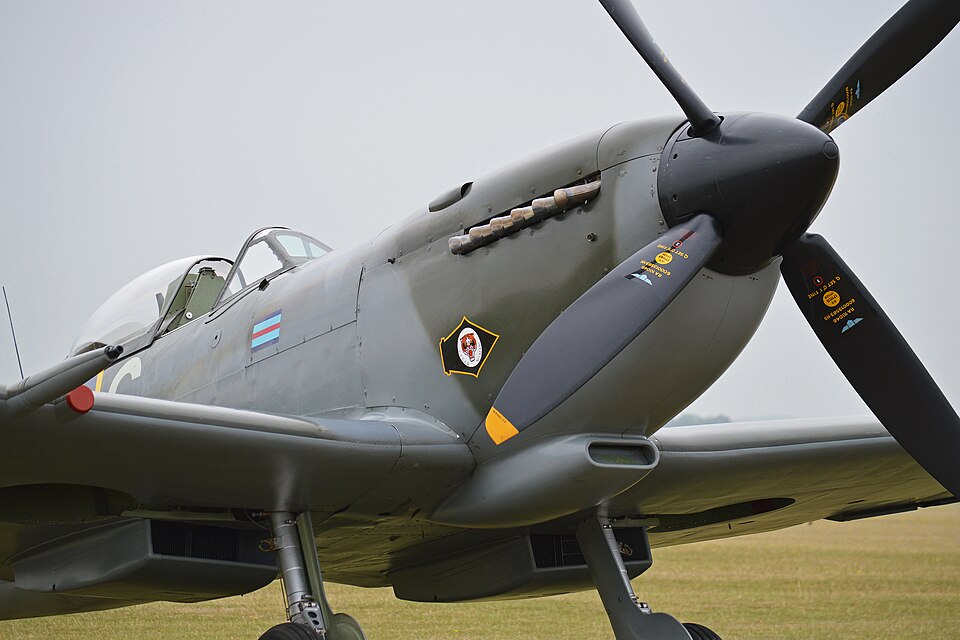
On 11 May 2001 at 1103 UTC, a privately operated Spitfire LF XVIE (registration G-OXVI) was making an approach to grass Runway 06 at Duxford Airfield, Cambridgeshire. The aircraft had been airborne for approximately one hour, during which the pilot practiced stalling, aerobatics, and general handling. The weather was fine with wind from 070° at 5 knots and good visibility. The circuit was flown without incident prior to the landing flare.
Sequence of Events
The pilot initiated the flare at approximately 15 feet above the runway. The pitch attitude continued to increase until the left wing dropped and struck the ground. Immediately thereafter, the nose and main landing gear hit the ground, tearing the main wheels from the fuselage. The aircraft slid to a halt on its belly. The pilot, who held a Private Pilot's Licence and was 73 years old with 1,300 total flying hours (60 on type), exited the aircraft uninjured.
Damage
The landing gear detached, the left wing tip was bent, and the propeller was shattered. No injuries were reported.
Pilot's Assessment
In his report, the pilot assessed the cause of the accident to be loss of airspeed during a higher than normal landing flare, leading to a stall and subsequent wing drop.