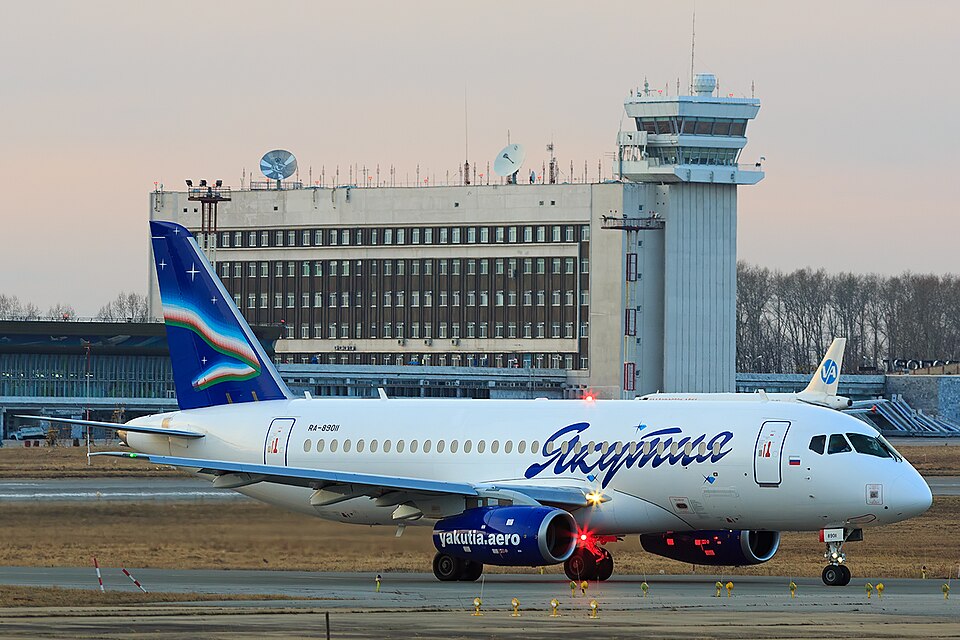
Approach and Landing
Following an uneventful flight from Ulan-Ude, the crew initiated the approach to Yakutsk-Platon Oyunsky Intl Airport Runway 23L. Due to work in progress, the threshold of Runway 05R was displaced by 1,150 metres, reducing the landing distance available on Runway 23L to 2,248 metres. The touchdown zone lighting system on Runway 23L was unserviceable. During the approach, air traffic control informed the crew that the runway friction coefficient was 0.45.
Overrun and Impact
The crew completed the landing on Runway 23L with a slight tailwind component of 4 knots and began braking. Unable to stop within the remaining distance, the aircraft overran the runway, entered a construction area, and collided with the junction of a concrete section under reconstruction. The collision caused both main landing gear to collapse, and the left main gear was torn off. The aircraft slid for another 250 metres before coming to rest. All 92 occupants evacuated safely. The aircraft sustained damage beyond repair.
Probable Cause
The official investigation determined that the cause of the accident was the transfer to the crew of incorrect information about the value of the friction coefficient, leading to a landing on an icy runway. The average normative friction coefficient was less than 0.3, which did not allow landing in accordance with current regulations. This resulted in a significant increase in landing distance, the aircraft rolling out of the runway, and collision with the reconstructed section's junction, which had a height of about 0.4 metres. The impact destroyed the main landing gear supports and damaged the engines, causing fuel leakage without fire.
Contributing factors identified in the investigation included: the absence of a connecting ramp between the current and reconstructed runway sections; inefficiency of the SMS of Yakutsk Airport JSC regarding risk identification and control for ice formation; erroneous determination of the friction coefficient value at the last measurement; inefficiency of the ice removal procedure due to lack of chemical reagents or thermal machines; lack of information from the crew of another aircraft (RRJ-95LR-100 RA-89038) about an actual runway excursion; and failure by airport and ATC officials to take appropriate action after receiving that crew's low friction report.