Incident Overview
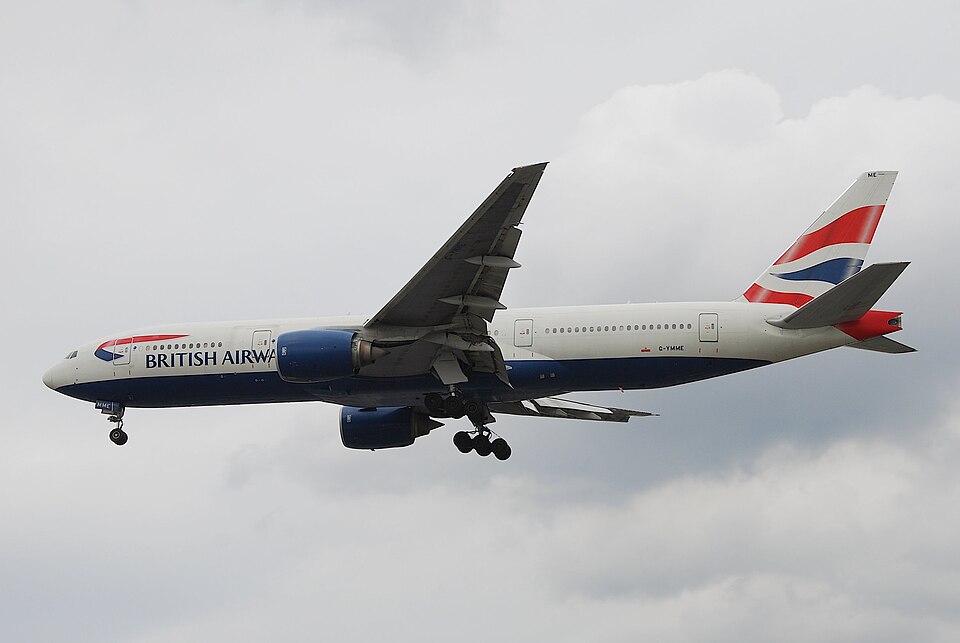
On 10 June 2004 at 1907 UTC, a Boeing 777-236, registration G-YMME, operated by British Airways PLC, experienced a fuel leak during departure from London Heathrow Airport. After takeoff, a vapour trail was observed streaming aft of the aircraft. The flight crew diagnosed a probable fuel leak from the centre wing fuel tank, declared an emergency, and jettisoned fuel to reduce to maximum landing weight before returning to Heathrow. The aircraft was met by the Airfield Fire and Rescue Service, who reported some vapour emanating from the left landing gear but no apparent fuel leaks.
Findings
The fuel leak was caused by fuel escaping through an open purge door inside the left main landing gear bay on the rear spar of the centre wing tank. The purge door had been removed during base maintenance at the operator's maintenance organisation in Cardiff between 2 May and 10 May 2004 and had not been refitted prior to the aircraft's return to service. The open purge door was not detected between the aircraft's return to service and the incident flight because it was not visible from the ground with the left inboard main gear door closed and the aircraft's fuel loads had been insufficient to create a leak.
The investigation identified multiple contributing factors. The purge door removal was not recorded on a defect job card. No person came forward stating they were involved with the purge door removal. The centre wing tank leak check did not reveal the open purge door because the purge door was not mentioned within the Aircraft Maintenance Manual (AMM) procedures for purging and leak-checking the centre wing fuel tank; with no record of the removal, the visual inspection did not include the purge door; and the fuel quantity required to leak-check the purge door was incorrectly stated in the AMM. Awareness of the existence of a purge door on the Boeing 777 was low among production staff, partly due to an absence of cross references within the AMM.
Additional findings included that the maintenance organisation had been aware of a missing baffle door reference for two years before the incident but had not created routine baffle door removal cards. Routine removal of the purge door on the Boeing 747 may have contributed to an experienced engineer removing the purge door on the 777 without realising its removal was not required. The aircraft manufacturer determined that the fuel leakage could have resulted in a potential wheel well fire, but in this incident there was little risk of an in-flight fire because no ignition sources were in the vicinity.
Causal Factors
The investigation identified the following causal factors: 1. The centre wing tank was closed without ensuring that the purge door was in place. 2. When the purge door was removed, defect job cards should have been raised for removal and refitting of the door, but no such cards were raised. 3. The centre wing tank leak check did not reveal the open purge door because: a. The purge door was not mentioned within the Aircraft Maintenance Manual (AMM) procedures for purging and leak-checking the centre wing fuel tank. b. With no record of the purge door removal, the visual inspection for leaks did not include the purge door. c. The fuel quantity required to leak check the purge door was incorrectly stated in the AMM. 4. Awareness of the existence of a purge door on the Boeing 777 was low among the production staff working on G-YMME, due in part to an absence of cross references within the AMM. 5. No person came forward stating that they were involved with the purge door removal.
Safety Actions
Following the incident, significant safety action was taken by both the maintenance organisation and the aircraft manufacturer to address issues discovered during the investigation. The AAIB made five safety recommendations: that British Airways Maintenance Cardiff actively encourage staff to raise problems with procedures and take prompt action; identify and publish clear disciplinary policies regarding maintenance errors; ensure its Maintenance Error Management System fulfills all recommended elements; ensure Technical Team Leaders adequately disseminate information; and that British Airways carry out a safety audit at its maintenance facility once the recommendations are addressed.