Incident
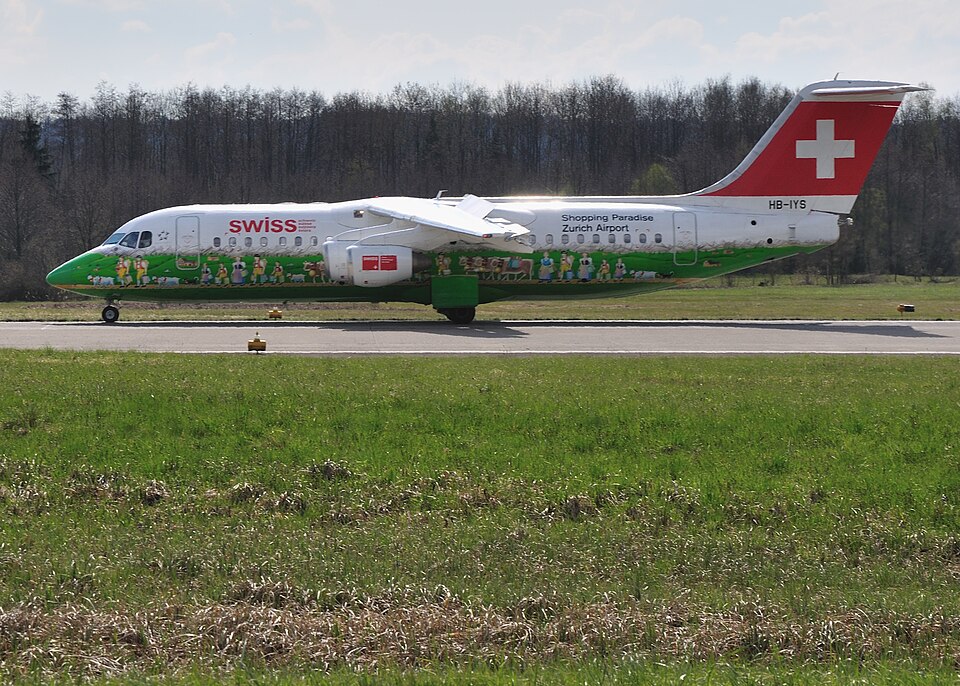
On 8 May 2013, a serious incident (near collision) occurred involving a paraglider of type Atlas and two commercial aircraft in the Zurich Terminal Control Area (TMA LSZH 6), approximately 24 nautical miles west-northwest of Zurich Airport. The aircraft involved were an Airbus A319-112, registration HB-IPX, operating as Swiss International Air Lines flight SWR 63M, and an AVRO 146-RJ100, registration HB-IYS, operating as Swiss European Air Lines flight SWR 78W.
Sequence of Events
The paraglider was flying in controlled airspace without authorization. The two aircraft were operating under instrument flight rules. The conflict was detected by air traffic control, and both aircraft received traffic advisories. The paraglider pilot likely did not have a functioning transponder. The aircraft crews took evasive action, and the closest proximity was reported as a near collision. No injuries or damage were reported.
Investigation
The Swiss Accident Investigation Board (SAIB) conducted the investigation. The report detailed the flight paths, communication, and environmental conditions. The paraglider pilot held a valid license and was participating in a cross-country competition organized by the Swiss Hang Gliding Association. Meteorological conditions were suitable for visual flight. Air traffic control was aware of the paraglider but was unable to establish communication.
Conclusions
The investigation determined that the paraglider pilot entered controlled airspace without clearance, leading to the conflict. The cause was attributed to the pilot's failure to comply with airspace regulations. No technical failures were found in the aircraft or air traffic control systems.