Introduction
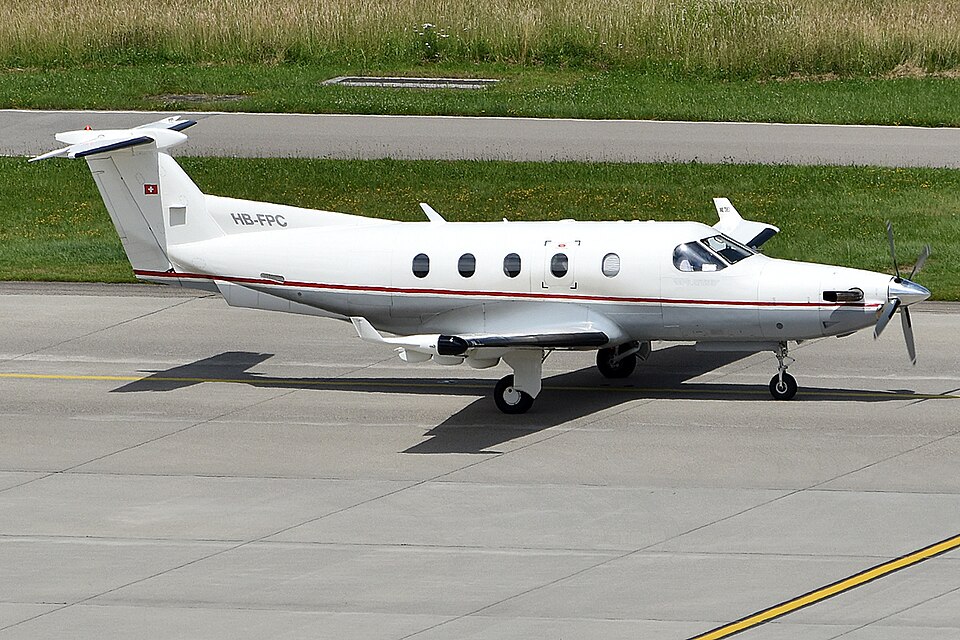
On 29 April 2018, a serious incident involving a Pilatus PC-12/45 aircraft, registered as HB-FPC, occurred during a private flight from Prague (LKPR) to Buochs (LSZC). The aircraft was operated by Moliair AG. On board were two pilots and one passenger.
Flight History
The flight departed Prague at 14:06 UTC. The pilot-in-command, a Swiss national born in 1965 holding a PPL(A) with 3644 total flight hours (2052 on type), occupied the left seat. The co-pilot, a Swiss national born in 1983 holding a CPL(A) with 1960 total hours (1600 on type), handled communications. At 15:27 UTC, while descending over Dübendorf at FL 75, the crew informed Zurich Departure they were ready to terminate IFR. The controller cleared them for free routing and to switch to Buochs frequency.
Suddenly, the aircraft yawed uncommanded left then right. Suspecting a rudder trim runaway, the pilot disengaged the autopilot via the disconnect switch on the control wheel. The co-pilot pressed the trim interrupt switch on the central pedestal (also inadvertently pressing the adjacent flap interrupt switch). At 15:29:25 UTC, the crew reported a trim problem. The controller offered assistance. The crew stated they could only turn right due to the trim issue. They saw Runway 10 at Zurich Airport and requested landing. At 15:30:24 UTC, a mayday was declared. The controller cleared a visual approach. The aircraft landed without further incident at 15:31 UTC.
Systems Description
The PC-12/45 features conventional flight controls with electric trim for aileron, rudder, and horizontal stabilizer. The rudder can be moved manually via pedals or by the yaw servo when the yaw damper (YD) is engaged. The YD and autopilot (AP) are controlled via a mode controller. When AP is engaged, YD activates automatically. Disengaging AP via the red disconnect switch also disengages YD and flight director. The rudder trim tab is actuated by a trim actuator. In case of an uncommanded trim runaway, the trim interrupt switch disables all electric trim systems, as well as AP and YD. The QRH provides checklists for both trim runaway and AP malfunction.
Outcome
No injuries were reported among the two crew members and one passenger. The aircraft sustained no damage. After landing, the crew attempted the trim runaway checklist without success. The aircraft was taxied to the assigned stand. Weather at the time was VFR with scattered clouds and good visibility.