What happened
On May 5, 2000, at approximately 06:56 UTC, a Cessna 421, registration D-IDDD, flying privately from Freiburg to Varese, entered the Zurich Terminal Control Area (TMA) without authorization. The pilot intended to transition from Visual Flight Rules (VFR) to Instrument Flight Rules (IFR) at the TRA/VOR waypoint. However, due to a lack of available flight plan data at the Area Control Centre (ACC), the pilot was initially instructed to remain outside the controlled airspace and was transferred to Flight Information services.
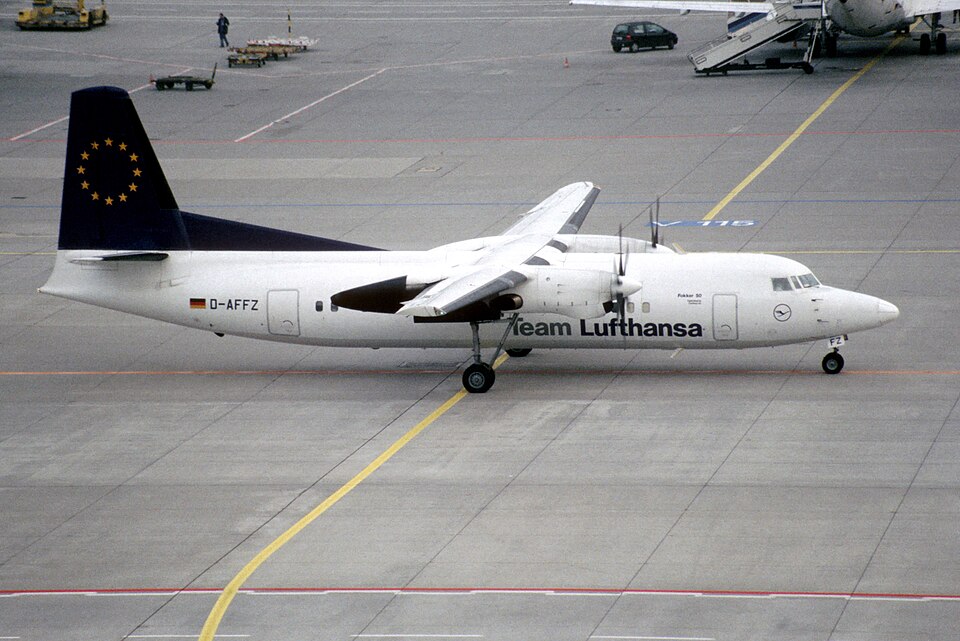
Simultually, a Fokker 50, registration DLH3652, operating a scheduled flight from Munich to Zurich, was descending through 5,000 feet. As the Cessna 421 continued its flight path toward the TMA boundary despite instructions to descend and turn east, it intercepted the path of the approaching airliner. The two aircraft came within 0.1 NM horizontally and 300 ft vertically of each other.
The investigation
SUST examined the technical and operational failures that led to the incident. The investigation established that a server failure at the ACC Zurich between 18:12 and 18:16 UTC the previous evening prevented the processing of incoming AFTN flight plan messages. Consequently, the flight plan for D-IDDD was not available to controllers on the day of the flight. While a warning regarding missing messages had been printed, the controller did not request the missing data from the Geneva center.
Furthermore, investigators reviewed radio communications between the aircraft and various control sectors. They found that the communications between the Cessna 421 and Flight Information were complex and difficult to understand, which hindered the controllers' ability to realize the pilot intended to fly IFR through the TMA.
Findings
- The primary cause of the incident was twofold: the pilots of D-IDDD failed to follow air traffic control instructions by entering the Zurich TMA without authorization, and the crew of DLH3652 did not comply with an instruction to expedite a climb to FL70.
- A technical server failure caused the loss of the flight plan for D-IDDD at the ACC workstations.
- Controllers failed to follow standard procedures by not requesting missing flight plans after receiving a system alert.
- The pilot of D-IDDD was slow to comply with descent and turn instructions, likely due to being focused on obtaining IFR clearance.
- The crew of DLH3652 received a TCAS Resolution Advisory (RA) to descend but continued their climb as instructed by ATC, which potentially exacerbated the conflict.
- Radio communications were often cumbersome and did not always follow standard phraseology.