What happened
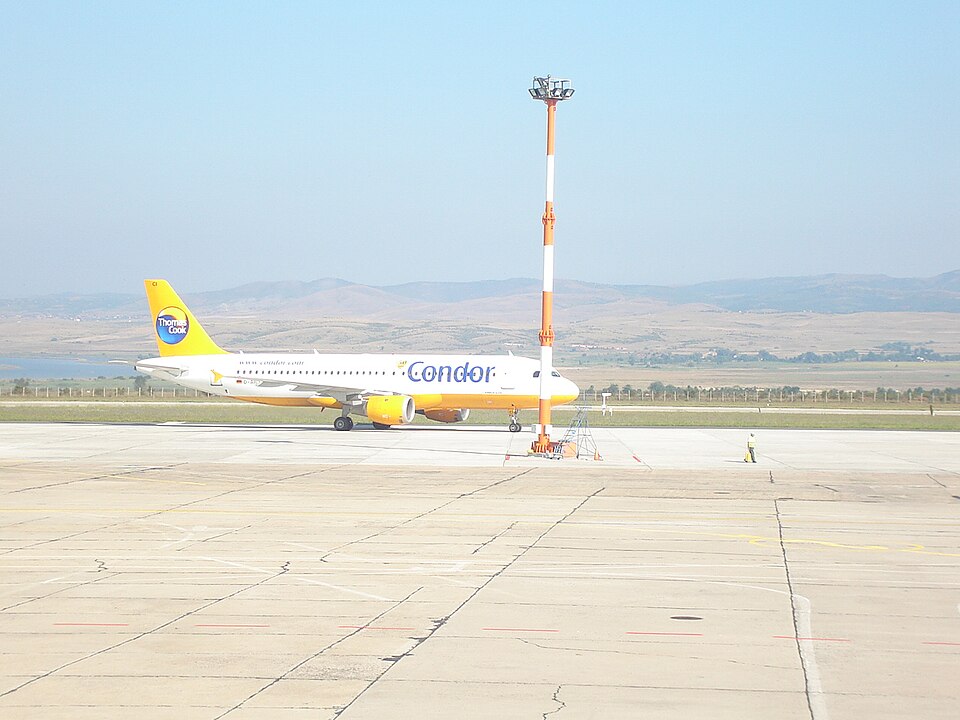
On 9 February 2003, an air traffic incident occurred north of Aosta involving two commercial aircraft. The Condor flight CFG 869, an Airbus 320 (registration D-AICI), was cruising at flight level 300 on a scheduled service from Palma de Majorca to Erfurt. Simultaneously, Alitalia flight AZA 116, an Airbus 319 (registration I-BIME), was operating a flight from Milan Malpensa to Amsterdam.
At approximately 13:43 UTC, air traffic controllers cleared the Alitalia crew to climb to flight level 290. However, the crew mistakenly set the aircraft to flight level 300. Shortly after, the controller warned the Alitalia pilot of traffic 1,000 feet above his authorized level and instructed him to delay any further climb for 15 nautical miles. Despite this warning, the Alitalia aircraft continued its climb through the authorized level.
As the aircraft approached a potential conflict, the radar controller—who was a trainee under supervision—initiated emergency maneuvers. The controller ordered the Alitalia flight to execute a 30-degree right turn and an immediate descent to flight level 280, while simultaneously instructing the Condor flight to climb to flight level 310. The aircraft eventually passed with a minimum lateral separation of 3.4 NM and a vertical separation of 400 ft.
The investigation
The investigation established that the primary cause of the incident was a pilot error during the altitude change. The crew of AZA 116 had incorrectly selected flight level 300 instead of the assigned flight level 290. This error occurred without being detected by the second crew member in the cockpit.
Investigators also noted that while the controller provided a warning regarding traffic, the information was not sufficient to prevent the Alitalia crew from continuing the unauthorized climb. The investigation highlighted that the Short Term Conflict Alert (STCA) system functioned correctly, triggering an alarm that allowed the controller to intervene. The controller' and trainee's rapid response prevented a more serious encounter, as evidenced by the fact that no TCAS Resolution Advisory (RA) was triggered for either aircraft.
Findings
- A crew member of AZA 116 erroneously set flight level 300 instead of the authorized flight level 290.
- The error was not identified or corrected by the second crew member on the Alitalia flight.
- The radar controller's proactive instructions to change headings and altitudes effectively managed the separation risk.
- The STCA alarm successfully alerted the controller to the loss of separation before a TCAS RA was required.