Introduction
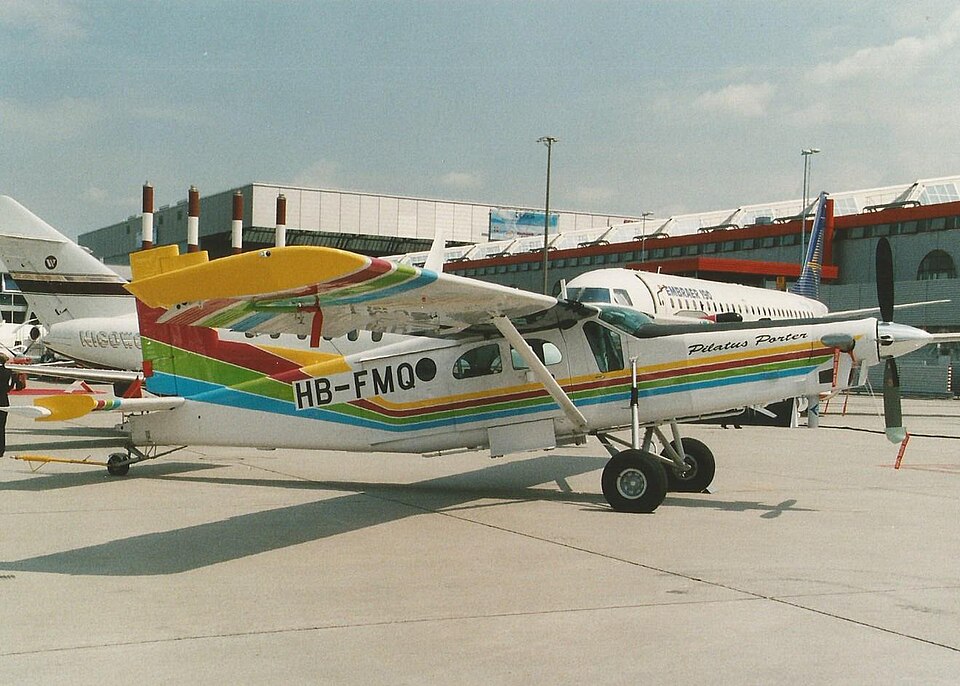
On 25 July 2005 at 10:28 local time, a Pilatus PC-6/B2-H4 (registration HB-FMQ) operated by Pilatus Flugzeugwerke sustained minor damage during a training landing at Buochs airfield (LSZC), approximately 12 km south-southeast of Lucerne, Switzerland. The two-person crew was uninjured.
Flight History
The flight was part of a type conversion training for a pilot with an air transport pilot licence. The pilot and flight instructor had completed five previous training flights on a PC-6 in May 2005. After a two-month break, they resumed training on 25 July 2005. The planned flight included touch-and-go landings at Buochs followed by a flight to Bern for avionics familiarization.
After a briefing and preflight inspection, the crew taxied from the Pilatus factory area to runway 25L at 10:15. During taxi, they performed checklist items, including brake checks from both seats. The pilot then took off for a circuit. The approach to runway 25L was flown with full flaps at 60 knots. The pilot flared and landed in a three-point attitude.
Aircraft Information
HB-FMQ was a Pilatus PC-6/B2-H4, a single-engine turboprop high-wing aircraft with a fixed tailwheel landing gear. The airframe, engine, and propeller each had 13:35 hours total time since manufacture. The engine was a Pratt & Whitney Canada PT6A-27, and the propeller was a Hartzell HC-D4N-3P four-blade constant-speed propeller. The aircraft was equipped with a hydraulic brake system actuated by pedals at both crew positions. The tailwheel could be locked in the centered position for takeoff and landing; according to Pilatus, the tailwheel lock is necessary for directional stability during rollout.
Weather and Conditions
At the time of the accident, wind was variable at 2–3 knots, visibility about 10 km, and there was haze. No hazards were identified.
Accident Sequence
After touchdown, the aircraft rolled straight for approximately 20 meters. The pilot then felt a slight drift to the left and attempted to correct with right rudder. The left veer continued. The pilot and instructor both applied the right brake, but did not experience the expected braking response. The aircraft continued turning left and departed the runway. Both brakes were then applied. The instructor commanded reverse thrust, but the pilot did not execute. The instructor then ordered the propeller to be feathered; the pilot set the propeller to feather before the propeller struck the airport boundary fence. The propeller and engine cowling were damaged; the fence was damaged. The crew shut down the engine and remained uninjured.
Cause
The investigation determined that the accident occurred because the aircraft veered left after landing and collided with a fence. The tailwheel lock and the brakes of the aircraft were defective.