Incident Overview
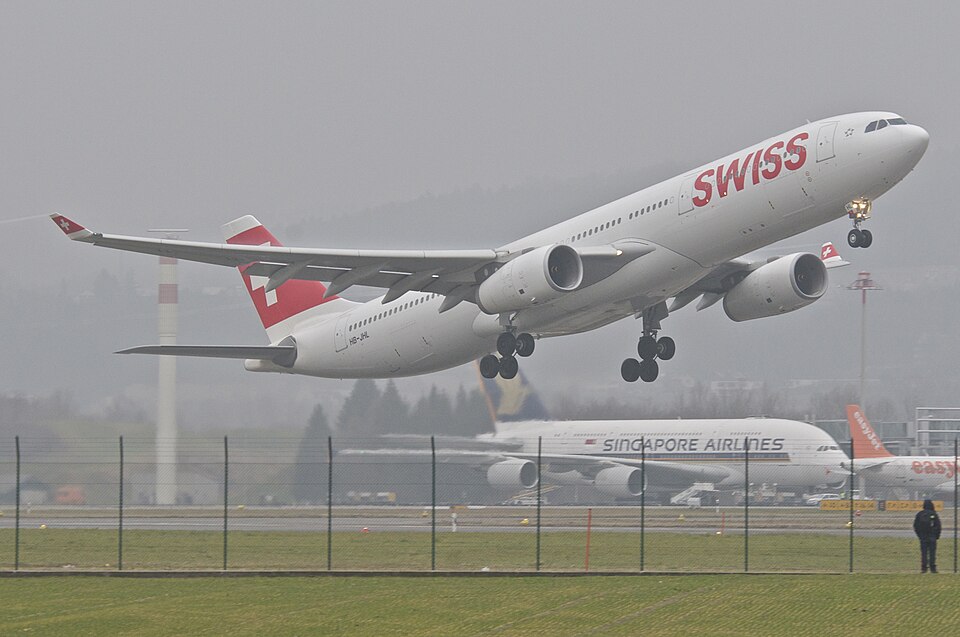
On 11 July 2023, at 17:05 UTC, a serious incident occurred involving an Airbus A330-343, registration HB-JHL, operated by Swiss International Air Lines Ltd. The aircraft was en route from Zurich Airport (LSZH) to Newark Liberty International Airport (KEWR) under instrument flight rules. During the cruise phase at flight level (FL) 340 over the English Channel, an odor developed in the cockpit and cabin.
Aircraft and Operator
The aircraft, an Airbus A330-343 (manufactured by Airbus S.A.S.), was owned and operated by Swiss International Air Lines Ltd., based in Basel, Switzerland. The incident occurred over the airspace of the United Kingdom.
Investigation
The Swiss Transportation Safety Investigation Board (STSB) received a report of the incident on the same day at 19:44 UTC. The United Kingdom's investigation authority delegated the investigation to the STSB, which opened the investigation on 28 September 2023. France, the United Kingdom, and the United States appointed accredited representatives to participate.
Findings
Investigators relied on radar recordings, crew statements, and information from the operator and aircraft manufacturer. The incident was classified as a serious incident due to the odor development. No injuries or damage were reported in the initial summary. The investigation focused on the use of protective breathing equipment (PBE) and training.
Safety Recommendations
Based on the investigation, the STSB issued safety recommendations regarding PBE (Collins Aerospace part number 119003-21), PBE certification and maintenance, and PBE training. The operator and the Federal Office of Civil Aviation also took measures following the incident.
Probable Cause
The investigation report did not state a specific probable cause; however, the incident highlighted issues related to odor events and PBE procedures.