What happened
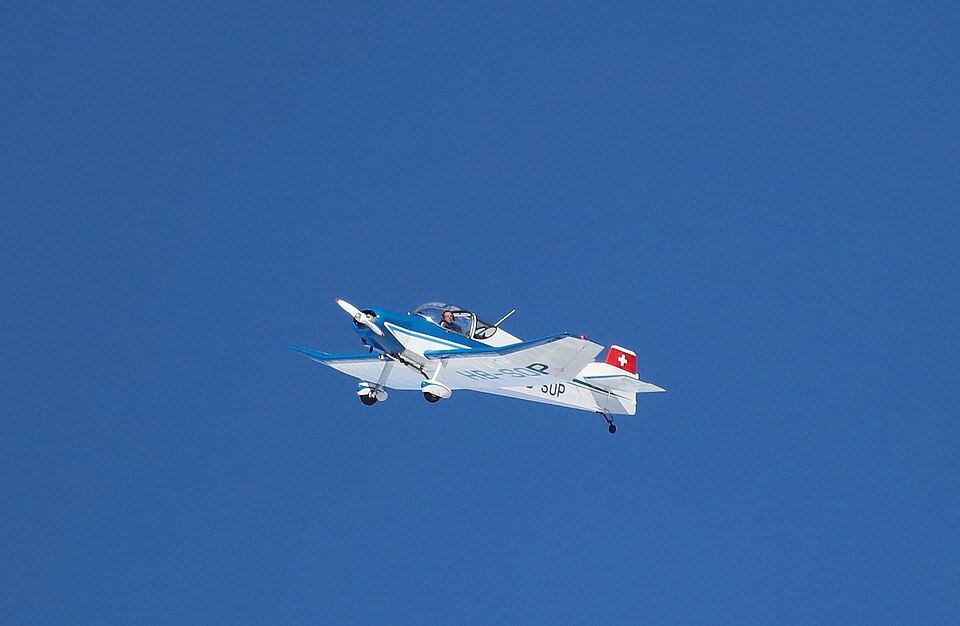
On May 18, 1963, a Jodel D-11, registration HB-SOP, was performing a standard training circuit at the Môtiers aerodrome. During the landing phase, the pilot executed an approach from the southwest and touched down in a tail-low attitude, with the tailwheel making contact before the main gear.
After rolling approximately 80 meters along the runway, the aircraft began to veer sharply to the left. The aircraft subsequently collided with the pilot's parked Porsche, which was located on a service path alongside the runway. The impact caused the left wing of the Jodel D-11 to break, and the aircraft continued its trajectory, striking another vehicle (a Fiat) and tearing away a marker before spinning into a nearby drainage ditch. There were no fatalities or injuries resulting from the event.
The investigation
The investigation focused on the mechanical state of the aircraft and the pilot's control inputs. The Jodel D-11 was found to be in good operational condition, having undergone recent maintenance including engine oil changes and filter cleaning. The braking system was inspected and found to be highly effective; the investigators noted that even light pressure on the pedals could lock the wheels.
A specific design characteristic of the aircraft's pedals was identified: the brake lever is positioned just below and slightly behind the rudder pedal. This configuration makes it easy for a pilot to inadvertently apply the brakes while attempting to use the rudder. The investigation also reviewed the pilot's training record, noting that while they had completed several solo flights, their recent flight frequency had been very low.
Findings
- The weather conditions were excellent, with high visibility and no significant wind.
- The aircraft was mechanically sound, and the braking system functioned as intended.
- The pilot's landing technique involved a tail-low touchdown.
- Inadvertent application of the brakes by the pilot during rudder corrections caused the leftward veer.
- The pilot's limited recent flight experience likely contributed to the inability to recover from the unintended braking.