Background
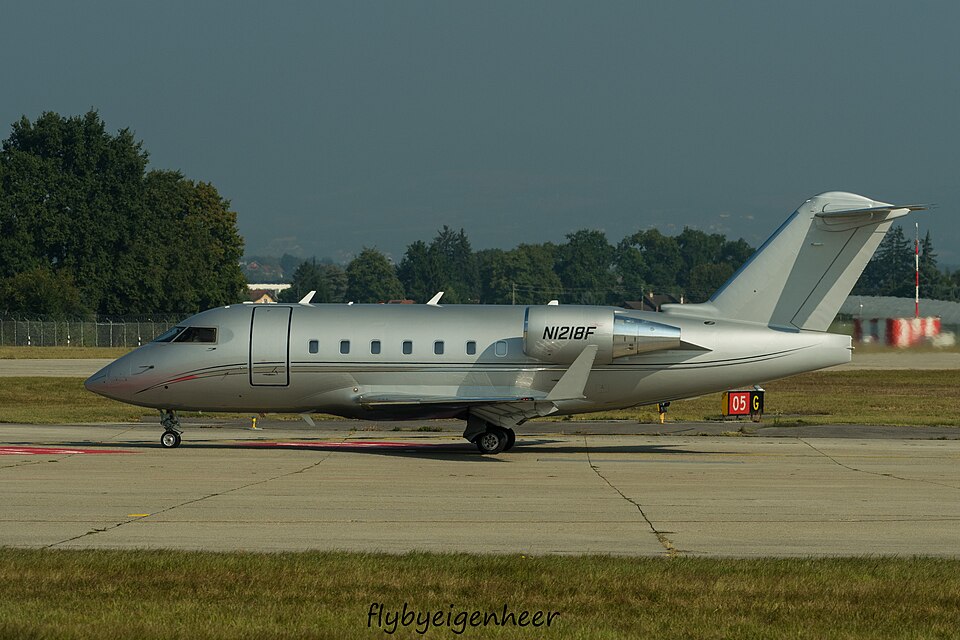
On the morning of 9 June 2016, a Bombardier CL-600 2B16 (CL604), registered as N1218F, operated a flight from Geneva Airport (LSGG) to Payerne military airfield (LSMP) with four persons on board. The commander, who held a temporary commercial pilot certificate for the CL-604, joined the aircraft at Payerne. The flight was intended to include several visual flight rules (VFR) traffic patterns with alternating cockpit crews. The commander and two other pilots required supervised landings to obtain a type rating endorsement for the CL-604 under the supervision of a type rating instructor (TRI).
Incident Narrative
At 08:49 UTC, N1218F departed runway 23 for four traffic patterns, each ending with a full stop landing. After the first three landings, the aircraft followed instructions from the Payerne air traffic controller to taxi via various taxiways and return to the runway. During the fourth and final landing at 09:36 UTC, the aircraft vacated runway 23 via taxiway Romeo as instructed. The controller then directed the crew to taxi via Sierra to intersection Quebec and hold short of runway 23. The controller’s attention turned to arriving military aircraft.
While taxiing northeast on taxiway Sierra, the commander attempted to identify taxiway Quebec. The first two intersections leading to runway 23 were marked only with "no entry" signs and lacked taxiway designators. The commander therefore believed they had not yet reached Quebec and continued taxiing. In reality, the first intersection was Quebec and the second was Papa. The instructor on the right seat was occupied with cockpit tasks.
Shortly before reaching the Sierra-Charlie junction leading to the Aéropôle apron, the right wing tip of the aircraft struck a construction fence, unbeknownst to the crew. Workers nearby signaled the crew, and the controller simultaneously informed them that they had passed the hold point. The commander stopped the aircraft on taxiway Sierra and shut down both engines. The aircraft was later towed back to the apron.
Investigation Findings
The investigation revealed that taxiway Sierra was partially closed between taxiways Papa and Mike due to construction, as indicated in a Notice to Airmen (NOTAM) known to the crew. However, no physical markings or warning signs were present on the taxiway or barriers to indicate the closure. Additionally, the taxiway designators for Quebec and Papa were missing, and the "no entry" signs at those intersections contributed to the crew’s confusion. The aircraft sustained minor damage to the right wing leading edge and navigation lights; no injuries occurred among the two crew members and three passengers.
Safety Actions
Following the incident, the "no entry" signs on the southern taxiways leading to the runway were removed. As part of a planned renovation of the southern taxiways, signs designating taxiways Quebec and Papa are to be installed.