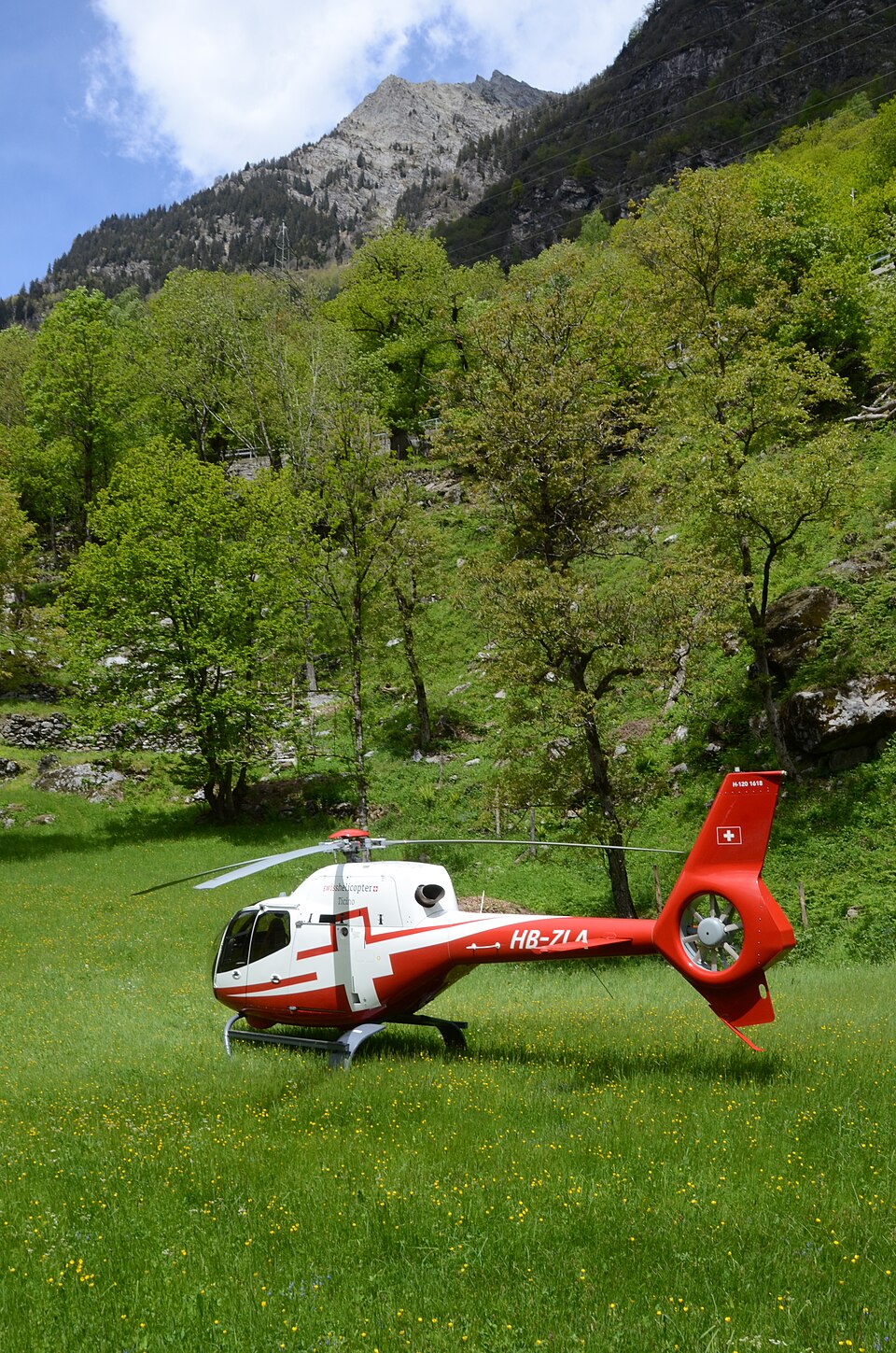
Incident Overview
On August 29, 2017, at approximately 13:21 local time, an Airbus Helicopters EC 120 B, registered as HB-ZLA, was involved in an accident during landing near Mendrisio, Switzerland. The helicopter, operated by Swiss Helicopter AG, was on a private flight under visual flight rules (VFR) from Genestrerio to Locarno Airport. The pilot, holding a private pilot license for helicopters (PPL(H)), and two passengers were on board. According to the Swiss Transportation Safety Investigation Board (STSB), the helicopter sustained severe damage, specifically to the fenestron (enclosed tail rotor) covering. No injuries were reported among the occupants.
Flight and Unusual Noise
The flight originated from a meadow near Genestrerio, where the pilot and passengers had stopped for lunch. After refueling and boarding, the pilot started the engine and took off around 13:15. The pilot initially climbed vertically but did not perform a hover check before transitioning to forward flight. Following a railway line at about 100 meters above ground, the pilot engaged the air conditioning and initiated a left banked turn approximately 45 seconds into the flight. At that moment, a loud noise was heard. The pilot described the sound as coming from behind his head near the main rotor, non-metallic, resembling a strap striking the helicopter. He removed his headset to better hear the noise and decided to land immediately on a meadow at San Martino. The passenger in the front left seat recorded the flight from engine start until the decision to land; the noise is clearly audible in the video.
During the approach, the pilot reduced engine power, and the noise persisted. The helicopter's tail collided with the ground during landing. After touchdown on the skids with the rotor still turning, the passengers exited on the left side on the pilot's instruction. The pilot then noted a torque exceedance warning on the Vehicle and Engine Multifunction Display (VEMD), shut down the engine, and secured the helicopter.
Investigation Findings
The helicopter's GPS-based navigation unit was off, so no flight data were recorded. A detailed visual inspection of the helicopter and its rotating components revealed no anomalies. The video's audio track was analyzed, but the noise could not be attributed to any rotating component. The air conditioning compressor was initially considered as a possible source, but subsequent checks found no irregularities. During maintenance after the accident, technicians discovered that the outer left rear passenger seat's lap belt had been tightened such that the strap end was long enough to hang outside the cabin. The sliding door could be closed normally with the strap hanging out, with the strap ending up behind the door's guide runner.
In a simulation, the hanging strap was manually struck against the underfloor panel, producing a sound very similar to that recorded in the video. The pilot confirmed the similarity. The underfloor panels acted as a resonance chamber, amplifying the noise.
Analysis and Conclusions
The STSB concluded that the noise was caused by the hanging seatbelt strap. It is inferred that when the passenger exited the helicopter at Genestrerio, she may have slid across the outer seat, pulling the strap out. The pilot did not notice it when closing the sliding door. Since the passenger re-entered from the right side after lunch, the sliding door was not opened again, and the strap remained hanging. The left banked turn likely changed the airflow, causing the strap to strike the underfloor more forcefully. The pilot did not perform a systematic problem analysis and elected to land immediately. The landing was carried out hastily, resulting in the tail strike.
No additional safety recommendations or causal factors beyond the stated facts were provided in the report.