Factual Information
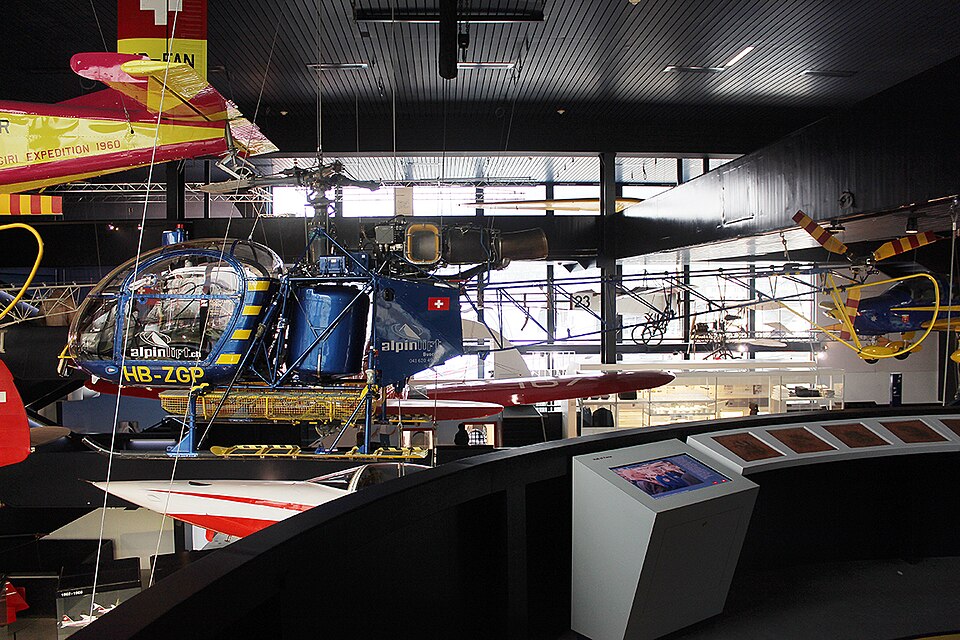
- Aircraft: SA 315 B "Lama", registration HB-ZGP
- Operator and Owner: Alpinlift Helikopter AG, Buochs, Switzerland
- Location: Mountain station of the Bannalpbahn, municipality of Wolfenschiessen, Canton Nidwalden, Switzerland (coordinates: 676 025 / 191 670)
- Date and Time: 21 September 2015, approximately 08:10 local time (UTC+2)
- Flight Phase: Landing approach
- Nature of Flight: Aerial work under visual flight rules
- Occupants: Pilot (Swiss, born 1963, commercial pilot license, 6377 total hours, 3670 on type) and one flight helper; two additional flight helpers were on the ground
- Injuries: None
- Aircraft Damage: Substantial
- Third-Party Damage: A cable of a transport cable car was dislodged from its guide
Flight History
On the morning of 21 September 2015, the crew was assigned to transport gravel from a landing site above Oberrickenbach to an alpine hut near Fulenwasser. The pilot received a chart excerpt showing the pickup and drop-off locations, including air navigation obstacles from the current database. A container previously deposited at the Bannalpbahn mountain station was to be retrieved in passing. The pilot was familiar with the area and had landed there before.
The helicopter departed Buochs shortly before 08:00, arriving at the alpine hut near Fulenwasser about five minutes later. There, the pilot partially touched down with the skids in a hover, as full landing was not possible. The flight helper and one of the ground helpers exited the helicopter to attach a 20 m transport line to the cargo hook. The flight helper then reboarded, while the ground helper remained at the site.
At approximately 08:05, the pilot departed from Fulenwasser toward the Bannalpbahn mountain station to pick up the container as an external load. During the approach, the pilot checked the digital map display in the cockpit and noticed that two cables were marked leading away from the mountain station, in addition to the Bannalpbahn cable. In flight, the pilot observed two cables, interpreting the ski lift cable (from the station to Nätschboden) as one of the marked cables.
The pilot lowered the transport line hook next to the container and intended to land nearby so the flight helper could attach the container. A nearby meadow seemed ideal for landing, but an electric fence would have required the line to cross it, risking damage. Therefore, the pilot decided to land immediately next to the container. After releasing the hook, he hovered slightly backward and to the right, then began a slow vertical descent, using the ski lift base station to his right as a reference.
The flight helper, seated left rear, had opened the left door and was checking the tail rotor clearance. During the descent, she suddenly saw a cable near the tail rotor and warned the pilot over the intercom. Almost simultaneously, the pilot felt an anomaly at the tail and vibrations. He estimated they were a few meters above ground and steered the helicopter slightly forward and toward the ground to land with forward motion.
The tail rotor struck the cable of the transport cable car that runs from the mountain station to the alpine huts at Räckholteren. The impact nearly severed the tail rotor blades. The cable then rubbed along the tail rotor guard and became lodged at the junction of the guard and the tail boom truss structure.
Meteorological Conditions
The weather was determined by a flat high-pressure system over central Europe. At the accident site and time, conditions were dry and autumn-like, with good visibility, light winds from the west-northwest, and a temperature of 6 °C. The sky was cloudless, visibility was 10 km or more, and the QNH was 1019 hPa. The mountain station was in terrain shadow at 08:10, with the sun at an azimuth of 99° and elevation of 9°. The pilot reported very good weather, nearly calm wind, but noted that lighting was not optimal as the area was still in shadow.
Causes and Contributing Factors
The Swiss Transportation Safety Investigation Board (STSB) determined that the accident resulted from the helicopter’s collision, during the landing phase, with a cable that was depicted on the aeronautical obstacle chart, due to an incorrect interpretation of the obstacle position indications. The following factors played a role in the accident: inappropriate work organization and difficult visual recognition of the cable.