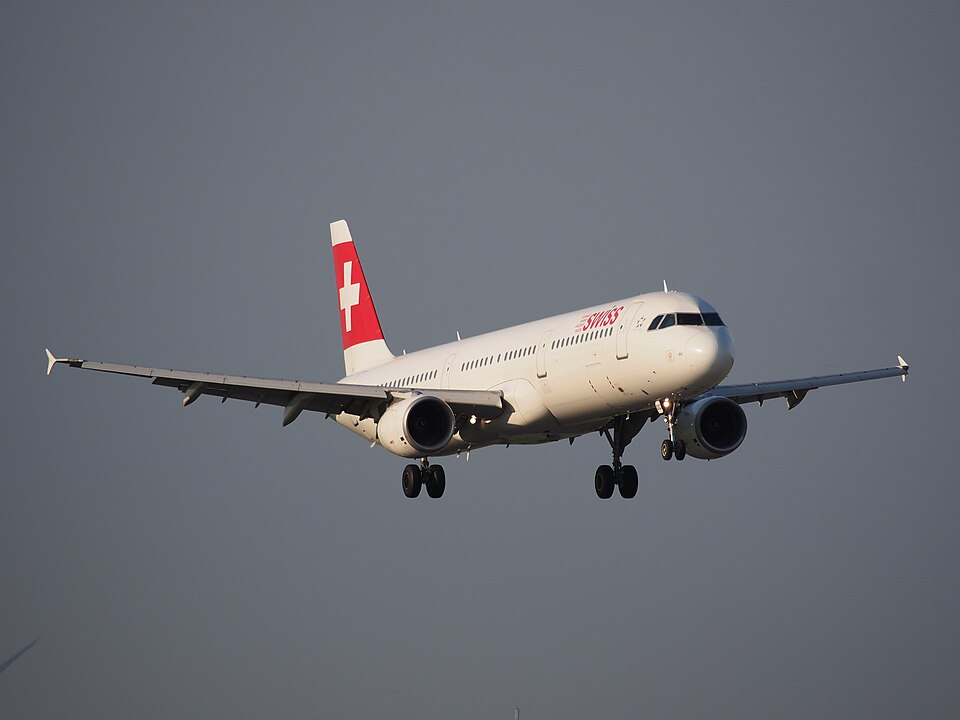
Tailstrike Occurs During Go-Around in Airbus A321 at Geneva

Casualties unknown • Genève Aéroport (LSGG), GE, CH

An Airbus A321 experienced a tailstrike at Geneva Airport after the pilot executed an abrupt pitch-up maneuver during a go-around following a perceived bounced landing.

What happened

On March 9, 2014, an Airbus A321-111, registered as HB-IOC, was operating a scheduled flight from Zurich to Geneva. During the approach to runway 05, the flying pilot opted to fly the aircraft without the use of autopilot or autothrust.

Upon touchdown, the pilot experienced an unusually heavy landing and perceived that the aircraft had briefly bounced. Believing a bounce had occurred, the pilot initiated a go-around. During this maneuver, the pilot applied a sudden and forceful aft movement to the sidestick, pulling it to the full rear stop. This aggressive pitch-up caused the rear fuselage of the aircraft to strike the runway, resulting in structural damage.

Following the incident, the crew performed a second approach using radar vectors, which concluded without further issue. The tailstrike was observed by ground personnel, though the crew was not immediately notified of the specific observation by air traffic control.

The investigation

The SUST investigation examined the flight data, cockpit voice recordings, and technical aspects of the aircraft's flight control systems. The inquiry focused on the crew's actions during the transition from landing to go-around and the communication between air traffic services and the flight crew. Investigators also reviewed the aircraft's maintenance status, noting that specific software modifications designed to mitigate tailstrike risks had not been implemented on this particular airframe.

Findings

  • The primary cause of the tailstrike was the abrupt application of aft sidestick input to the full stop by the pilot in command during the go-around.
  • The pilot's limited experience led to the misinterpretation of the heavy touchdown as a bounced landing.
  • A lack of tactile feedback between the two sidesticks prevented the monitoring pilot from identifying the sudden, aggressive movement of the flying pilot's controls in a timely manner.
  • The flight crew failed to recognize that the aircraft had reached an excessive longitudinal pitch angle.
  • Air traffic control failed to directly inform the crew that a tailstrike had been visually observed, instead asking the crew if they believed a strike had occurred, which led the crew to deny the event.

Safety action

Following the investigation, the operator implemented changes to simulator training. New exercises were integrated into both recurrent training and cross-crew qualification courses, specifically focusing on "balked landings" (go-arounds) to better prepare crews for the complexities of managing aircraft pitch during such maneuvers.

Probable cause

The tailstrike was caused by the pilot's sudden and extreme rearward sidestick input during a go-around, driven by a misperception of a bounced landing and compounded by a lack of tactile synchronization between the sidesticks.

Frequently asked questions

What happened in the 2014-03-09 AIRBUS INDUSTRIE A321-111 accident near Genève Aéroport (LSGG), GE, CH?

An Airbus A321 experienced a tailstrike at Geneva Airport after the pilot executed an abrupt pitch-up maneuver during a go-around following a perceived bounced landing.

What aircraft was involved and where did it happen?

The accident on 2014-03-09 involved a AIRBUS INDUSTRIE A321-111, registration HB-IOC, at Genève Aéroport (LSGG), GE, CH.

What was the probable cause of the accident?

The tailstrike was caused by the pilot's sudden and extreme rearward sidestick input during a go-around, driven by a misperception of a bounced landing and compounded by a lack of tactile synchronization between the sidesticks.

Investigation report by the Swiss Transportation Safety Investigation Board (STSB / SUST). Original record: https://www.sust.admin.ch/inhalte/AV-berichte/2293_D1.pdf. This page is a structured re-presentation; facts and quotes are in the Swiss Transportation Safety Investigation Board (STSB), Switzerland.

Loading the flight search…