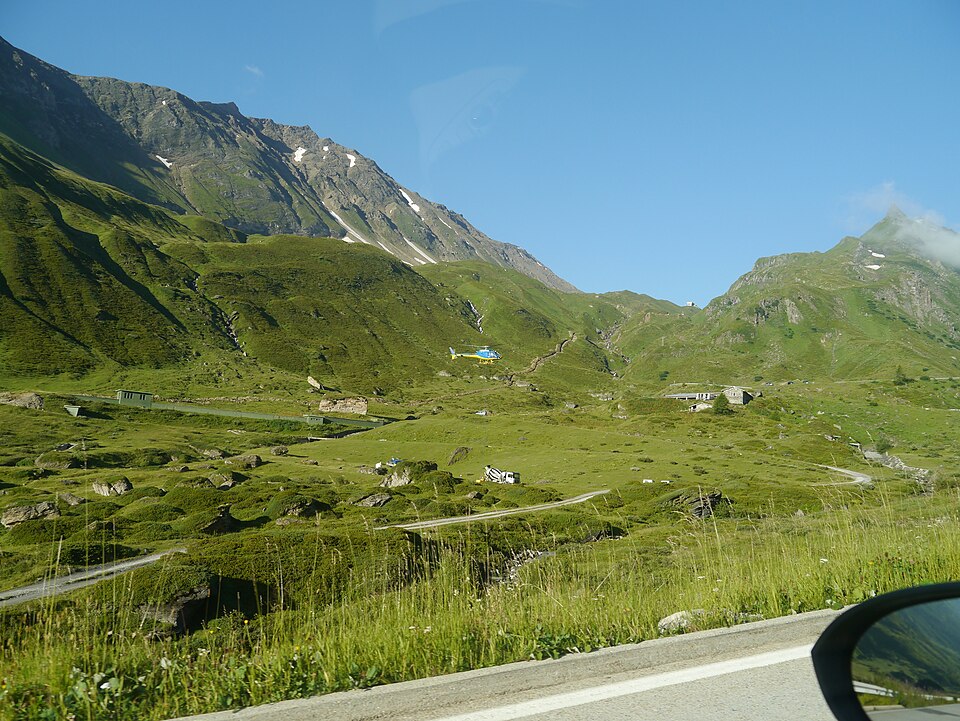
On May 11, 2012, an EUROCOPTER AS 350 B3 (registration HB-ZCM) was involved in an aviation accident near Camorino, TI, CH. Investigators recorded the probable cause as: The accident was caused by a ground crew member being seriously injured by a metal shackle after the release of the sling. Contributing factors included an inappropriate release of the sling and a lack of coordination and communication. This summary draws on records from the Swiss Transportation Safety Investigation Board (STSB / SUST).
A Swiss accident investigation report details an incident on May 11, 2012, in Camorino, where a ground crew member was seriously injured by a falling metal shackle during a helicopter cargo operation.
Incident Overview and Aircraft Details On May 11, 2012, at approximately 14:00 local time, a Eurocopter AS 350 B3 “Ecureuil” helicopter, registered as HB-ZCM, was involved in an accident at a sports field in the municipality of Camorino, Ticino, Switzerland. The aircraft was operated by Heli Rezia SA and was engaged in a commercial visual flight rules (VFR) operation. The helicopter was equipped with a cargo hook and a floor hatch, and its weight and center of gravity were within the limits specified in the flight manual. The pilot, a Swiss national born in 1966, held a commercial pilot license for helicopters and had a total of 13,067 flight hours, including 3,510 hours on the accident aircraft type. The aircraft had 9,062:09 operating hours at the time of the incident. The pilot reported no technical defects with the helicopter prior to the event. The operation involved the transport of a swimming pool with a total load of approximately 800 kg. The pilot was supported by three ground crew members, two at the pick-up site and one at the drop-off site. All ground crew members wore protective clothing and helmets with integrated radio equipment, as recommended by the Swiss Accident Insurance Fund (SUVA). Communication between the pilot and the ground crew was conducted on the working frequency “Heli 2.” The pilot selected an 80-meter transport sling, composed of a 20-meter and a 60-meter rope, connected by a 1.1 kg metal shackle. The initial transport flight to the drop-off site near Vigana, located 500 meters southeast and 110 meters higher than the pick-up site, was completed as planned at approximately 13:45. ## Sequence of Events and Contributing Factors After the initial transport, the helicopter returned to the sports field in Camorino to deploy the transport sling. During the approach, the pilot descended in a hover until the transport hook touched the ground, allowing ground crew member 1 to grasp and deploy the sling. The pilot then continued to deploy the sling while flying backward, a maneuver intended to reduce the risk of tail rotor contact with the sling. When the helicopter was hovering approximately 25 meters above the ground, with the metal shackle still about 5 meters above the ground, the pilot released the transport sling without instruction from the ground crew. The falling metal shackle struck ground crew member 2 on the forehead, causing serious injuries. The ground crew member was occupied with organizing flight operation materials at the time. Immediately after releasing the sling, the pilot realized that ground crew member 2 was directly beneath the helicopter and issued a radio warning, “ocio” (watch out), which was received by ground crew member 1. Ground crew member 2 did not recall hearing the warning. No radio communication occurred between the pilot and the ground crew during the sling deployment until this warning. The injured ground crew member was immediately attended to by ground crew member 1 and later transported to the Regional Hospital of Bellinzona by ambulance. The Swiss Accident Investigation Board (SUST) was notified at approximately 17:00 and began the on-site investigation in cooperation with the Ticino Cantonal Police. ## Meteorological and Operational Context The weather conditions at the time of the accident were favorable, with 1/8 cumulus clouds at 8,200 feet AMSL and 3/8 cirrus clouds at 26,200 feet AMSL. Visibility was 30 km, wind was from 260 degrees at 3-7 knots with maximum gusts of 13 knots, and the temperature was 28 °C with a dew point of 15 °C. The QNH was 1024 hPa. The pilot reported good weather conditions, a clear sky, and wind speeds that had no impact on helicopter control. The sun was at an azimuth of 213° and an elevation of 58°, with daylight conditions. The pilot had no recorded external cargo sling (ECS) training in his flight log, although he had been authorized by the operating company for operations with transport slings longer than 30 meters. The pilot stated it was his habit to release transport slings longer than 40 meters from a height of 20 to 25 meters over soft ground. Ground crew member 1 had been employed by the company since 2010 and trained in-house, while ground crew member 2 had been employed part-time and trained in 2008. The company's flight operation manual designated the managing director as the Safety Officer. The Swiss Federal Office of Civil Aviation (BAZL) had published a “Ground Crew Syllabus” as a training basis for ground crew members. ## Probable Cause and Contributing Factors The accident was caused by a ground crew member being seriously injured by a metal shackle after the release of the sling. Contributing factors included an inappropriate release of the sling and a lack of coordination and communication between the pilot and the ground crew. The investigation was conducted solely for the purpose of accident prevention, in accordance with Annex 13 to the Chicago Convention and Swiss aviation law, and did not address legal liability or fault.