Summary
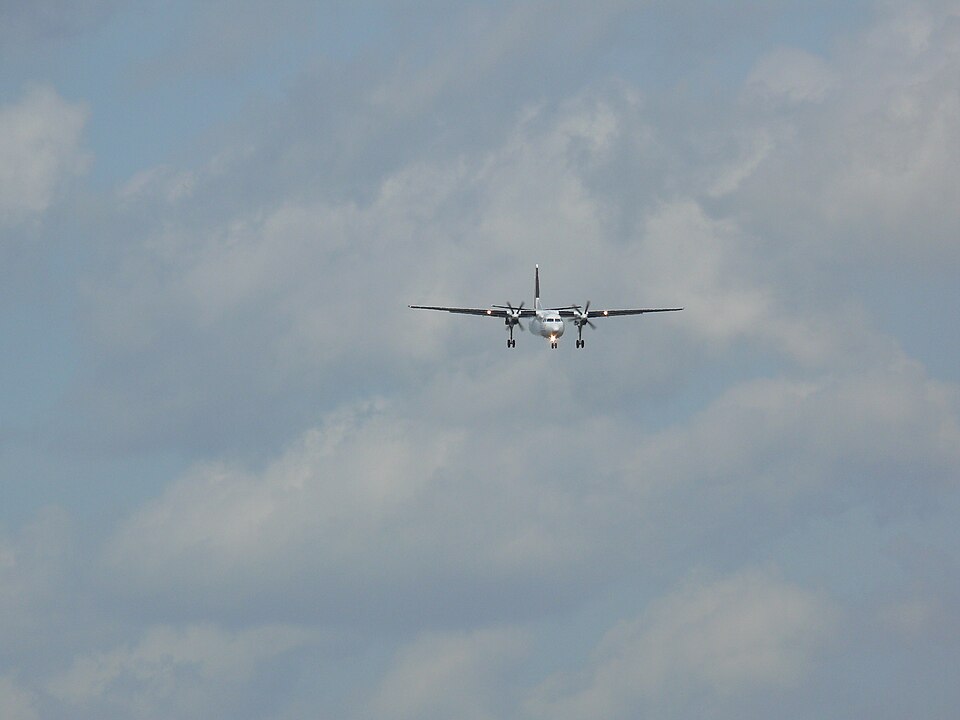
On 21 April 2016, a serious incident occurred involving a Fokker 50, registration OO-VLF, operated by Vlaamse Luchttransportmaatschappij N.V. (VLM) under flight designator VLM 22TX, and a Piper PA-28RT-201T, registered as OK-ELL. The near collision happened approximately 10 nautical miles northeast of Friedrichshafen Airport (EDNY) in Germany.
Investigation
The Swiss Transportation Safety Investigation Board (STSB) conducted the investigation in accordance with Annex 13 to the Chicago Convention. The investigation's sole purpose was accident prevention, not to determine fault or liability. The report, number 2325, was published in German, with the German version being authoritative. All times were in Coordinated Universal Time (UTC), with local time being UTC+2 hours (Central European Summer Time).
Findings
The flight crew of VLM 22TX and the pilot of OK-ELL were involved in a situation that led to a serious incident classified as a near collision. The airspace structure and air traffic control services were relevant to the incident. The report detailed the meteorological conditions, communication, navigation aids, and airport information for Friedrichshafen, including the AERO Friedrichshafen aviation exhibition which was ongoing at the time.
Causes
The probable cause of the serious incident was not stated in the available source material. The investigation may have released safety recommendations and safety notices, but these are not included in the excerpt.