Aircraft Information
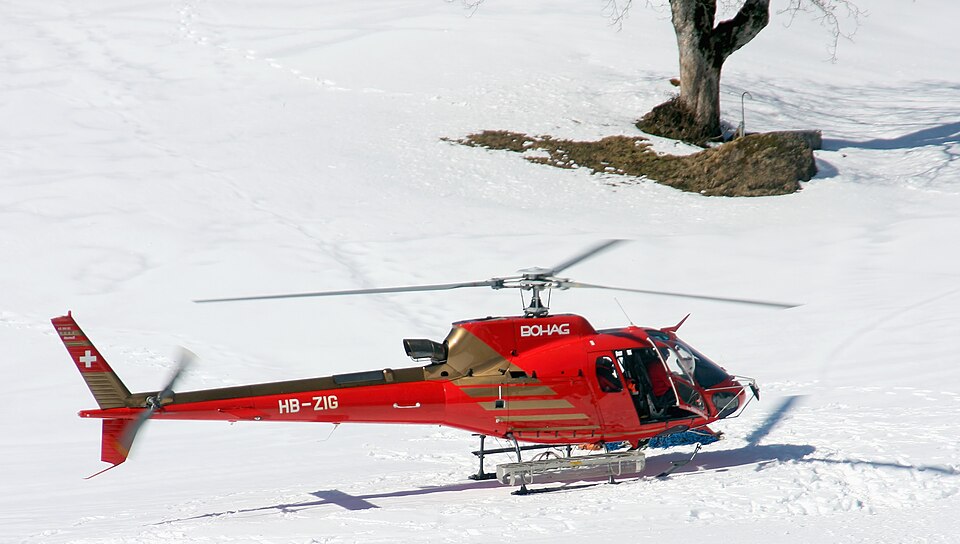
The accident aircraft was a Eurocopter AS 350 B3, registration HB-ZIG, operated by Swiss Helicopter AG. It was a single-engine helicopter with a three-blade main rotor (diameter 10.69 m) and a two-blade tail rotor. The landing gear had a track of 2.17 m and the main rotor head height was 3.14 m. The helicopter was equipped with plastic snow pads on the rear of the skids.
Flight History
The helicopter was based at Schattenhalb (LSXC). On 11 February 2015, it was tasked with transporting two workers from Kraftwerke Oberhasli AG (KWO) from Handeck 2 to the Grubenbachfassung facility. The crew consisted of a pilot and a flight assistant, both flying to Grubenbachfassung for the first time. After departing Schattenhalb at approximately 08:00, they picked up the workers at Handeck 2 and departed at about 08:05 for the 2-minute flight to Grubenbachfassung.
Accident Sequence
During the approach, the workers mentioned that on previous flights they had been dropped off on the roof. The pilot observed potential landing spots on the ground downhill from the building but decided to land on the roof. The roof had two platforms (larger lower and smaller upper) about 50 cm apart. As the helicopter neared the larger platform, the pilot noticed a snowdrift at the eastern corner that seemed unstable, so he opted for the smaller upper platform.
While hovering over the upper platform, the pilot saw rising snow-covered terrain with bushes and shrubs ahead. The platform bordered rock on the right. The flight assistant opened the left sliding door for better visibility and guided the pilot. As the right skid touched down, the flight assistant indicated the left side was not yet clear. Unable to descend further due to obstacles, the pilot decided to abort the landing and pulled up on the collective. A loud bang occurred, followed by strong vibrations as the rotor struck the rock on the right. The helicopter then rotated clockwise, tipped onto its right side, and came to rest on the step between platforms and the rising terrain. All four occupants remained uninjured and were evacuated. No fire broke out. The rescue helicopter later evacuated them to a hospital for precautionary checks.
Meteorological Conditions
At the time of the accident, weather in the Grimsel area was cloudless with light winds (3–5 kt downslope). Visibility was 70 km. Temperature was 1 °C, dew point −13 °C. QNH was 1026 hPa. No hazards were reported.
Damage
The helicopter suffered heavy damage. Minor soil contamination occurred from leaked operating fluids.
Causes
The investigation determined that the accident was caused by contact of the main rotor with an obstacle due to the choice of a landing site that was too small. Contributing factors were: both crew members used this site for the first time; lack of relevant information concerning the landing site; information from workers who had previously been dropped off on the same roof.