Background
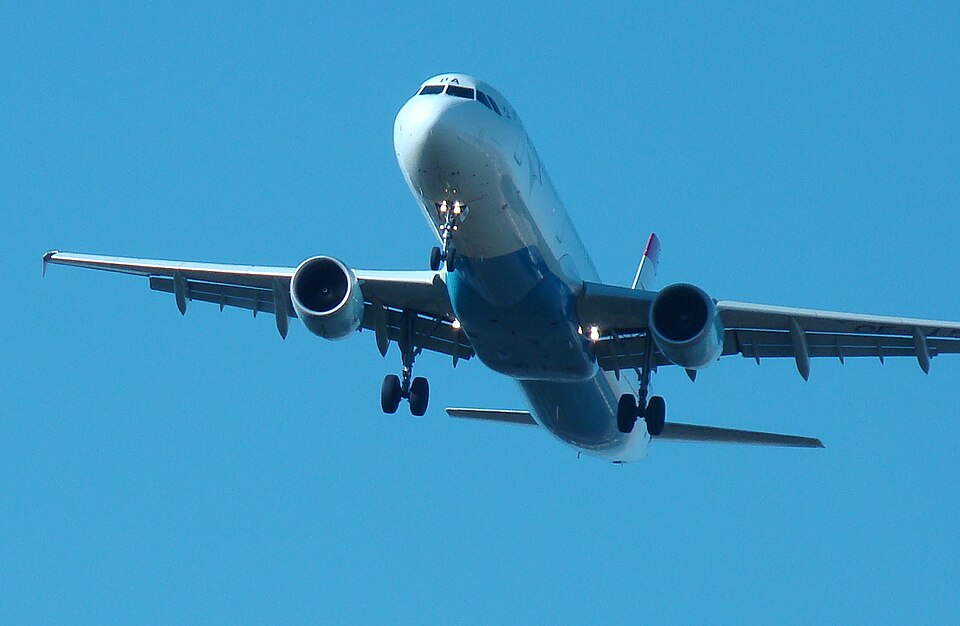
On 10 May 2007, a serious incident (AIRPROX) occurred between two commercial aircraft near Zurich, Switzerland. The aircraft involved were an Airbus A340-300, registration CC-CQC, operated by LAN Airlines S.A. as flight LAN704 from Madrid-Barajas to Frankfurt-Main, and an Airbus A321-100, registration OE-LBA, operated by Austrian Airlines AG as flight AUA415W from Vienna-Schwechat to Paris Charles-de-Gaulle. Both flights were under IFR. The incident took place at approximately 15:06 UTC, about 9 nautical miles east of the DVOR TRA navigation aid.
Sequence of Events
At 14:53 UTC, LAN704 contacted Swiss Radar Upper Area Control Centre East (UAC-E) Sector Upper M4 on frequency 133.405 MHz. The radar executive (RE-M4), a trainee under the supervision of a coach, cleared the flight to FL380 via waypoints DITON-KUDES-LADOL-NELLI. The coach did not have a separate radar console and monitored the situation via the trainee's display.
Meanwhile, AUA415W was in contact with Sector Upper M3 on 134.605 MHz, cruising at FL340 eastbound toward Trasadingen VOR.
Prior to the incident, the RE-M4 issued a descent clearance to FL330 to an aircraft with call sign SPAR 91. This instruction was simultaneously acknowledged and executed by another aircraft, AFR 1591. The overlapping transmissions made the replies unintelligible, so the RE-M4 repeated the clearance to SPAR 91. Consequently, AFR 1591 descended unnoticed from Sector M4 to FL340 into Sector M3 airspace (which extended from FL326 to FL355). The coach then took over traffic management, judging the trainee was overwhelmed and the situation too complex.
At 15:02:43 UTC, the RE-M4 instructed LAN704 to turn left direct to waypoint NELLI and descend to FL360, which was correctly acknowledged. At 15:04:08 UTC, LAN704 was further instructed to continue descent to FL320, confirmed by the first officer. Meanwhile, the radar planner of Sector M4 (RP-M4), who had not heard the descent clearance, coordinated with his Sector M3 counterpart (RP-M3) to allow LAN704 down to FL350, aware of AUA415W at FL340 via a quicklook down function. The RP-M4 then informed his RE that the aircraft could descend to FL350, receiving a brief acknowledgment.
At 15:04:33 UTC, the RE-M4 instructed LAN704 to contact Rhein UAC. After twice confirming the cleared altitude of FL320, the crew changed frequency at FL361. At that time, AUA415W was at FL340 about 8.5 NM from the crossing point. The minimum separation was breached 75 seconds later.
The RP-M4 noticed that Sector M3 had not yet accepted the flight plan data for LAN704 and inquired about its cleared altitude. The RE-M4 replied FL320, but the RP-M4 corrected that only FL350 had been coordinated. The RE-M4 then attempted twice at 15:05:48 UTC to recall LAN704 on the previous frequency to stop the descent, but the aircraft had already switched to Rhein UAC. Coordination between RP-M3 and Rhein UAC could not prevent the incident.
At 15:06:16 UTC, a short-term conflict alert (STCA) was triggered after the aircraft had passed. The horizontal distance was 1.1 NM and vertical distance 900 ft. Both crews reported that their Traffic Alert and Collision Avoidance Systems (TCAS) did not generate any traffic advisory or resolution advisory. LAN704, in visual meteorological conditions (VMC), identified the other aircraft as an Austrian Airlines jet.
Meteorological Conditions
At the incident time, conditions at FL340 were: no clouds, visibility over 30 km, wind from approximately 270° at 60 knots, temperature -52°C, dew point -60°C. No hazards were identified.
Sector Capacity and Traffic
The maximum capacity of Sector M4 was 38 movements per hour during military hours and 41 otherwise. On this day, capacity was reduced by 10% due to the introduction of a new flight plan processing system. Recordings showed traffic between 35 and 37 movements per hour from 14:20 to 16:00 UTC.
Analysis
The analysis noted high traffic complexity and workload, which was too demanding for the trainee in early on-the-job training. The coach intervened after the unauthorized descent of AFR 1591, but the analysis suggested earlier intervention would have been warranted. The unclear radio transmissions and subsequent coordination errors contributed to the loss of separation.