Incident Overview
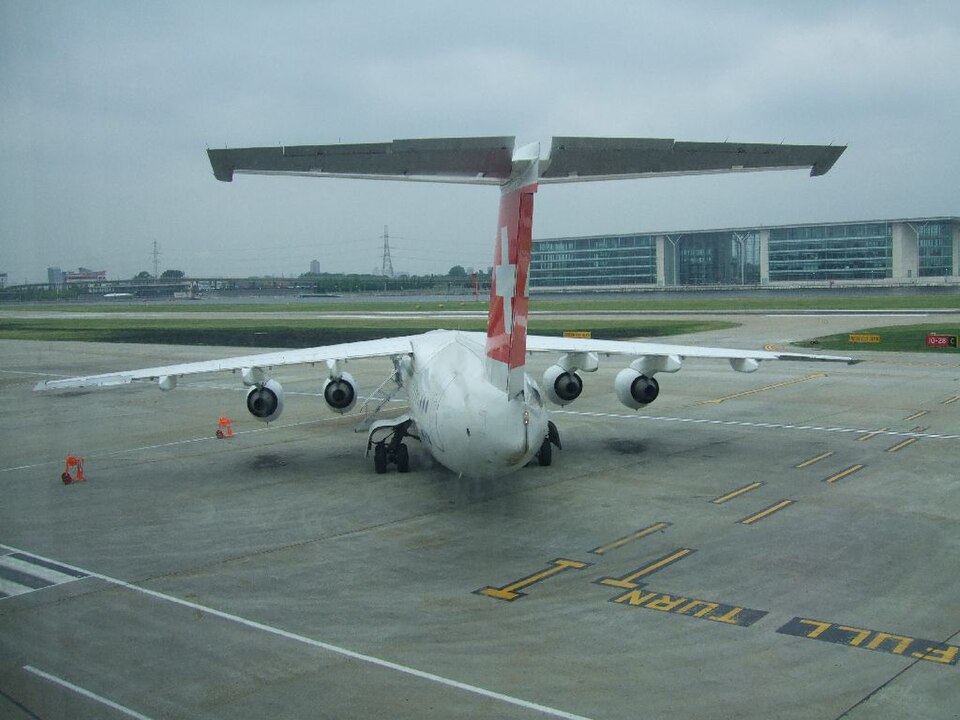
On October 24, 2016, an Avro 146-RJ100, registration HB-IYR, operated by Swiss Global Air Lines AG, was on a scheduled flight from Birmingham (EGBB) to Zurich (LSZH). The aircraft, owned by Swiss International Air Lines Ltd., carried two pilots, two cabin crew, and 66 passengers. The flight departed Birmingham at 17:48 UTC after a pushback with the auxiliary power unit (APU) running.
Sequence of Events
During taxi in Birmingham, the cabin chief entered the cockpit to confirm cabin readiness for takeoff and noted a strong oil smell together with the flight crew. The crew tested switching the bleed air source from APU to engine 1 (ENG1), and the smell disappeared. They then shut down the APU and took off without cabin ventilation. At 1500 ft above ground, they re-engaged engine bleed air and both air conditioning packs. As expected, no smell occurred, and the climb and cruise continued normally.
During the descent into Zurich, the anti-ice system was switched on. At approximately FL80, the crew turned it off. About one minute later, a strong oil smell returned in the cockpit, prompting the crew to don their oxygen masks. At 19:29:06 UTC, they issued a pan-pan call, informing air traffic control of oxygen mask usage and requesting landing priority. The approach to runway 28 under radar guidance proceeded normally; no further adjustments were made to the pneumatic system. No abnormal smell was noticed in the cabin. The aircraft landed safely at 19:36 UTC.
Post-Flight Actions
After reaching the parking position and opening the aircraft door, firefighters took an air sample in the cockpit, which analyzed normal. Blood oxygen and carbon dioxide levels of the crew were measured and found normal. Maintenance checks on all four engines and the APU, including borescope inspections, found no clear cause for the smell. A hydraulic oil leak was repaired but not considered causal.
A subsequent air quality test using an Aero Tracer detected oil particles when bleed air from engine 2 was used. Notably, engine 2 supplies the left pack, which primarily provides air to the cockpit. After a similar indication on October 1, 2016, maintenance decided to replace engine 2. However, because the operator was phasing out the Avro 146-RJ100 type, the engine was placed in storage without further investigation. No similar smell events occurred on the aircraft after the replacement.
Previous Incidents
On October 1, 2016, during an approach to Zurich, the crew of the same aircraft reported an abnormal smell described as 'old socks' for about one minute, with unusual air quality throughout the flight from Paris. Tests with the Aero Tracer again indicated oil particles from engine 2 bleed air. Although a bearing oil leak was initially suspected, it could not be confirmed after opening the bearing housing. Compressor wash and subsequent tests showed no anomalies; a check flight was uneventful.
On October 21, 2016, after departure from Dresden, the crew detected a strong smell for about three minutes when switching from APU to engine bleed air. The smell vanished after switching to fresh air mode. No emergency calls were made, and the aircraft landed normally. Maintenance checks included Aero Tracer tests, borescope inspections, and replacement of pack 1 and cabin filters, but no definitive source was identified.
Analysis
The investigation determined that the crew's use of oxygen masks and the pan-pan call were appropriate safety measures. The definitive cause of the oil smell could not be established with certainty. However, Aero Tracer tests pointed toward engine 2 bleed air as a likely source. Replacing engine 2 was considered a logical corrective action, and no further comparable incidents occurred on the aircraft.