Introduction
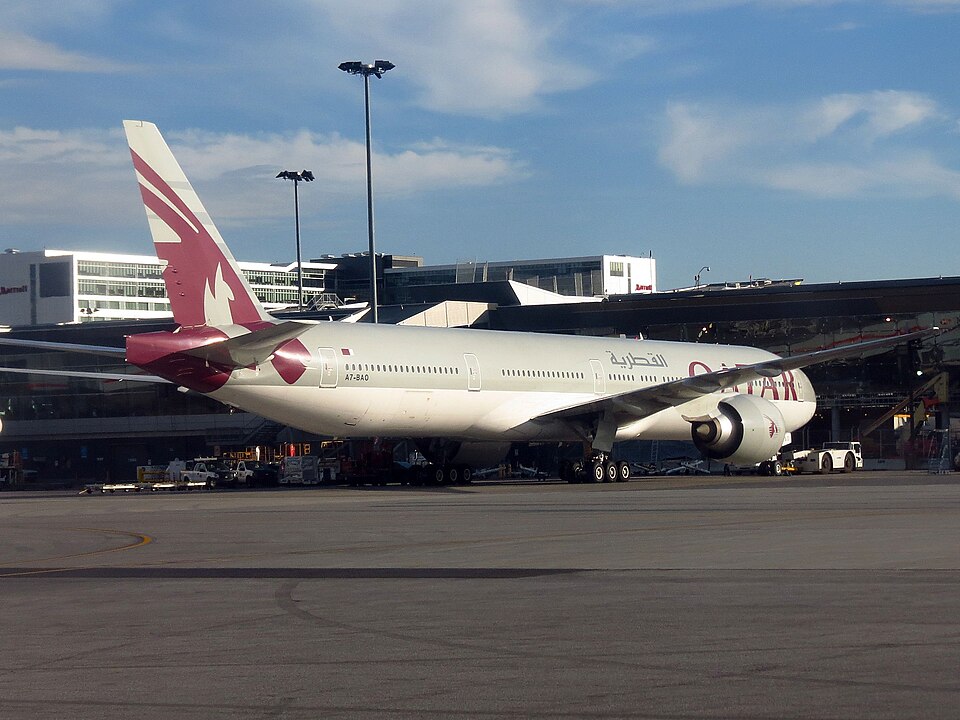
On 19 November 2016, a Boeing B777-300ER aircraft registered as A7-BAO, operated by Qatar Airways as flight QTR 778, experienced an electrical odor in the cockpit during cruise flight. The incident occurred at 09:10 UTC at flight level 350, approximately 16 nautical miles north-north-west of Basel, Switzerland. The flight was an ultra-long-range scheduled service from Miami (KMIA) to Doha (OTHH).
Crew and Operations
In accordance with the operator’s ultra-long-range procedures, two flight crews were assigned, each comprising a commander and a copilot. At the time of the incident, crew A (commander A and copilot A) was on duty in the cockpit, while crew B was on a rest period. Copilot A was the pilot flying (PF) and commander A was the pilot monitoring (PM). The aircraft carried 4 pilots, 16 cabin crew members, and 359 passengers. It had a takeoff weight of 346.9 tonnes and was fueled with 124.3 tonnes of fuel.
Incident and Response
After establishing contact with air traffic control at 09:06:31 UTC, a strong odor developed in the cockpit. Both flight crews later described it as an electrical smell. Commander A, feeling unwell (dizzy), donned his oxygen mask at 09:10:44 UTC. A cabin crew member was summoned, and the odor appeared to abate but then returned. By 09:13:41 UTC, both pilots were using oxygen masks. Crew B was informed, and a cockpit display related to a cooling system—specifically the status message ‘EQUIP COOLING FAN R’—was mentioned. The decision to divert to Zurich (LSZH) was made.
At 09:15:04 UTC, the flight crew issued a mayday distress message and informed the controller of smoke in the cockpit, requesting a diversion to Zurich. The controller provided immediate descent instructions. At 09:18:16 UTC, the crew requested and received authorization to dump fuel along the approach path. The fuel jettison arm switch was actuated multiple times; initially, the right nozzle valve did not open, but after several attempts, fuel dumping commenced. Approximately 8 tonnes of fuel were jettisoned.
Diversion and Landing
By 09:22:39 UTC, the crew received weather reports and decided to execute a category I ILS approach for runway 16 at Zurich, performing an overweight landing. Oxygen masks were removed gradually as no further smoke was detected. At 09:35:18 UTC, commander A took over as PF for the landing, as per operating procedures. The landing was completed without incident at approximately 09:38 UTC. The aircraft was not damaged, and no injuries to crew, passengers, or third parties were reported.
Subsequent Actions
No probable cause was established in the summary investigation; the report primarily documents the sequence of events. Lessons learned were noted for future reference.