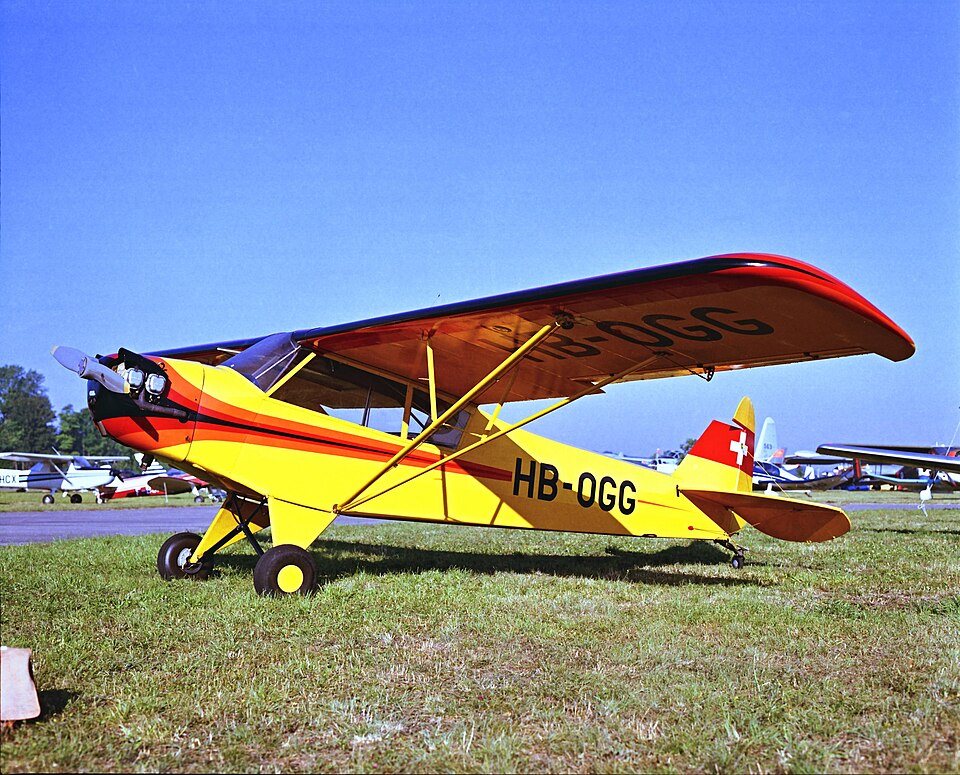
Background
The two pilots involved were close friends and frequently flew together in formation. According to the pilot of the Piper J3C-65/L-4 (HB-OGG), the Piper usually led the formation, with the Luscombe 8A (HB-DVW) following behind and to the right, slightly lower. They typically maintained a separation of more than 50 meters unless coordinated by radio. On normal flights, they used a separate radio frequency for formation coordination.
Flight Sequence
On 1 September 2004 at 15:42 local time, both aircraft departed Les Éplatures airfield (LSGC) and proceeded in formation toward Luzern-Beromünster. After approximately 28 minutes of flight, at about 16:10, the two aircraft collided in mid-air near Altwyden, in the municipality of Utzenstorf, Canton Bern, approximately 22 km north-northeast of Bern.
Collision and Aftermath
During the collision, the Luscombe 8A suffered extensive damage, causing it to enter an uncontrolled descent and crash. The pilot of HB-DVW sustained fatal injuries. The pilot of HB-OGG managed to land the damaged Piper on a nearby meadow in flat terrain. Emergency services, including the local rescue forces and the Cantonal Police of Bern, were alerted, and the Aircraft Accident Investigation Bureau (AAIB) opened an investigation the same day.
Investigation Findings
The investigation determined that the accident was due to a mid-air collision while the aircraft were flying in formation. The collision inflicted such damage on one aircraft that it became uncontrollable and crashed. The report noted that the lack of formal formation flight training for both pilots may have played a contributing role.
Probable Cause
The accident was caused by a mid-air collision during a formation flight. One aircraft sustained damage that led to loss of control and subsequent crash. The absence of formation flight training for either pilot was a possible contributing factor.