Event
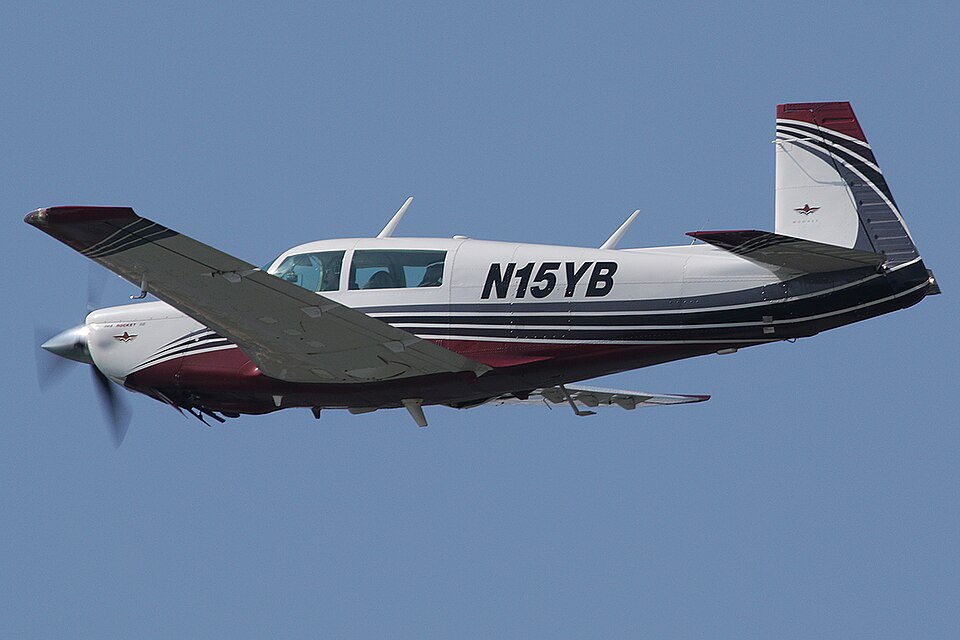
On 30 June 2018 at approximately 14:01 UTC, a serious incident (airprox) occurred about 30 km northeast of Grenchen (LSZG) near Roggwil, Switzerland, at an altitude of around 6000 ft AMSL. The two aircraft involved were a Mooney M20K, registered as N15YB, and a Duo Discus, registered as HB-3438. The minimum separation during the close encounter was 115 meters horizontally and 175 meters vertically. The airprox was classified as ICAO Category A.
The Mooney was operating under Instrument Flight Rules (IFR) and was on an instrument approach to Grenchen. The pilot had been cleared to descend to 6000 ft QNH and directed toward the NEMAG waypoint. At the time of the encounter, the Mooney was aligned with the final approach course for Runway 24.
The Duo Discus was operating under Visual Flight Rules (VFR) and was en route from Kägiswil (LSPG) to Kägiswil. The glider was cruising near Langenthal. According to radar recordings, the glider's transponder was not transmitting altitude information; it had been inadvertently set to "ON" instead of "ALT".
The pilot of the Mooney reported sighting the glider and stated that he considered avoiding action but did not find it necessary. The glider pilots later stated they were unaware of the IFR approach point near Langenthal and did not recall a dangerous proximity. They noted that approach procedures were not loaded in their onboard devices (LX7007 and XCSOR).
Aircraft and Pilots
The Mooney M20K (N15YB) was owned and operated by Faddair Inc. The pilot, a Swiss national born in 1954, held a private pilot license (PPL(A)) issued by EASA via the Swiss Federal Office of Civil Aviation (BAZL). He had a total of 1319 flight hours, with 824 hours on type. The aircraft was equipped with a Mode S transponder but no collision avoidance system.
The Duo Discus (HB-3438) was owned and operated by Segelfluggruppe Obwalden. Two pilots were on board: Pilot 1 (born 1962), a Swiss national with a sailplane pilot license (SPL) issued by EASA via BAZL, total 850 hours, 195 hours on type; Pilot 2 (born 1958), a Swiss national with an SPL issued by the Austrian civil aviation authority, total 91 hours, 11 hours on type. The glider was equipped with Flarm and a Mode S transponder.
Findings
The instrument approach chart for the VOR approach to Runway 24 at Grenchen (LSZG) contained a caution that parts of the procedure pass through Class E airspace, where VFR traffic without transponder or radio contact may be encountered.
Due to the missing altitude transmission from the glider's transponder, air traffic control could not provide reliable traffic information, and the ground-based Short Term Conflict Alert (STCA) system was ineffective. Additionally, the Mode S transponder on the Mooney and the Flarm on the glider were incompatible for mutual detection.
The glider pilots were not aware that the IFR approach point for Grenchen was located near Langenthal. This information was no longer published on official VFR charts, unlike approximately ten years earlier.
The Swiss Transportation Safety Investigation Board (STSB) concluded that the consistent implementation of Safety Recommendation No. 499, concerning the introduction of compatible collision warning systems for general aviation, would have mitigated this serious incident. No further investigation was conducted as this was considered an isolated case.