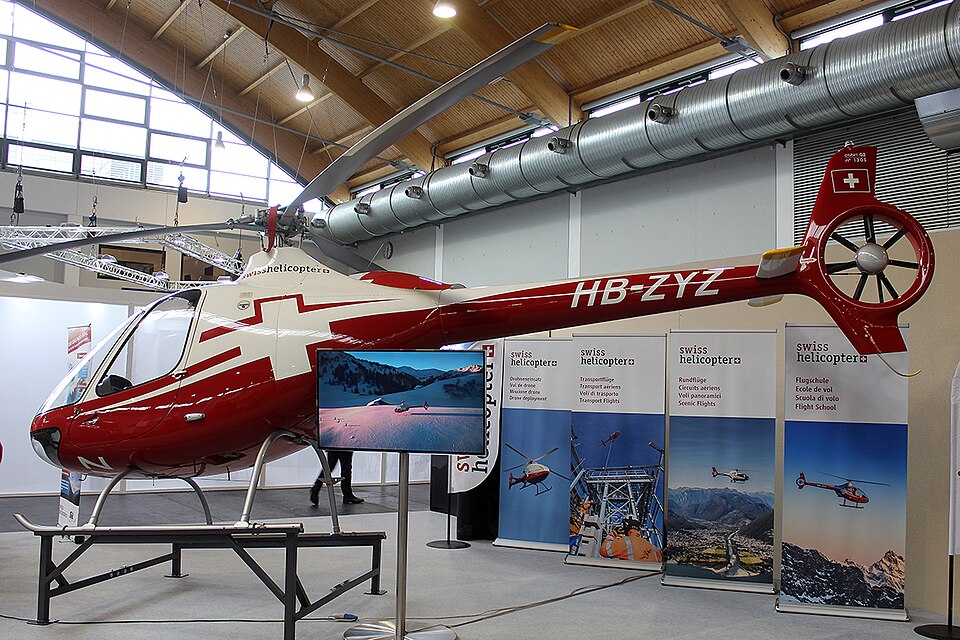
Incident Overview
On 25 May 2018, at approximately 10:20 local time, a Cabri G2 helicopter (registration HB-ZYZ) operated by Swiss Helicopter AG collided with a drone near the Vogorno lake dam, adjacent to Locarno Airfield (LSZL). The helicopter was conducting an initiation training flight under visual flight rules (VFR) and was in the cruise phase at an altitude of 3000 ft AMSL and a speed of about 95 knots.
Flight Details
The flight originated and was destined for Locarno. After takeoff, the helicopter proceeded toward Ascona, then climbed the Maggia valley to Bignasco, where it turned right into the Versasca valley. While overflying the dam, the instructor was transmitting position on the Locarno tower frequency and suddenly saw an object to his left, above the helicopter, and felt an impact. He reduced speed and noticed no unusual vibrations initially, continuing the approach to the company base, which was two minutes away. During the hover before landing, abnormal vibrations became apparent. After the rotor stopped, damage was found on one main rotor blade. The company was notified and, suspecting a drone collision, contacted cantonal police, who intercepted the drone pilot.
Drone Operator Account
The drone pilot had driven to the dam earlier that morning and positioned west of it to photograph the dam wall. The drone weighed more than 500 g and was flown in direct visual line of sight. Approximately 15 minutes after launch, the pilot observed two helicopters to the south and decided to return the drone. During the return maneuver, while looking south, the pilot lost visual contact and control of the drone. The pilot did not notice a third helicopter approaching from behind or the collision. After losing the signal, the pilot returned to the drone’s start position, found the wreckage, collected the debris, and went back to the parking area, where police intercepted him. Initially, the pilot did not connect the drone crash to a collision but later went to the helicopter company base.
Post-Collision Actions
Police intercepted the drone pilot. The helicopter’s instructor reported the damage to company management, who contacted authorities.
Damage
The helicopter sustained minor damage. One main rotor blade showed two impact marks on the leading edge tip, with deformation on the underside. The drone was destroyed.
Findings
The drone pilot was operating in a zone (marked red on aeronautical charts) where the use of drones over 500 g was prohibited due to proximity to Locarno Airfield. The geofencing radii set by the manufacturer were smaller than those prescribed by the Federal Office of Civil Aviation (OFAC), allowing the drone to be operated with only a warning about a nearby aerodrome.
Analysis
The drone operator used a drone weighing more than 500 g in an unauthorized zone and could not avoid colliding with a light aircraft returning to its nearby base from behind. The damage to one main rotor blade, by chance, did not force an emergency landing in an unsuitable area. The risk of collision near aerodromes is high for drones weighing between 500 g and 30 kg, and such use is prohibited. However, drones under 500 g are not restricted, which is considered inadequate because a collision with a lighter drone could also cause damage endangering occupants.