What happened
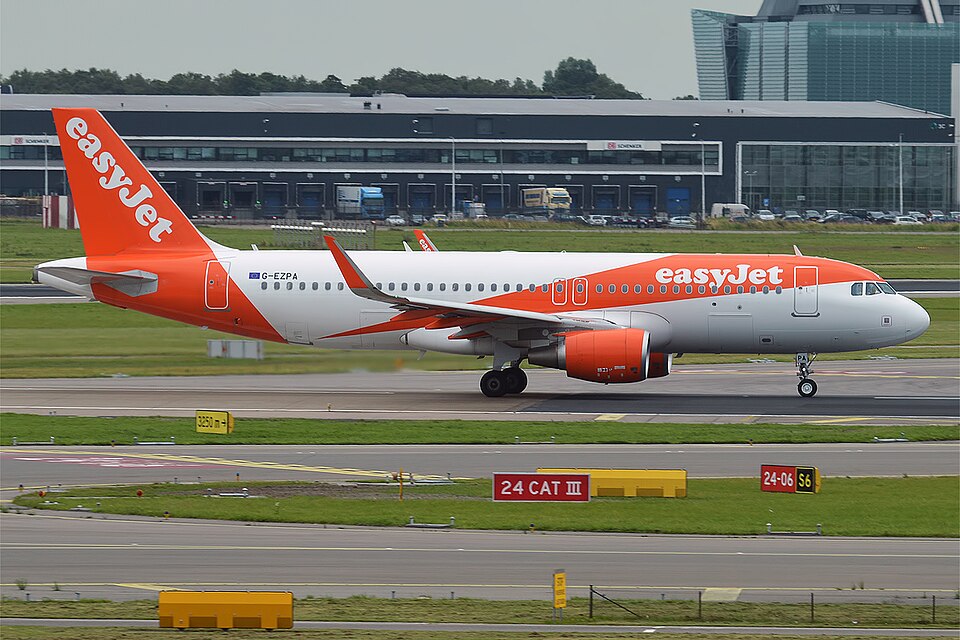
On July 14, 2016, at 18:38 UTC, an Airbus A3/20-214, registration G-EZPA, was performing a scheduled passenger flight from Amsterdam to Basel. The aircraft, operated by EasyJet, was on a stabilized ILS approach to runway 33 with 169 passengers and 6 crew members on board.
While flying at approximately 2,100 ft AMSL, roughly 3.4 NM from the runway threshold near the Schützenmatte stadium, the flight crew spotted a drone directly in their flight path. The pilot described the object as a white drone with red lights, appearing to be stationary or moving very slowly at a vertical distance of about 10 meters from the aircraft. Due to the proximity and the limited time available, the crew was unable to perform an evasive maneuver. The captain immediately reported the near-miss to Basel airport air traffic control. The flight continued its approach and landed without further incident.
The investigation
The SUST investigation examined the circumstances of the encounter and reviewed broader trends regarding remotely piloted aircraft systems (RPAS). The investigation noted that this was not an isolated event, as a similar near-collision had occurred at Basel airport earlier in March 2016.
Investigators analyzed the increasing frequency and severity of drone-related incidents in Switzerland. Data showed that while incidents were relatively stable and low-severity between 2010 and 2013, there was a significant rise in both the number and the severity of encounters in subsequent years, particularly around major airports like Zurich. The investigation also reviewed the regulatory landscape, including Swiss federal laws regarding drone operation, altitude restrictions, and the lack of a unified unmanned traffic management system.
Findings
- The primary safety concern is that unmanned aircraft systems are largely detectable only through visual observation rather than through onboard collision avoidance technology.
- The increasing density of drone operations, with an estimated 20,000 drones in use in Switzerland alone, significantly raises the risk of mid-air collisions.
- Large multi-rotor drones pose a severe threat to commercial aviation, as an impact could cause substantial damage to engines or even trigger an engine fire.
- Current regulatory frameworks and technical limitations, such as the lack of remote identification or widespread geofencing, contribute to the difficulty in maintaining separation between manned and unmanned aircraft.