What happened
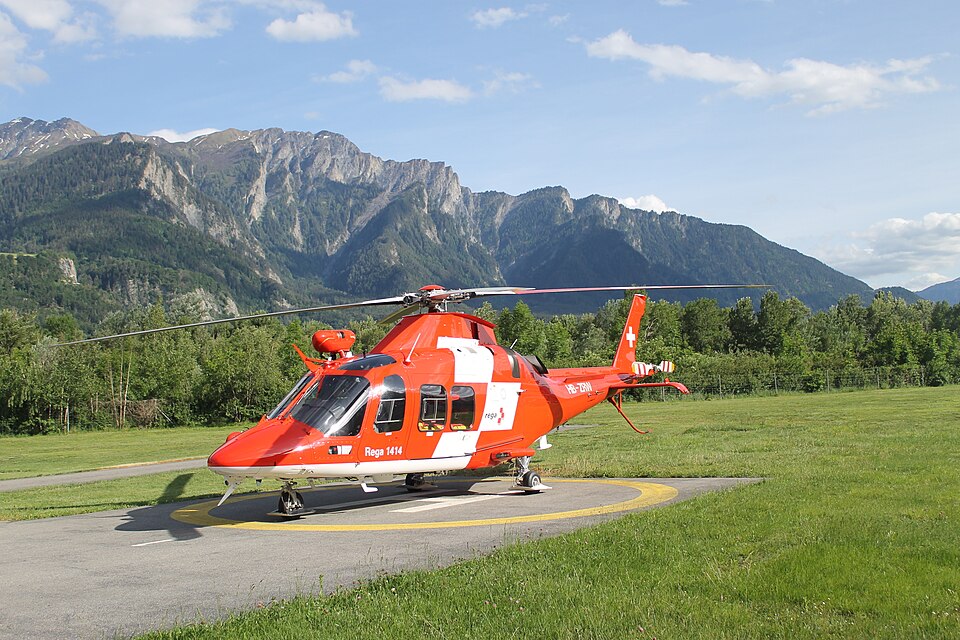
On June 23, 2016, a paragliding student was performing a landing approach at the Wasserauen landing site in Switzerland when their Ozone Mojo 4 S wing suddenly collapsed. The incident occurred while the student was executing a landing maneuver following the recent passage of an AW10_SP helicopter, registration HB-ZRW, which was conducting a medical rescue mission.
The helicopter, operated by Swiss Air-Ambulance, had been tasked with retrieving two hikers via winch. During the mission, the helicopter pilot transitioned to a landing site near Alp Hütten and later flew toward a pickup point near the Wasserauen station. As the helicopter descended through the valley, it passed approximately 20 meters from the student's flight path at an altitude of 90 meters. The resulting wake turbulence caused the paraglider to collapse, leading the student to fall from a height of 10 to 15 meters. The student sustained severe injuries to the cervical spine and chest.
The investigation
The Swiss Transportation Safety Investigation Board (SUST) examined the flight paths of both the helicopter and the paraglider, as well as the coordination between the rescue mission and local paragliding activities. The investigation reviewed the flight logs of the HB-ZRW, the training records of the student, and the operational procedures of the rescue service. Investigators also looked into the training curricula of the Swiss Hang Gliding Association (SHV) and the operational manuals of the rescue organization regarding the risks of helicopter-induced turbulence.
Findings
- The primary cause of the accident was the student being caught in the wake turbulence generated by the helicopter.
- Several contributing factors were identified, including the specific approach path and landing site chosen by the helicopter pilot.
- The student maintained their original approach trajectory toward the landing target despite the helicopter's recent passage.
- There was a lack of coordination between the ongoing helicopter rescue mission and the active paragliding operations in the area.
- A systemic cause was identified as a lack of awareness among both helicopter and paraglider pilots regarding the specific dangers posed by wake turbulence.
- The investigation noted that the rescue mission's flight path was not coordinated with the paragliding activities occurring at the landing site.
Safety action
Following the accident, representatives from the paragliding school, the Swiss Hang Gliding Association (SHV), the rescue service (Rega), and Alpine Rescue Switzerland (ARS) met to establish better coordination protocols. The SHV subsequently published "Best Practice" guidelines for interactions between paragliders and helicopters. Additionally, the rescue service published safety information specifically highlighting the distinction between rotor downwash and the more insidious dangers of wake turbulence.