What happened
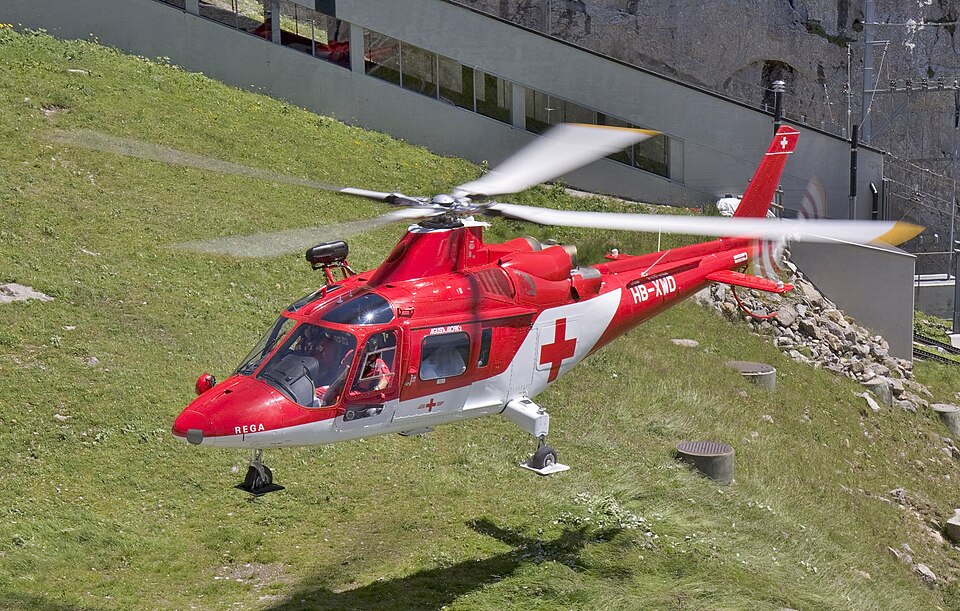
On July 31, 1997, an AGUSTA A 109K2 helicopter, registration HB-XWD, was conducting a rescue mission near Veyges, Switzerland. The crew, consisting of a pilot, a professional rescuer, and a REGA physician, responded to a mountain bike accident involving a young woman in a nearby forest. Because landing was impossible, the crew utilized the helicopter's winch to lower the physician to the patient.
During the subsequent recovery phase, the winch mechanism became obstructed. While attempting to hoist the physician and the patient back to the aircraft, the crew encountered a mechanical jam at an altitude of approximately 3.5 meters of cable deployment. In an attempt to resolve the issue, the pilot and rescuer manipulated the controls to move the suspended individuals toward a prepared stretcher on the ground. As the aircraft hovered approximately 15 meters above the terrain, the winch cable snapped. The physician and the patient fell to the ground, sustaining fatal injuries.
The investigation
Investigators examined the winch mechanism and the cable at the accident site. The investigation revealed that the cable had been significantly damaged by repeated friction against sharp metal edges within the winch housing. Laboratory analysis by EMPA confirmed that the failure was caused by the cable rubbing against steel plates installed during a recent factory modification.
Further examination of the winch hardware showed that a guide finger had been incorrectly installed by the manufacturer. This error caused the cable guide system to derail, leading to improper cable winding. The investigation also noted that while an abnormal noise had been reported during a previous flight, subsequent functional tests had not identified any defects. The crew was also found to be unaware of specific REGA operational directives regarding winch jams, which had been issued in German.
Findings
- The primary cause of the accident was the rupture of the winch cable following the improper handling of a jammed winch.
- A manufacturing error led to the incorrect installation of a guide finger, causing the cable to derail and rub against sharp-edged metal plates.
- The repeated friction from the misaligned cable weakened the steel strands until they could no longer support the 147 kg load.
- The crew was not informed of specific internal operational guidelines regarding procedures for winch malfunctions.
Safety action
- Certification authorities should require proof that technical modifications do not introduce new hazards during component failure.
- Aircraft operators must ensure that all technical directives and operational recommendations are effectively communicated to and understood by flight crews.
- Manufacturers should demonstrate that the installation of certified optional equipment maintains full airworthiness across the entire flight envelope.