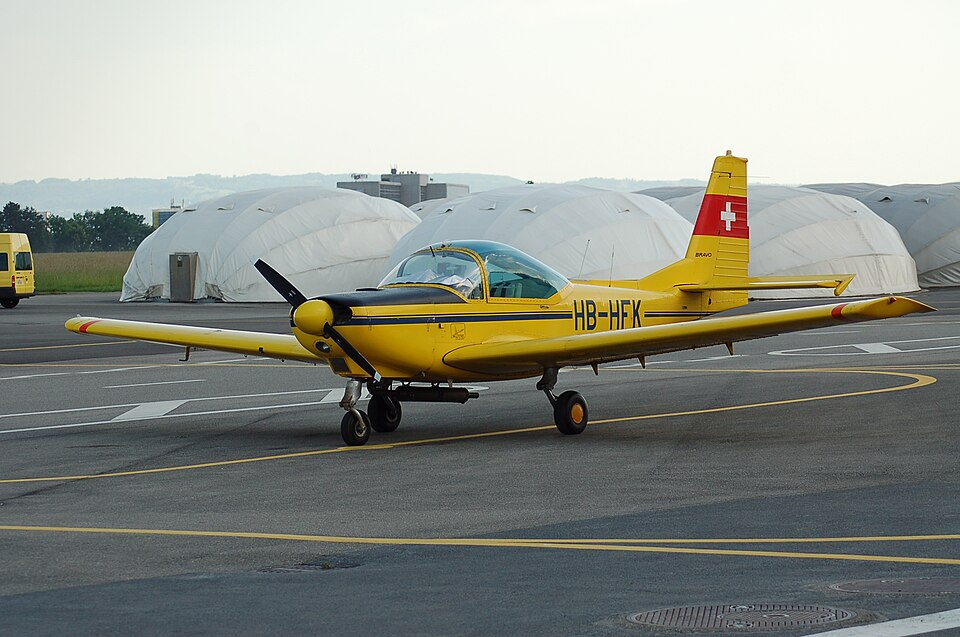
What happened
On April 16, 2015, an FFA AS202/15-1/16M, registration HB-HFK, was performing a flight training mission departing from Lausanne-La Blécherette (LSGL). The flight was intended to be a scenic tour of the Alps toward Locarno.
During the takeoff roll on runway 36, the student pilot rotated the aircraft at 60 MPH. Immediately after leaving the ground, the aircraft entered a high pitch attitude of approximately 14 degrees. Despite the instructor's attempt to take control after noticing insufficient airspeed, the aircraft could not gain altitude and entered a "second regime" flight state, where it could no longer increase speed without losing height.
As the aircraft reached the end of the runway at an altitude of only 12 meters, the instructor executed an emergency landing in a nearby field. During the descent, the instructor retracted the flaps, which further reduced lift. The aircraft struck the ground heavily, causing the left main landing gear to collapse as it crossed a furrow between two fields. The aircraft slid approximately 250 meters before coming to a halt. Both the instructor and the student pilot were uninjured and evacuated the aircraft on their own.
The investigation
SUST examined the flight sequence using data from the aircraft's Flarm system, airfield webcam footage, and witness statements. The investigation focused on the aircraft's performance, the configuration of the wing camber flaps, and the weight of the aircraft at the time of departure. Technical inspections of the engine and propeller showed no mechanical failures, and the aircraft was found to be in a valid state for VFR operations.
Findings
- The aircraft was operating at a mass near its maximum takeoff weight, which negatively impacted performance.
- The wing camber flaps were set to a position greater than the recommended 15 degrees for takeoff, contributing to a lack of climb performance.
- The aircraft entered a second regime flight state due to the combination of the high pitch angle, improper flap setting, and high weight.
- The instructor's late takeover of the controls prevented the crew from avoiding the unstable flight condition.