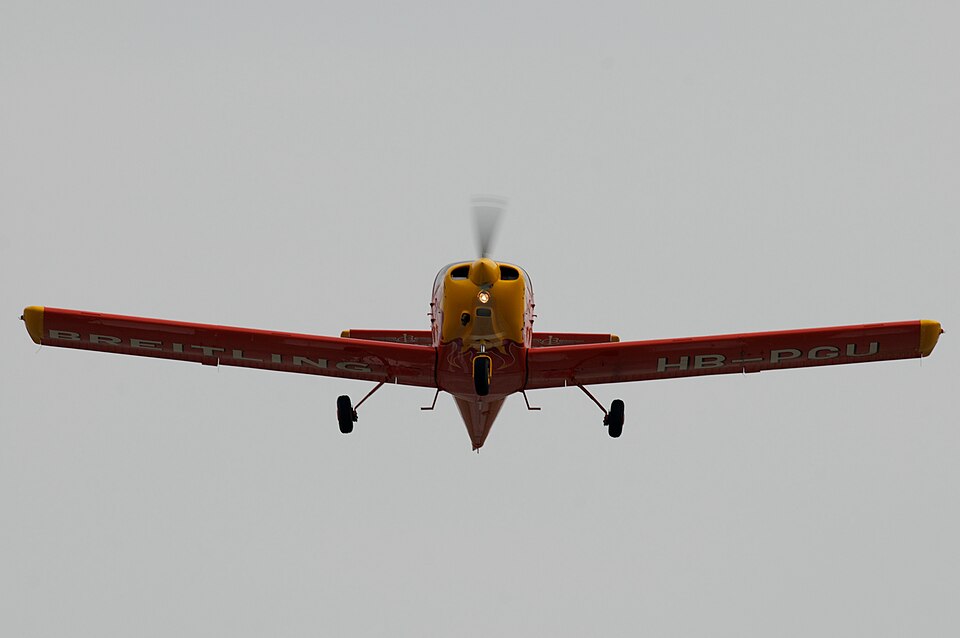
Accident Overview
On 5 June 2014, a Piper PA-38-112 Tomahawk, registered HB-PGU, was involved in an accident approximately 300 meters southwest of Grenchen Regional Airport (LSZG). The aircraft was operated by Maximair AG and conducted a training flight under VFR. The crew consisted of a flight instructor and a student pilot. Both remained uninjured. The aircraft sustained substantial damage, and minor ground damage occurred.
Crew and Aircraft
The flight instructor, born 1973, held a commercial pilot license (CPL(A)) with a flight instructor rating, valid until 30 September 2015. He had logged 1087:02 flight hours total, with 427:39 hours on the accident type. The student pilot, born 1989, had no pilot license and had accumulated 21:39 flight hours, all on the PA-38.
Flight History
The training flight was scheduled for grass strip operations according to lesson 2.3 of the Maximair AG flight school curriculum. The lesson included a 45-minute theory session and a 20-minute flight with a rejected takeoff, two touch-and-goes, a go-around, and a landing. Before the flight, the crew conducted a pre-flight briefing and a pre-flight inspection. Fuel was 10 gallons per wing tank. Engine start was per checklist.
First Takeoff Attempt
At 15:50, the crew requested taxi clearance for runway 25L. After taxiing, they performed engine run-up and pre-takeoff checks. At 16:05, they reported ready for takeoff with a circuit. Wind was 5 knots from 240°. The takeoff roll on dry grass initially showed good acceleration. However, the instructor deemed the angle of attack excessive, took over control, and aborted the takeoff before liftoff. The aircraft stopped on the remaining runway.
Second Takeoff Attempt and Accident
After returning to the runway, at 16:08, the controller cleared the aircraft for another takeoff on runway 25L, with wind 6 knots from 230°. The second takeoff began at 16:10. Initial full throttle RPM was 2300, and acceleration was comparable to the first attempt. The student reported reading 45 knots abeam the windsock. The aircraft lifted off shortly before the runway end, near taxiway T. After liftoff, the student attempted to gain speed by reducing angle of attack as instructed, but was unsuccessful. The instructor took control and tried to accelerate in ground effect, hearing the stall warning. He kept flaps at takeoff setting (21°) with his left hand on the flap lever. The aircraft crossed a cantonal road at very low altitude. The instructor estimated a maximum height of about 5 meters before hearing the stall warning again. He then decided to land in the field ahead, allowing the aircraft to sink without reducing power and setting flaps to landing (34°) just before touchdown.
During the landing, the left wing and nose contacted the ground first. The left main landing gear leg separated from the fuselage. The aircraft slid about 30 meters, rotating left, and came to rest facing southeast. The propeller stopped on ground contact. The crew shut off the fuel and master switch and evacuated. The fire department responded but was not needed.
Probable Cause
The accident was due to the aircraft's performance which, due to insufficient takeoff speed, did not allow climb, thus forcing the crew to execute an emergency landing outside the aerodrome limits. Contributing factors were action on the elevator during the takeoff roll, excessive takeoff weight, the method of monitoring acceleration during the takeoff roll, and diminished engine performance due to fouled spark plugs.