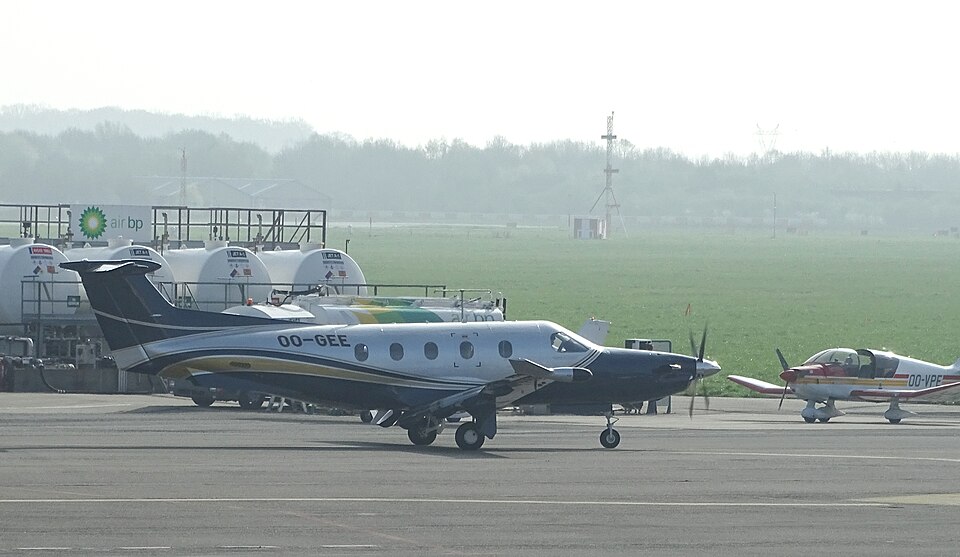
What happened
On the morning of February 12, 2011, a Pilatus PC-12/47E, registration OO-GEE, was conducting a private flight from Antwerp Deurne to Lausanne-La Blécherette. The flight, operated by ASLnv for the Pilatus Club One V.Z.W., carried two pilots and two passengers. After canceling the IFR flight plan near St-Prex, the crew performed a visual approach to runway 18.
Upon touchdown, the aircraft was unable to decelerate sufficiently, continuing down the runway and exiting the paved surface. The impact with the terrain beyond the runway caused the nose gear to be torn away and the forward landing gear to collapse. While no fire occurred, a fuel leak was identified under the left wing. All four occupants evacuated the aircraft safely and uninjured.
The investigation
Investigators analyzed radar data, webcam footage, and police reports to reconstruct the landing sequence. The investigation focused on the aircraft's performance on the descending slope of runway 18 and the crew's use of braking and propeller conditioning techniques. Technical examinations of the Pilatus PC-12/47E confirmed that the aircraft was in a valid condition for flight and that no mechanical failures contributed to the event.
Findings
- The aircraft approached the runway on a glide path approximately 3.6° above the standard APAPI, with an excess speed of about 5 knots.
- The initial touchdown occurred on a 2.5% descending slope, which likely reduced weight on the main wheels and hindered braking effectiveness.
- The propeller was left in the FLIGHT IDLE position, which maintained residual forward thrust during the braking phase.
- The crew applied brakes, but the lack of sufficient downward pressure on the main gear caused the wheels to lock, leading to tire damage and smoke.
- The inappropriate landing and braking techniques prevented the aircraft from stopping within the available distance.
- The nose gear failure was caused by the aircraft striking the transition between the grass and the embankment at the end of the runway.