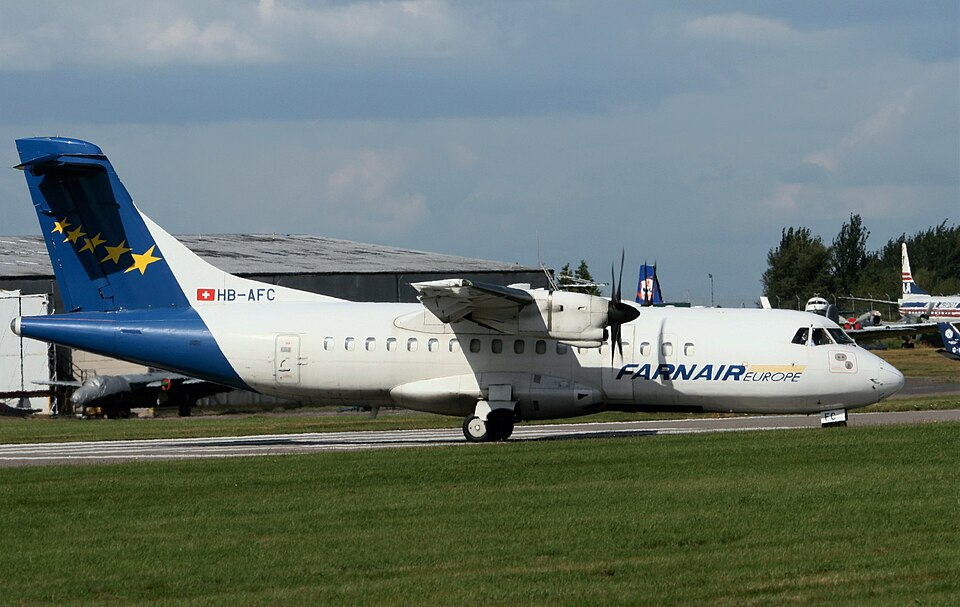
Incident Summary
On 29 March 2006 at 04:01 UTC, an ATR 42-320 aircraft, registration HB-AFC, operated by FARNAIR as cargo flight FAT6932, experienced a fire in the cockpit while on short final for an ILS approach to runway 23 at Geneva Airport. The crew declared a distress situation to air traffic control. The aircraft landed normally and vacated the runway via rapid exit taxiway CHARLIE, where it came to a stop. The copilot reported a near total loss of all onboard systems and stated that the aircraft could no longer taxi. The airport security service, already on scene, took charge and requested the engines be shut down. The fire onboard lasted only a few seconds, and no external firefighting intervention was necessary.
Flight Details
The aircraft was owned and operated by FARNAIR Switzerland AG, based in Basel, Switzerland. The flight crew consisted of a commander and a copilot. The flight was a cargo operation. The preceding flight had been uneventful. The incident occurred during the approach phase.
Incident Evolution
According to the investigation report, the fire originated from a short circuit caused by multiple assembly errors. The fire produced sparks and smoke in the cockpit. The crew followed standard procedures and declared an emergency. The fire extinguished spontaneously within seconds. The aircraft sustained fire damage, including to wiring and components in the cockpit area (see Annex 1 of the report). Several onboard systems malfunctioned, including near total loss of systems as reported by the copilot.
Aftermath
No injuries or fatalities were reported. The aircraft was evacuated after shutdown. The airport fire service did not need to actively fight the fire. The incident was notified to the Swiss Bureau d'enquête sur les accidents d'aviation (BFU) at 04:10 UTC, and an investigator arrived at the airport around 05:00 UTC. The technical investigation was conducted with assistance from a specialist from the aircraft manufacturer.
Investigation
The BFU analyzed flight data recorder and cockpit voice recorder data, as well as radio communications. The investigation focused on the electrical system. It was determined that a short circuit occurred due to multiple assembly errors in the aircraft's electrical wiring. The fire was limited and did not spread beyond the cockpit area. No other contributing factors were identified.
Findings
The investigation concluded that the serious incident was caused by a fire that started due to a short circuit resulting from several assembly errors. The report stated that the fire was confined and did not require external intervention due to its short duration. Safety recommendations were issued following the incident, including an airworthiness directive (AD No. 2006-0283).
Conclusion
The serious incident of flight FAT6932 was attributable to a short circuit caused by multiple assembly errors, leading to a brief cockpit fire. The crew's prompt actions and the fire's self-extinction prevented further escalation.