Introduction
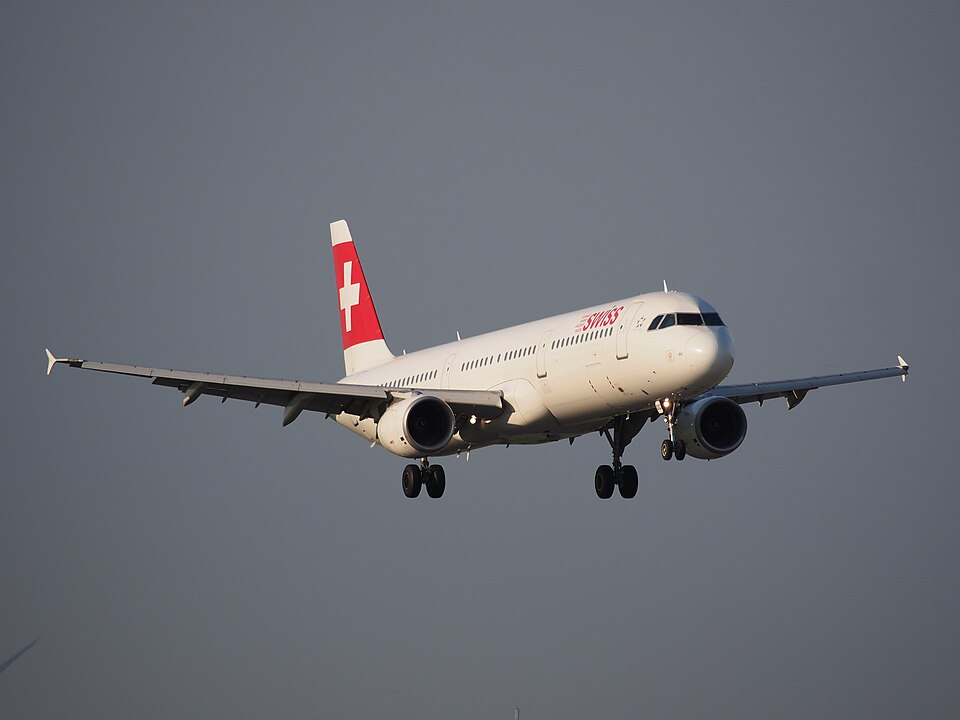
On 2 October 2018, an Airbus A321-111, registered as HB-IOC, operated by Swiss International Air Lines Ltd., was prepared for a flight from Zurich Airport (LSZH) to Malaga Airport (LEMG). The aircraft carried 7 crew members and 213 passengers.
Sequence of Events
After engine start, the flight crew briefly noticed a smell of burnt rubber. Following a short discussion, they concluded the odor likely came from outside. The smell diminished, and the crew decided to proceed normally. The aircraft departed from runway 16 at 07:34 UTC without further incident.
During climb to the planned flight level of FL 330, at approximately FL 150 (07:43 UTC), the same odor was again perceptible. The crew later stated that they had never encountered a similar smell during flights. They described the odor as burnt rubber, similar to that near landing aircraft but less intense and intermittent. The crew assessed the situation as non-critical and continued the flight.
They invited the lead flight attendant (maître de cabine) to the cockpit, who confirmed the smell. The crew agreed that the odor would likely dissipate and that the flight could continue. As a precaution, cabin service was suspended to enable a quick diversion if needed. When the smell intensified, two additional flight attendants were called to the cockpit. One perceived a burnt rubber smell; the other described it as reminiscent of metal welding. After the attendants left, the crew decided to abort the flight and return to Zurich. At that time, the aircraft was near Geneva at FL 276.
Response and Landing
At 07:54 UTC, the crew informed air traffic control of their desire to return due to technical problems. No mayday or pan-pan call was made, but a priority approach was requested to avoid delay. Speed was temporarily increased to 320 kt. The crew notified passengers and company of the decision. They discussed the aircraft's high landing weight and initially planned to burn off excess fuel in a holding pattern. However, when the odor reappeared during the initial descent, they opted for a direct approach and an overweight landing.
The crew informed ATC that the return was a precautionary measure and that the approach and landing, except for the overweight aspect, would be normal. ATC offered radar guidance from waypoint GIPOL to the final approach for runway 16, but the crew declined. The approach was flown standard, with speed reduced to 250 kt below FL 100.
During the flight, no abnormal checklists from the Quick Reference Handbook (QRH) were used aside from the overweight landing procedure. The crew discussed risks and decided to don oxygen masks at the first sign of impairment; the masks remained unused throughout. The minimum landing distance required for runway 16 was calculated, yielding a margin of approximately 1500 m under the prevailing conditions.
The aircraft landed on runway 16 at 08:27 UTC. During rollout, maximum reverse thrust and brakes from about 70 kt were used. The aircraft exited via the second-last taxiway and taxied to the parking position. Firefighters, summoned by ATC, followed the aircraft and reported no external anomalies. After engine shutdown, passengers disembarked normally. The crew subsequently noted that the commander's Electronic Flight Bag (EFB) charger had been inoperative since the beginning of the flight. Following the event, the crew visited the medical service; all but one had normal findings, with one person reporting mild discomfort.
Subsequent Incidents
On 3 October 2018, after the aircraft was released for service, the crew detected a light burnt plastic smell upon entering the cockpit. During preflight, the commander's EFB was found inoperative. A mechanic noted that circuit breaker Y-1 for that circuit had tripped and could not be reset; the aircraft was operated with the charger deactivated.
On 6 October 2018, during descent on a return flight from Naples (LIRN) to Zurich, a distinct odor described as "dirty socks" was noticed. The lead flight attendant, upon entering the cockpit, perceived the smell. He confirmed that nothing had been heated in the oven since the outbound flight. The crew discussed using oxygen masks for the final approach but did not do so. After engine shutdown, the co-pilot experienced dizziness, headache, and nausea. Maintenance was contacted.