Circumstances
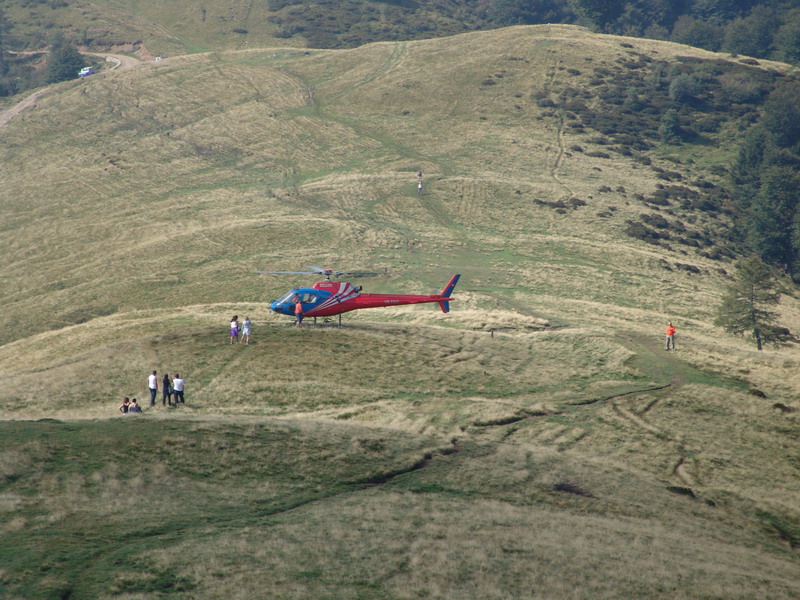
On 29 June 2013, an Eurocopter AS350 B2 helicopter, registered HB-XSO, operated by Heli-TV SA, was involved in an accident on Alp Trüsp, approximately 900 meters south of Iragna, in the municipality of Lodrino, Canton Ticino, Switzerland. The flight was a commercial VFR operation with the purpose of transporting organizers and guests to a festival on the alp.
Flight Preparation
The pilot, a Swiss citizen born in 1951, held a commercial pilot license (CPL(H)) with ratings for the AS350 and mountain operations. He had accumulated 901 total flight hours, with 418 hours on type. The operator had prepared a designated landing area called "Er dal Zelar" near the alp huts. The pilot was briefed about the terrain and obstacles by the chief pilot. However, he had no detailed personal knowledge of the landing site.
Flight Sequence
At 07:42 LT, the pilot, accompanied by a flight assistant, departed from Lodrino Airport (LSML) and flew to the meeting point at the Personico Dam. Four organizers boarded with the rotor turning. At 07:47, the helicopter departed for the first rotation to Alp Trüsp. During the climb, the pilot asked the flight assistant for directions to the landing area. He initially approached a set of huts below the alp, then turned toward the alp huts.
Accident
At approximately 07:53 LT, the pilot performed a hover landing near the alp huts, with the left skid partially resting on a rock. Witnesses reported that the helicopter did not fully touch down but remained in a low hover. While the flight assistant helped passengers disembark, the main rotor blades struck a rock. The assistant heard a bang and saw the helicopter abruptly climb. The pilot maintained a stable hover despite the damage, then executed a left turn toward the valley floor. The flight assistant advised returning to Lodrino for an emergency landing, and the pilot acknowledged via radio.
Injuries and Damage
The accident resulted in four fatalities: the pilot and three passengers. Two other occupants (the flight assistant and one passenger) were uninjured. The helicopter was destroyed. Light damage occurred to a storage shed and construction material, and there was minor soil contamination from fuel.
Investigation
The Swiss Transportation Safety Investigation Board (STSB) conducted the investigation. No flight path recordings were available. The report details the sequence of events but does not state a probable cause in the provided excerpt.