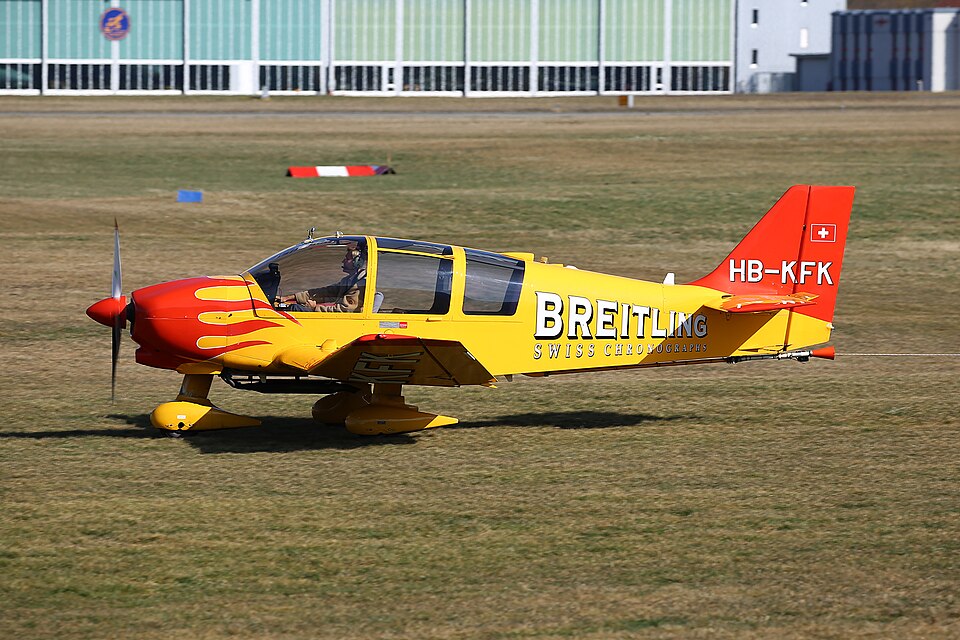
Accident Overview
On 15 July 2017 at 12:46 local time, a Robin DR400/180R, registered as HB-KFK, crashed approximately 1.2 km south of Bern Airport (LSZB). The aircraft was destroyed, and the pilot, the sole occupant, sustained serious injuries. A house roof and a field were damaged. The accident occurred during the approach phase of a glider towing flight.
Flight History
The aircraft was owned and operated by Segelfluggruppe Bern. The pilot, born in 1973, held a Private Pilot Licence (PPL(A)) issued by the Swiss Federal Office of Civil Aviation. He had accumulated 446 hours and 40 minutes of total flight time, including 140 hours on the accident aircraft type. On the day of the accident, the pilot was assigned to perform glider towing operations. After a pre-flight briefing and aircraft inspection, he completed five glider tows between 09:58 and 11:03, followed by a short break. He then conducted four more tows, taking off for the accident flight at 12:36.
Accident Sequence
The pilot took off from Bern Airport's glider strip 32 for a glider tow to the Riggisberg area. After releasing the glider, he returned towards Bern. At 12:44:26, he contacted the aerodrome control tower, reporting his position over the Längenberg at 3600 ft and requesting an approach via mid-downwind for glider strip 32. The tower cleared him to land at his own discretion. The pilot continued northeast, descending to enter the downwind leg at 2150 ft AMSL. At the end of downwind, he was at 2000 ft. He did not observe another glider, HB-1766, which had been cleared to land earlier and was on final approach. As he turned onto the base leg at a constant altitude of 2000 ft and a speed of approximately 180 km/h (decreasing), he first sighted the glider on final. The pilot was startled by its presence, and subsequently lost control of the aircraft. The accident sequence was not further described in the preliminary report.
Investigation
The Swiss Transportation Safety Investigation Board (STSB) conducted the investigation. The accident was classified as a loss of control. The pilot's statement indicated that the sun position and background made it difficult to see other aircraft. The stall warning system was found to be functional. No probable cause was stated in the preliminary report.