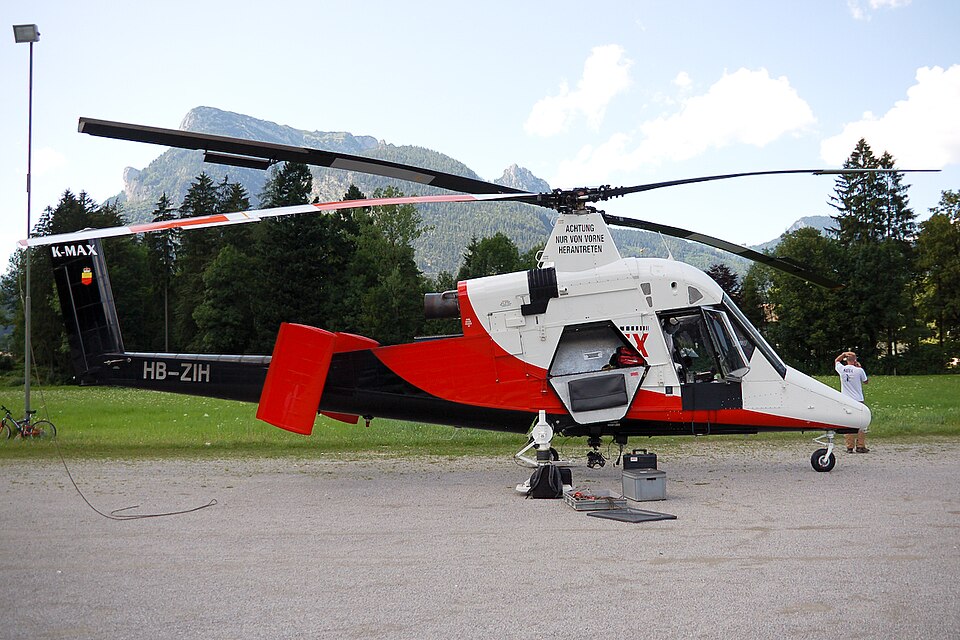
Accident Overview
On September 19, 2017, at 09:00 local time, a Kaman K-1200 helicopter, registration HB-ZIH, operated by Rotex Helicopter AG, was involved in a timber transport accident in the region of Faura d'Anzano, Blenio, Ticino, Switzerland. The aircraft was performing stemwood extraction with a crew consisting of one pilot and two flight helpers, as well as three forestry workers.
Sequence of Events
During the second-last rotation of the operation, as the helicopter transitioned to forward flight, a piece weighing approximately 300 kg detached from one of the logs suspended below the aircraft. The piece fell from a height of about 3 meters above ground. At that moment, a flight helper was standing beneath the load. He was struck by the falling log piece and sustained serious injuries.
Aircraft and Crew Information
The helicopter was a Kaman K-1200, registered in Switzerland as HB-ZIH. The owner and operator was Rotex Helicopter AG. The pilot and both flight helpers were employees of the flight operations company. The flight crew consisted of the pilot, Flight Helper 1, and Flight Helper 2. Their statements were the primary source of information for the investigation.
Investigation Findings
The Swiss Transportation Safety Investigation Board (STSB) opened an investigation the day after the accident. The investigation focused on the operational sequence and human factors. No technical deficiencies with the helicopter were reported. The accident was classified as an occupational accident during timber transport. No safety recommendations were issued.
Meteorological Conditions
The general weather situation was described as fair, with no adverse conditions reported at the time and location of the accident. The specific weather details were not noted as a contributing factor.
Conclusion
The accident occurred when a log piece separated unexpectedly as the helicopter began forward flight. The piece struck the flight helper below, causing serious injury. The investigation determined that the event was an occupational accident inherent to timber transport operations.