Synopsis
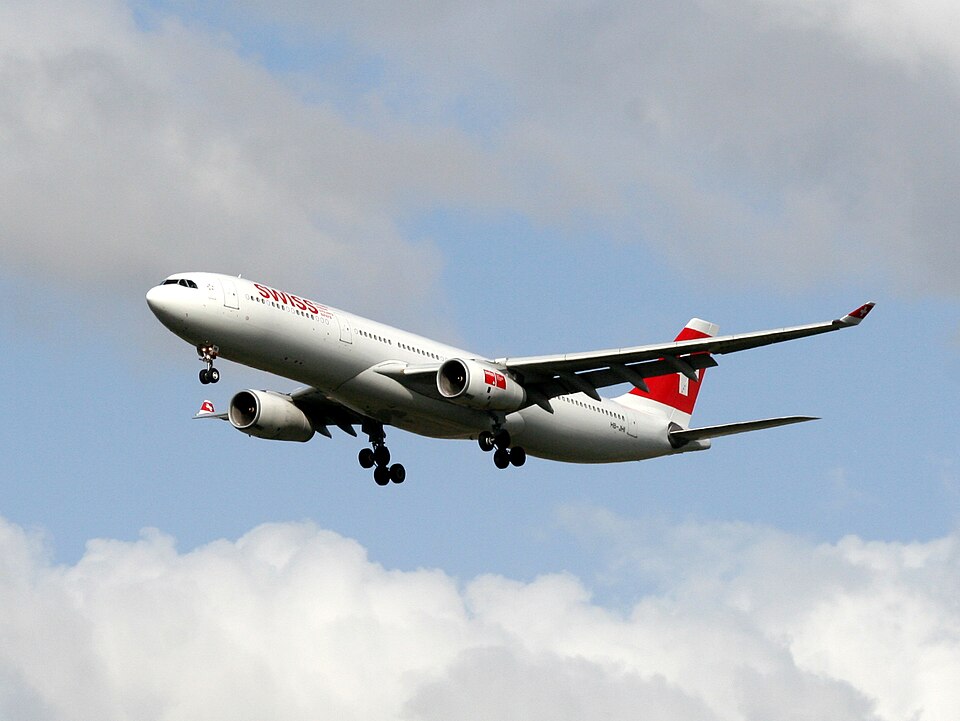
On 13 September 2024, at 16:20 UTC, an Airbus A330-343 airliner registered as HB-JHI operated by Swiss International Air Lines Ltd. experienced a serious incident involving loss of cabin pressure during climb. The aircraft was en route from Zurich Airport (LSZH) to Newark Liberty International Airport (KEWR) as flight LX18, carrying two pilots, ten cabin crew members, and 205 passengers. The crew initiated an emergency descent and returned to Zurich, where the aircraft landed without incident. No occupants were injured.
Factual Information
Flight History
The aircraft took off from Zurich at 16:07 UTC. During climb, at flight level (FL) 220, the ECAM displayed the caution message CAB ALT, indicating cabin altitude exceeding 8800 ft. The crew switched cabin pressure controllers from system 1 to system 2, but the cabin altitude continued to rise. At 16:23 UTC, the warning CAB PR EXCESS CAB ALT appeared. The crew donned oxygen masks, declared an emergency, and initiated an emergency descent at approximately 5000 ft/min. The cabin altitude peaked at 10,800 ft. Upon reaching FL 100, the cabin altitude dropped below 9000 ft and the ECAM messages cleared. The aircraft returned to Zurich for an overweight landing.
Damage and Findings
Post-incident inspection revealed damage to the cabin pressure system. At the low-pressure manifold and emergency ram air inlet, the sealing sleeve and one screw clamp were missing; the sealing sleeve was found damaged inside the fuselage. The skin check valve (part number 4063-18140-01) had one flap open beyond 90°, with a broken hinge and bent hinge pin. The leaf spring was broken off, and the valve components were severely damaged.
Cause
According to the investigation, the serious incident was caused by a defective skin check valve, which prevented the cabin pressure system from building up sufficient cabin differential pressure. A service bulletin issued by the aircraft manufacturer in 2016 recommending the earliest possible replacement of the skin check valve with a modified version had not been implemented, which was causal.