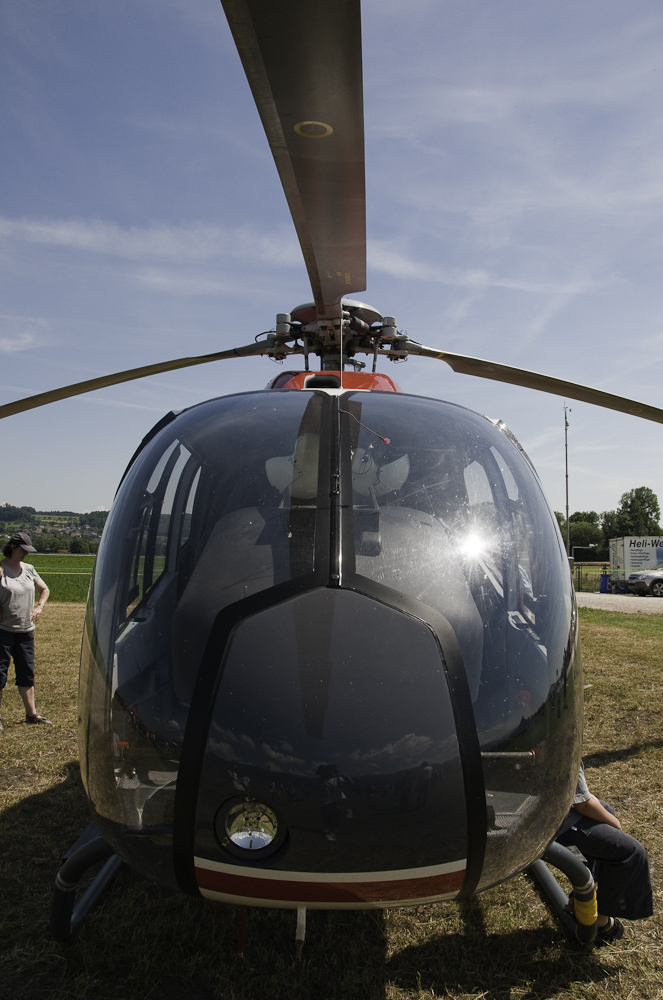
Aircraft and Flight Details
The incident involved a Robinson R22 Beta II helicopter, registered HB-ZGO, operated by Mountain Flyers 80 Ltd. The helicopter was conducting a training flight under visual flight rules (VFR) from Bern-Belp Airport (LSZB). The crew consisted of a flight instructor and a flight instructor aspirant. No passengers were on board. The aircraft had undergone a 50-hour check including a ground run earlier that day.
Sequence of Events
At 14:26 LT on 6 April 2016, the helicopter departed from Bern-Belp. After several minutes of flight, both pilots heard a scratching noise in their headsets. The ammeter indicator, measuring charge/discharge current, fluctuated to its stops. The crew disconnected the generator from the electrical system by switch and pulled the circuit breaker. Simultaneously, they noticed an "electrical" burning smell, which then decreased. The helicopter was still within the Bern-Belp control zone, about 8 km from the airport. Communication difficulties initially arose, but the flight instructor aspirant established contact and obtained clearance to return. During the return, the crew briefly re-engaged the generator, resulting in the same ammeter fluctuations and renewed burning smell, so they switched it off again. At 14:35, after 9 minutes of flight, the helicopter landed on the apron. The tower reported visible smoke from the engine area. The aspirant exited and observed an open fire near the generator, which he extinguished with a fire extinguisher. The airport fire brigade arrived shortly after but the fire was already out. No injuries occurred; the aircraft sustained light damage.
Investigation Findings
The Swiss Transportation Safety Investigation Board (STSB) determined that the serious incident was caused by an electrical short circuit between the two terminals of the generator and the housing of a retrofitted suppressor capacitor (alternator filter). This short circuit produced sparks that ignited a fire in the engine compartment. The investigation identified the following causal factors:
- Lack of indication in the installation guide regarding mounting of the suppressor capacitor on the generator.
- Inadequate installation of the suppressor capacitor and the defective condition of its rubber caps, which remained undetected.
The incomplete follow-up of procedures prescribed by the manufacturer for electrical fire in flight likely contributed to the appearance of the fire. Additionally, the absence of specific authorization for the suppressor capacitor installation was identified as a risk factor but did not directly contribute to the incident.
Cause and Contributing Factors
The probable cause was an electrical short circuit between the generator terminals and the suppressor capacitor housing, leading to sparks and engine compartment fire. Contributing factors included inadequate installation guidance, poor installation quality, and incomplete emergency procedure execution.