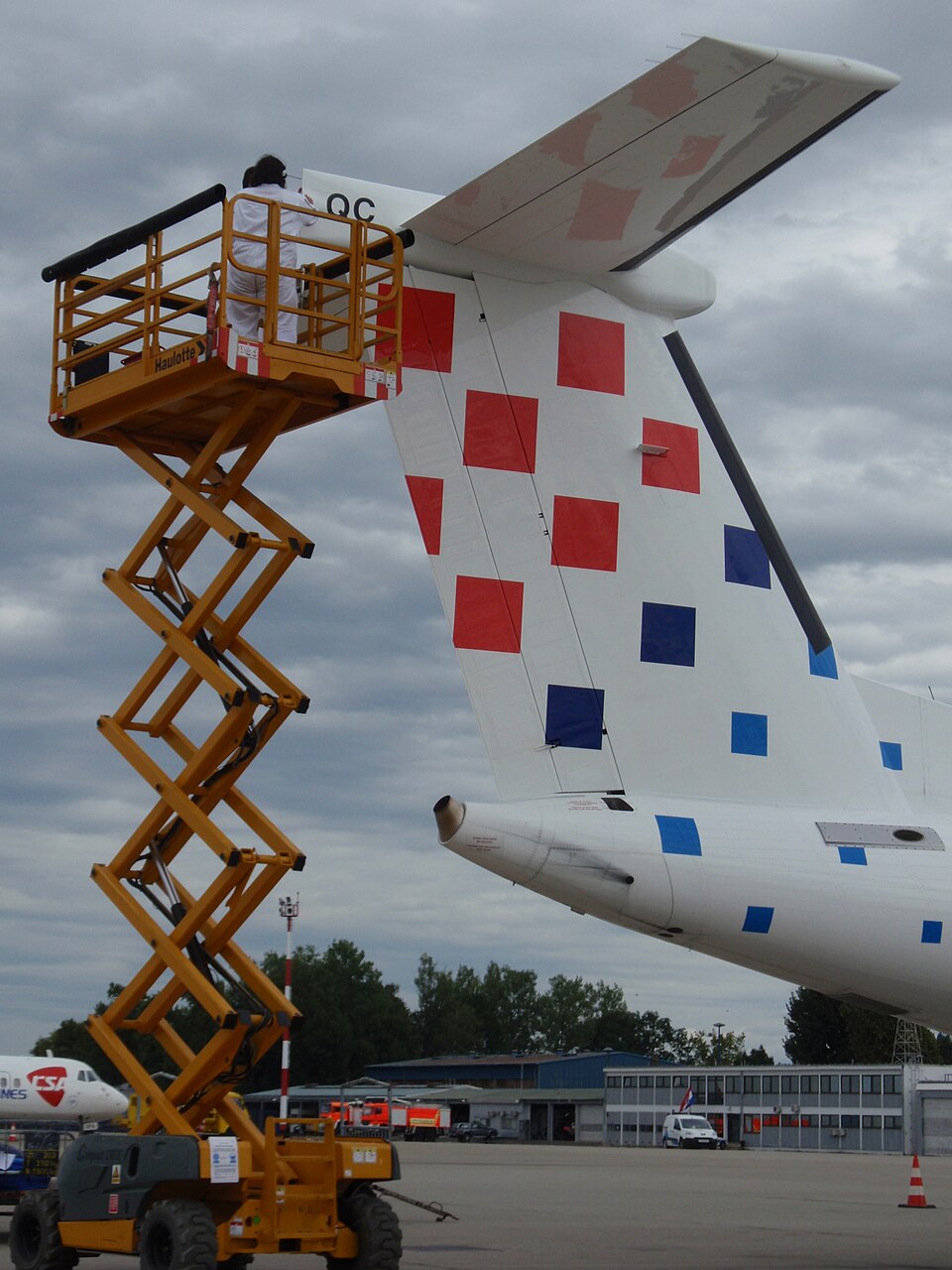
On September 27, 2013, a BOMBARDIER INC. DHC-8-402 (registration 9A-CQC) was involved in an aviation accident near Zürich Flughafen (LSZH), ZH, CH. Investigators recorded the probable cause as: The flight crew was unable to extend the nose landing gear because the lower retaining devices of the WOW cover plate were broken, immobilizing the nose gear mechanism and preventing its extension. This summary draws on records from the Swiss Transportation Safety Investigation Board (STSB / SUST).
On September 27, 2013, a Bombardier DHC-8-402 (9A-CQC) operated by Croatia Airlines landed at Zurich Airport with its nose gear retracted. The Swiss investigation attributed the accident to a mechanical failure of the nose gear cover plate.
Incident Overview and Aircraft Details On September 27, 2013, a Bombardier DHC-8-402 aircraft, registered as 9A-CQC and operated by Croatia Airlines under flight designation CTN 464, was involved in an accident at Zurich Airport. The incident occurred on runway 14. The aircraft was forced to land with its main landing gear extended but the nose landing gear retracted. ## Investigation Findings and Probable Cause The Swiss Transportation Safety Investigation Board (STSB) concluded that the accident was caused by the flight crew's inability to extend the nose landing gear. A contributing factor was the failure of the lower retaining devices of the weight-on-wheels (WOW) cover plate. These devices were broken and folded around the upper anchoring devices, which immobilized the nose gear mechanism and prevented its extension. ## Contributing Mechanical Factors The investigation identified two factors that contributed to the rupture of the lower retaining device. First, the installation design of the WOW cover plate generated lateral forces during nose gear steering, creating mechanical tension on both the upper and lower retaining devices. Second, imperfections were found in the weld seams in the area of the lower retaining device. ## Official Report Context The final report, numbered 2245, was issued by the Swiss Transportation Safety Investigation Board. The report states that its sole purpose is accident prevention, in accordance with international civil aviation standards and Swiss aviation law. It explicitly does not assign legal fault or liability. All times in the report are given in Coordinated Universal Time (UTC), with local time in Switzerland being UTC plus two hours at the time of the accident.
A SkyWalk Join't 3 paraglider crashed into the ground near Las Vizcachas, Chile, on September 1, 2024. The pilot and passenger sustained serious spinal…
PARAPENTE (ULTRALIVIANO NO MOTORIZADO)·2024-09-01DGAC Chile
A Cessna 172N struck electrical cables while on final approach to land at Aucó Aerodrome in Chile. The pilot was uninjured, but the aircraft sustained damage…
A Bombardier DHC-8-402 suffered a tail strike during landing at Puerto Williams on September 9, 2024. All 76 occupants were unharmed, but the aircraft…
A MYD JS-MD 3 glider veered off the runway and struck a wall at Vitacura Aerodrome on January 6, 2025. The pilot was uninjured, but the aircraft sustained…
A recreational paraglider flight in Puchuncaví, Chile, ended with the pilot sustaining serious injuries after a rapid descent and impact with a hillside on…
PARAPENTE (ULTRALIVIANO NO MOTORIZADO)·2025-03-29DGAC Chile
A Tecnam P2006T landed on its belly at an aerodrome in Poland after the crew failed to confirm landing gear deployment. The incident resulted in no injuries…