Accident
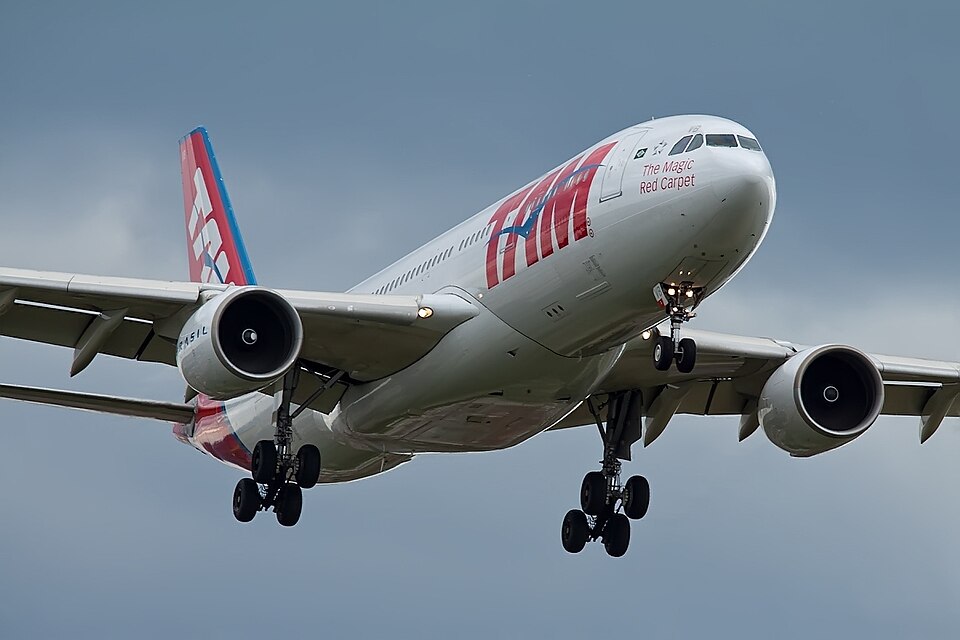
On 27 December 2001 at 19:39 UTC, a ground collision occurred at Zurich Airport between a Crossair AVRO RJ100 (registration HB-IYX) and a TAM Airbus A330-200 (registration PT-MVB). The TAM aircraft, operating as flight TAM8071, was taxiing to runway 28 for a flight to Frankfurt. The Crossair aircraft, operating as flight CRX874, was waiting to enter the remote de-icing position east (RIO) on by-pass RWY28. The right winglet of the Airbus A330-200 collided with the rudder assembly of the AVRO RJ100. The crew of the Crossair aircraft felt a vibration and notified Zurich Tower. The TAM crew did not initially notice the collision and were informed by ATC.
Aircraft and Crew
The TAM Airbus A330-200, PT-MVB, was a two-engine medium- and long-range aircraft with winglets. The Crossair AVRO RJ100, HB-IYX, was a four-engine short-range high-wing aircraft. The TAM flight crew consisted of a male pilot, born 1960, with 7255 total flight hours (3076 on A330), and a male co-pilot, born 1959, with 4470 hours (1805 on A330). The Crossair crew consisted of a female pilot, born 1957, with 9536.6 hours (2275.8 on type), and a male IFR with 562.5 hours (460 on type). All crew members held valid licenses and medicals.
Damage and Injuries
Substantial damage was found on the AVRO RJ100 at the transition from the horizontal to vertical stabilizer, rendering the aircraft not airworthy. The Airbus A330-200 had only scratches on the outside of the right winglet and was able to continue its scheduled flight after inspection. No injuries occurred.
Weather and Conditions
It was snowing lightly at the time of the collision, and taxiway markings were partially covered by snow or slush. All lighting was operational, but the yellow centre lines of the taxiways were difficult to see.
Investigation Findings
The investigation revealed that the remote de-icing position east (RIO) was authorized only for specific aircraft types up to the size of an Airbus A321 or Boeing B757. The collision occurred because the crew of taxiing TAM8071 did not recognize that the stationary CRX874 had not fully rolled into the standby for de-icing position and that the available space was insufficient for an aircraft the size of an A330-200 to pass. A possible contributing factor was distraction of the TAM copilot, who was responsible for obstacle clearance on the right side, due to a frequency change to the tower frequency.