Background
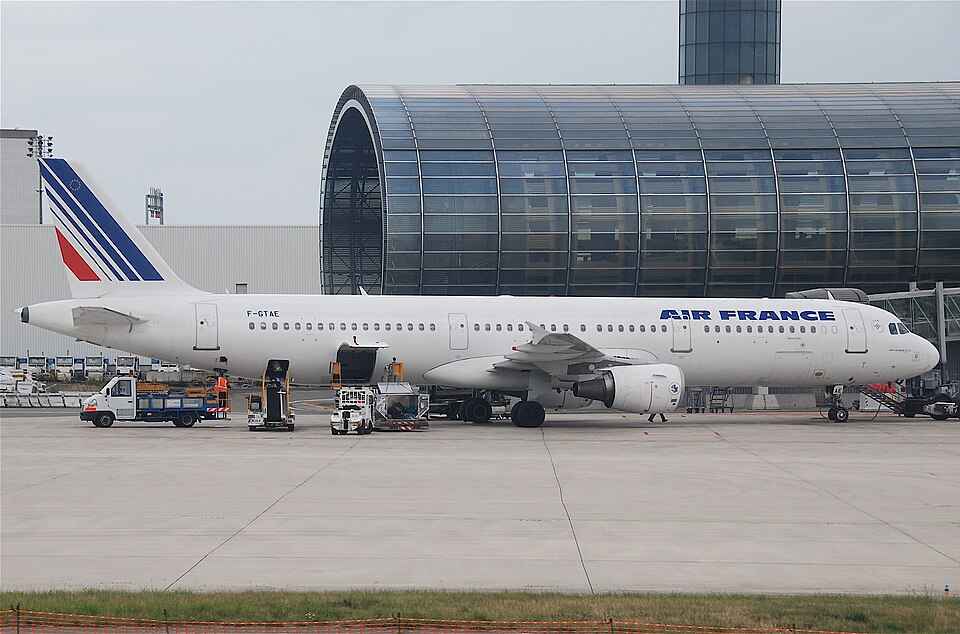
On 1 July 2008, at 19:01 UTC, a serious incident known as an AIRPROX occurred in the Geneva control zone (CTR) involving two commercial airliners. The aircraft were an Airbus A321, registration F-GTAE, operated by Air France as flight AFR1242 from Paris-Charles-de-Gaulle to Geneva, and an Airbus A320, registration CS-TNG, operated by TAP Portugal as flight TAP945B from Geneva to Lisbon. Both flights were conducted under IFR.
Sequence of Events
At 18:58 UTC, AFR1242 contacted Geneva Tower on 118.70 MHz, established on the ILS for runway 23 at about 9 NM. The aerodrome controller instructed it to report at 2 NM final. At 18:59:14 UTC, the controller cleared TAP945B to line up and wait on runway 23. Visibility was 10 km and the runway was dry. At 19:00:09 UTC, TAP945B was cleared for takeoff while AFR1242 was at 3 NM final. At 19:00:57 UTC, the controller called AFR1242 to issue surface wind and runway 23, apparently to clear it to land, but the pilot replied that he had initiated a go-around due to windshear. At that time, AFR1242 was practically at the runway threshold.
The conditions for reduced runway separation were met. However, TAP945B, in its takeoff roll, had not yet reached the minimum required distance of 2400 m from the start of runway 23. AFR1242 was at 0.5 NM from the threshold at 1600 ft. The controller ordered AFR1242 to climb to 7000 ft on the runway heading and TAP945B to stop its climb at 5000 ft.
According to the pilot of AFR1242's air safety report, the windshear was severe, experienced around 300 ft above ground, with a sudden loss of indicated airspeed despite application of high thrust, a noticeable descent, and a simultaneous "windshear" alarm. He immediately performed the go-around procedure. The Tower had received no windshear reports or forecasts from MeteoSwiss, and no other crew reported windshear before or after the incident.
At 19:01:19 UTC, radar data showed AFR1242 passing 2300 ft climbing at 187 kt, and TAP945B, 1.4 NM ahead, passing 1800 ft climbing at 178 kt. At 19:01:27 UTC, the controller coordinated with Approach Control (PRE), who instructed an immediate left turn for AFR1242 to a heading of 180°. The aerodrome controller did not issue essential traffic information to AFR1242, stating he considered visual acquisition of the preceding aircraft obvious. At 19:01:49 UTC, AFR1242 was instructed to turn left heading 180° for radar climb; at 19:02:25 UTC, to continue left turn to heading 050°; and at 19:02:32 UTC, transferred to Arrival frequency 136.25 MHz. The AFR1242 crew reported that they had seen the departing aircraft and found the separation impressive.
The minimum horizontal separation between the aircraft was 1.3 NM, and the minimum vertical separation was 300 ft.
Weather Conditions
At 18:50 UTC, Geneva METAR reported wind 140° at 7 kt, visibility 10 km, few clouds at 5000 ft, broken at 20000 ft, temperature 26°C, QNH 1015 hPa. A general barometric marsh situation with isolated thunderstorms over the Alps and north of the Alps was forecast, with AIRMETs indicating occasional thunderstorms. Surface wind observations from automatic stations showed light and variable winds.
Other Similar Events
The report references three previous similar events at Geneva:
- Report No. 1866 (28 June 2003): IBE3483/SWR353, minimum vertical 0 ft, horizontal 0.6 NM.
- Report No. 1983 (29 December 2006): KLM57W/EZY2076, vertical 300 ft, horizontal 1 NM.
- Report No. 1977 (11 May 2006): PTI747/EZY9VM, vertical 100 ft, horizontal 0.9 NM.
Regulatory Framework
The report cites the Swiss Aeronautical Infrastructure Ordinance (OSIA) Article 27, allowing temporary derogations from operational procedures under special circumstances. It also references the ATMM Section 9 on reduction of separation in the vicinity of aerodromes, which permits reduced separation if aircraft are continuously visible to the controller or if flight crews can maintain their own separation.