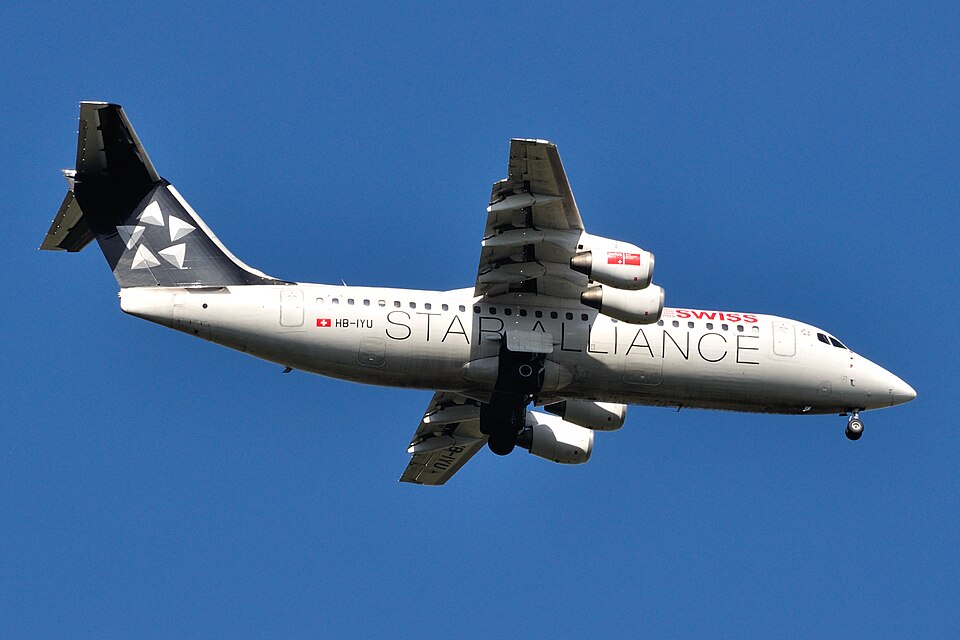
What happened
On September 3, 2016, an Avro 146-RJ100, registration HB-IYU, was operating a scheduled passenger flight from Geneva to Zurich. Shortly after takeoff, the crew transitioned from using the Auxiliary Power Unit (APU) bleed air to engine bleed air for the air conditioning system. Following this change, an oily odor became noticeable in the cockpit.
In an attempt to mitigate the smell, the crew restarted the APU to revert to its bleed air source. While the air quality initially appeared to improve, the odor returned. The flight crew began experiencing physical symptoms, including head pressure and throat dryness. To ensure safety, the pilots donned oxygen masks at 14:17 UTC and requested priority handling from Air Traffic Control for their arrival in Zurich.
Upon landing, the crew monitored the situation and allowed passengers to disembark normally. Firefighting specialists inspected the aircraft using thermal imaging and detection equipment but found no immediate abnormalities.
The investigation
SUST examined the aircraft's maintenance history, noting that similar odor complaints had occurred on previous flights in July and August 2016. While previous inspections had failed to identify a specific source, the investigation following this incident involved extensive borescope inspections of all four engines and the APU.
Technical analysis identified a leak in the Integrated Drive Generator (IDG) 4 oil system on engine number one. Specifically, oil line connections to the temperature control valve were not tightened with sufficient torque. This allowed oil to drip onto the engine compressor, where it could enter the engine bleed air stream. Additionally, improper alignment of the APU breather and engine oil cooler vent pipes may have allowed contaminated air to enter the air conditioning circuit instead of being exhausted overboard.
Findings
- The primary cause of the odor was an oil leak in the IDG 4 oil system of the first engine due to insufficiently tightened connections.
- Improperly aligned ventilation pipes allowed contaminated air to bypass overboard discharge and enter the cabin air conditioning system.
- The flight crew acted with safety in mind by donning oxygen masks and requesting priority when physical symptoms appeared.
- Previous maintenance efforts had been unable to locate the source of the recurring odor.